These caramel apple cookies bake up soft in the center with lightly crisp edges, and the little pockets of melted caramel and tender apple give every bite a mix of sweet, buttery, and warm spice. The finish of caramel sauce and flaky salt pushes them from good cookie to the kind people reach for while they’re still warm on the pan.
What makes this version work is the balance: the apple is diced very small so it softens without turning the dough wet, and the dough leans on brown sugar for chew while the granulated sugar helps the edges set. A quick pat dry on the apples matters more than you’d think. If the fruit goes in damp, the cookies spread too much and the centers can turn cakey instead of staying tender.
Below, I’ve included the small details that keep the texture right, plus a few smart swaps if you need to work with what’s in the pantry. The caramel finish is worth keeping exactly as written.
The cookies stayed soft for days and the caramel bits made those gooey pockets I was hoping for. Patting the apples dry made a big difference — no soggy centers at all.
Save these caramel apple cookies for the batch that stays soft, chewy, and full of caramel pockets.
The Part That Keeps These Cookies Soft Instead of Wet
The biggest mistake with apple cookies is treating the fruit like a normal mix-in. Apples carry a lot of moisture, and if you toss in big pieces or skip the drying step, they leak into the dough and change the whole bake. You end up with cookies that look set on the edges but stay pale, heavy, and a little gummy in the middle.
These cookies work because the apples are tiny. That gives you apple flavor in every bite without punching holes in the dough structure. The dough itself is sturdy enough to hold the fruit and caramel bits, but not so dense that it bakes up dry. You want the edges to turn golden while the centers still look a touch underbaked when they come out. That last bit of carryover heat finishes the texture without overbaking the apple.
What the Apples, Caramel Bits, and Spices Are Really Doing
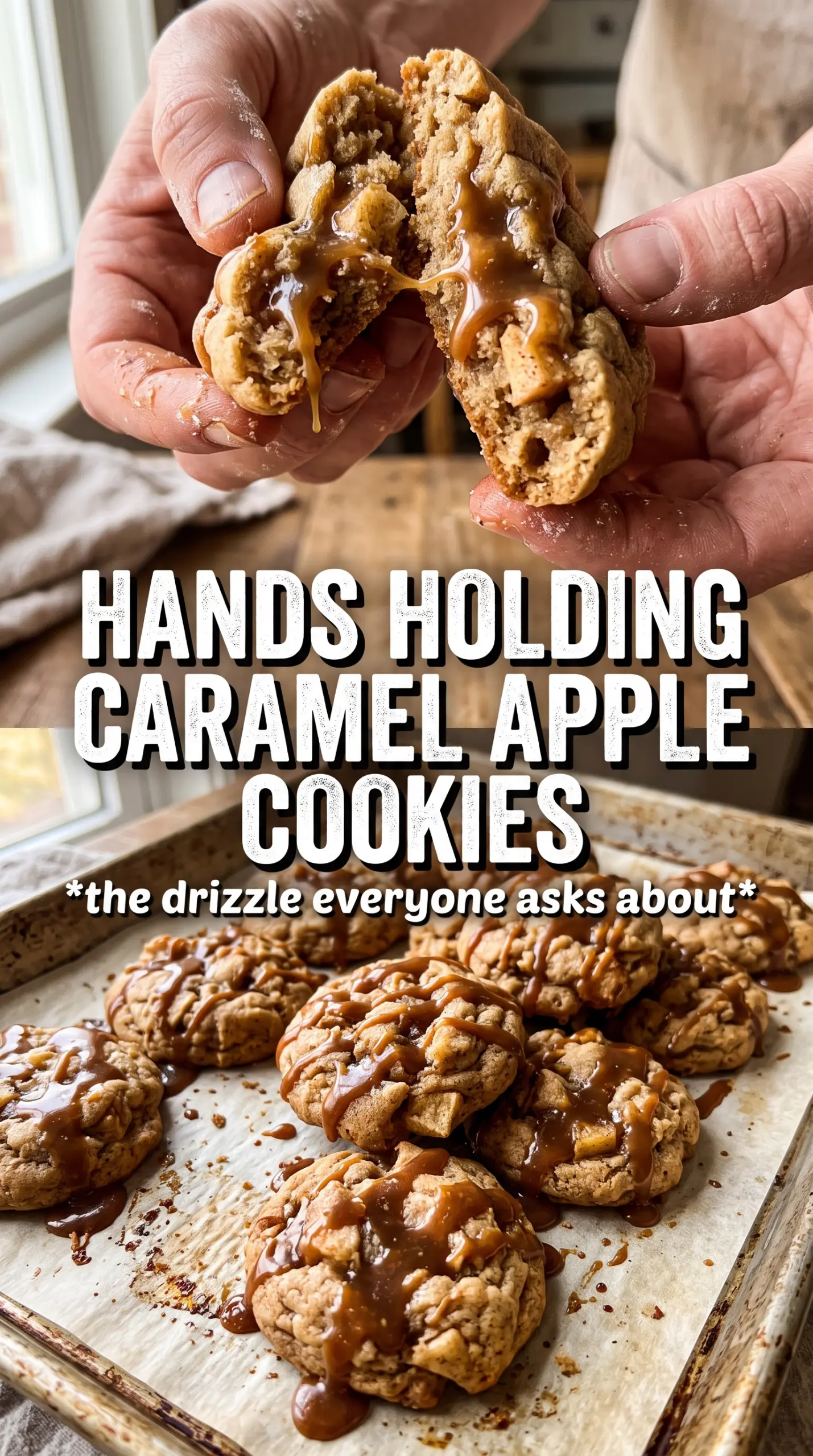
- Apples — Use a firm baking apple if you have one, but the more important step is dicing it very finely and patting it dry. Bigger chunks release more juice and create uneven pockets in the dough.
- Caramel bits or soft caramels — Caramel bits hold their shape a little better, while chopped soft caramels melt into gooier pockets. Either works, but if you use soft caramels, chop them small so they distribute evenly and don’t sink into one spot.
- Brown sugar — This is what gives the cookies their chew and deeper flavor. Granulated sugar helps with spread and keeps the edges from staying too soft.
- Cinnamon, nutmeg, and allspice — This blend doesn’t overpower the apple. It warms the dough just enough that the cookies taste like apple pie in cookie form without turning perfumey or heavy.
- Butter — Softened butter creams properly with the sugar, which gives the cookies lift and a tender crumb. Cold butter won’t trap enough air, and melted butter makes the dough spread too much.
Building the Dough So the Apples Bake In, Not Out
Whipping the Butter and Sugars
Beat the softened butter with both sugars until the mixture looks pale and fluffy, not dense or greasy. That step traps air, which helps the cookies rise just enough to stay soft instead of flat. If the butter is too warm, the mixture will look shiny and loose, and the dough will spread more in the oven. Stop as soon as it looks light and creamy.
Folding in the Fruit Last
Stir in the flour mixture first, then fold in the diced apples and caramel bits by hand. That keeps the apples from getting crushed and releasing juice into the bowl. If the dough starts to look wet after the fruit goes in, the apples were not dry enough. A quick pat with paper towels fixes more cookie problems than an extra handful of flour ever will.
Baking Until the Centers Still Look Soft
Scoop the dough into 2-tablespoon rounds and bake just until the edges turn golden. The centers should still look slightly underdone when you pull the tray from the oven. If you wait for the whole cookie to look finished in the oven, the apples will tighten up and the cookie will lose that soft middle. Let them sit on the pan for five minutes before moving them so they can finish setting without overbaking.
The Caramel Finish
Drizzle the cookies with caramel sauce while they’re still warm enough for it to settle into the tops. A little flaky salt keeps the sweetness from running away with the whole bite and makes the caramel taste deeper. If you add the salt too early, it can dissolve into the sauce instead of sitting on top where it gives you that clean little crunch.
Use Pear Instead of Apple
A firm pear gives you a softer, more floral cookie with the same juicy bite. Dice it just as finely and dry it well, because pears can be even juicier than apples. The spice still works, but the cookie reads a little lighter and less tart.
Make Them Dairy-Free
Swap the butter for a good plant-based baking stick and use a dairy-free caramel if needed. The texture will still be soft, but the flavor loses a little of that classic buttery richness, so the salt on top matters more here.
Use Soft Caramels for Bigger Pockets
Chop soft caramels into small pieces if you want obvious gooey spots in the finished cookie. They melt more than caramel bits, so the result is messier and richer. Keep the pieces small or they’ll pool and leak onto the baking sheet.
Freeze the Dough for Later
Scoop the dough first, then freeze the rounds on a tray before moving them to a bag. Bake from frozen and add a minute or two to the time. This is the best way to keep the apples from making the dough soggy while still getting freshly baked cookies whenever you want them.
Storage and Reheating
- Refrigerator: Store in an airtight container for up to 4 days. The cookies stay soft, but the caramel topping will firm up.
- Freezer: Freeze baked cookies for up to 2 months. Wrap them well so the apple pieces don’t pick up freezer odor, and thaw at room temperature.
- Reheating: Warm one cookie at a time in the microwave for 8 to 10 seconds, just until the caramel loosens. Too much heat makes the apple pieces get rubbery and can turn the cookie greasy.
Answers to the Questions Worth Asking
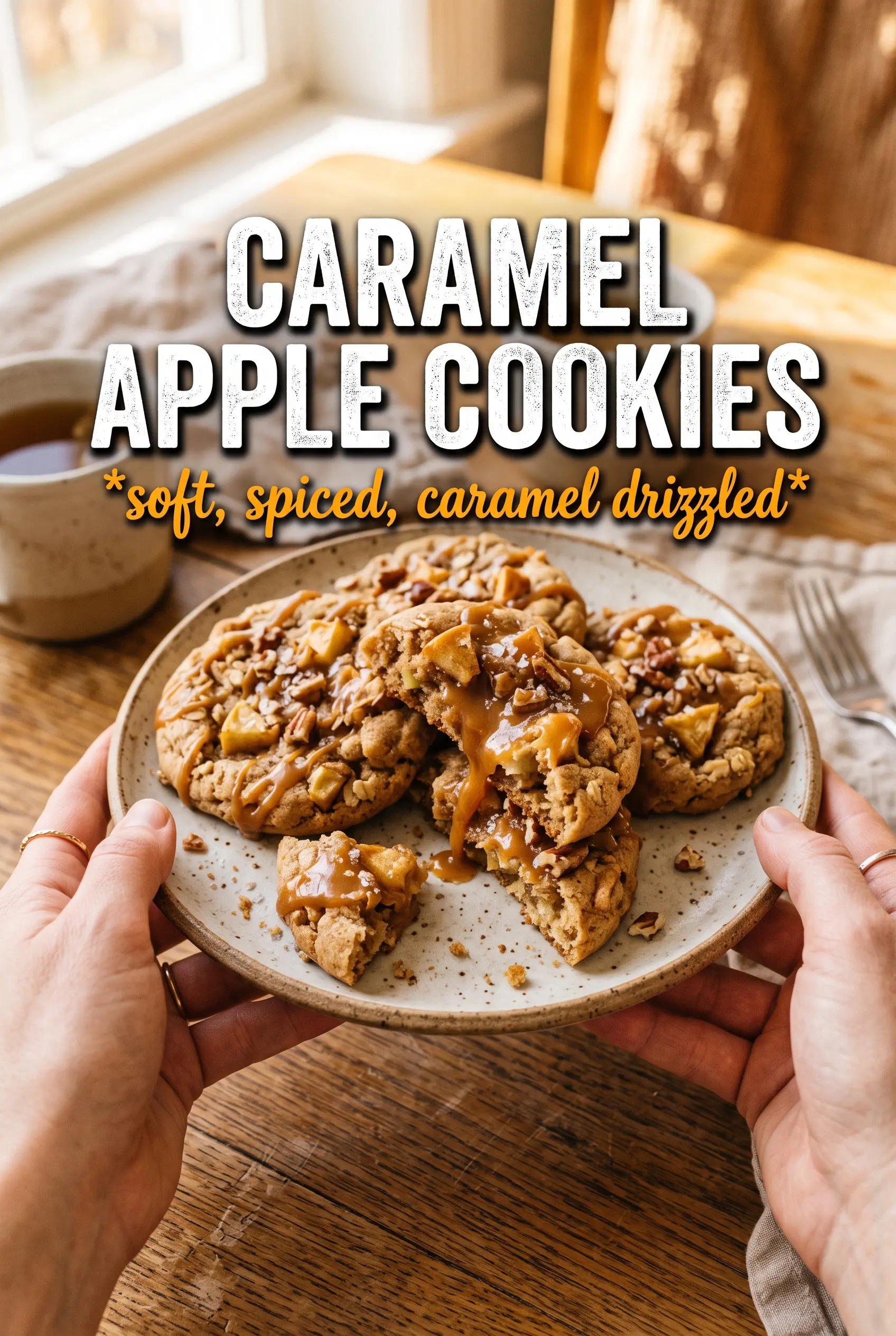
Caramel Apple Cookies
Ingredients
Equipment
Method
- Preheat oven to 375F and line baking sheets with parchment.
- Set out ingredients so you can mix wet and dry components without delay.
- Whisk all-purpose flour, baking soda, cinnamon, nutmeg, allspice, and salt until evenly combined.
- Beat softened unsalted butter with granulated sugar and packed brown sugar until fluffy.
- Beat in eggs one at a time, then mix in vanilla extract.
- Stir the flour mixture into the butter mixture until no dry streaks remain.
- Fold in the diced apples (ensure they are well-patted dry) and fold in caramel bits or chopped soft caramels.
- Scoop dough into 2-tablespoon rounds and place them on the prepared sheets, spacing evenly.
- Bake for 10-12 minutes, until edges are golden but centers look slightly underdone.
- Cool cookies for 5 minutes on the pan before moving them or serving.
- Drizzle with caramel sauce and sprinkle with flaky sea salt while warm.


