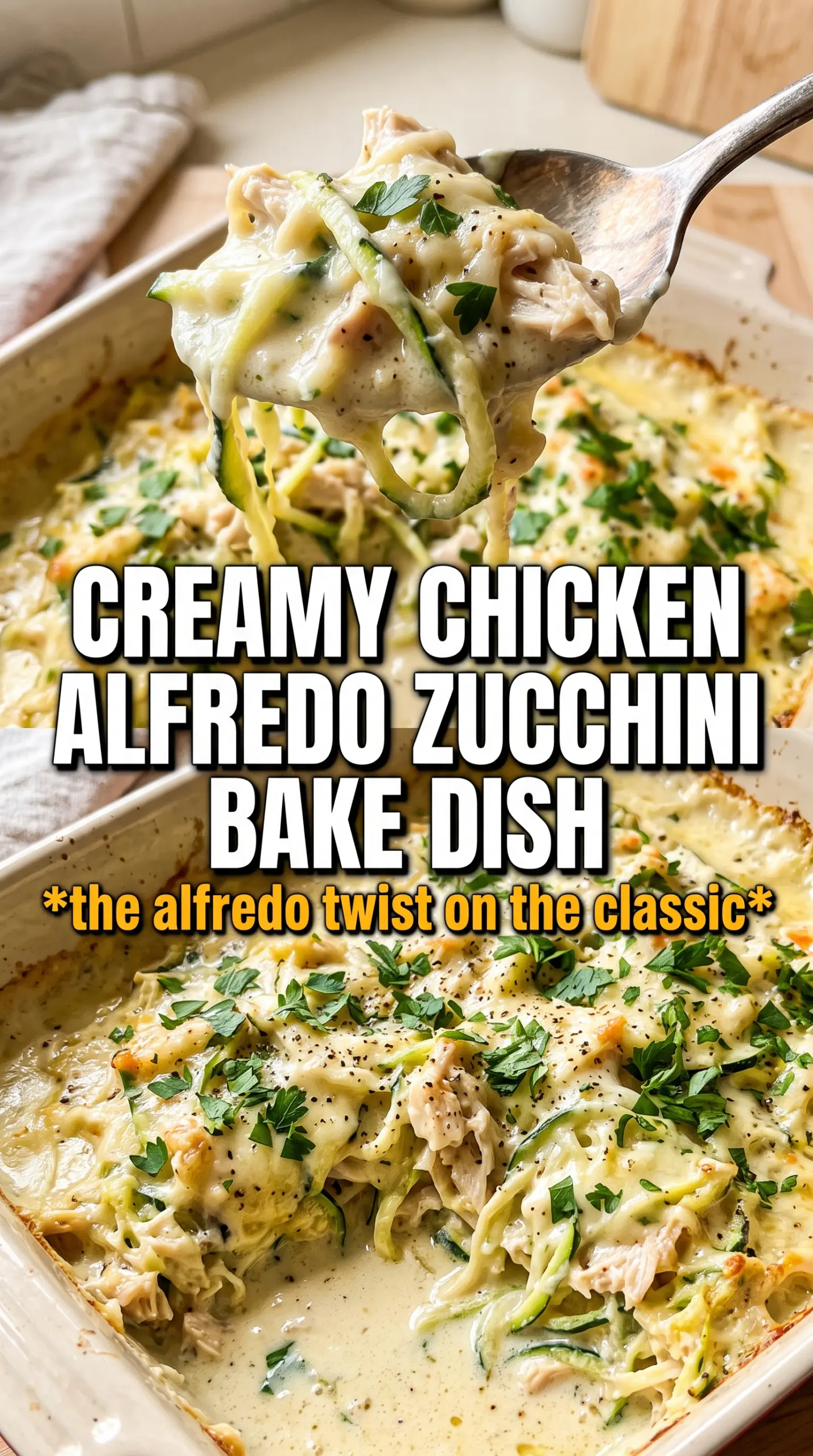
Chicken Alfredo zucchini lasagna bakes up rich, creamy, and surprisingly structured, with tender zucchini standing in for noodles and keeping every layer from collapsing into a puddle. The Alfredo sauce clings to the chicken and ricotta instead of sliding off, and the top turns bronzed and bubbly with just enough bite to slice cleanly. It tastes like a white lasagna with a lighter finish, but it still eats like comfort food.
The part that makes this version work is moisture control. Zucchini carries a lot of water, and if you skip the salting and roasting step, that liquid ends up thinning the sauce and loosening the layers. The sauce itself stays stable because the cream simmers before the parmesan goes in, which helps it thicken without turning grainy. A little nutmeg gives the Alfredo the warm, round flavor that keeps it from tasting flat.
Below, I’ve laid out the exact steps that keep the layers intact, plus the swaps that work if you need to adjust for what’s in the fridge.
The zucchini held up beautifully and the Alfredo stayed thick instead of watery. I loved that the layers sliced cleanly after resting, and my husband went back for a second piece before I’d even plated mine.
Save this chicken Alfredo zucchini lasagna for the nights when you want creamy layers, a clean slice, and all the comfort of lasagna without the noodles.
The Trick to Keeping Zucchini From Flooding the Lasagna
Zucchini is the part that can make or break this dish. Salt it first, let it sit long enough to pull out moisture, then roast the planks until they look softened and a little dry around the edges. That extra step keeps the finished lasagna creamy instead of soupy, and it gives the layers enough backbone to hold their shape when you cut in.
The other place people run into trouble is stacking too much filling in one spot. Thin, even layers work better than thick piles here because the zucchini still has some give after baking. If the layers look tidy going into the oven, they’ll slice tidily coming out.
- Zucchini — Use large squash and slice them into long planks, not coins. The wider surface helps them act more like noodles and makes the layers easier to stack.
- Salt — This isn’t just seasoning. It draws out the water that would otherwise dilute the Alfredo and make the casserole slump.
- Roasting — Don’t skip this. Roasting after salting drives off more moisture than patting alone and gives the zucchini a firmer texture.
- Chicken — Cooked shredded chicken works best because it soaks up sauce without drying out. Rotisserie chicken is an easy shortcut if you want to save time.
What Each Layer Is Doing in This Chicken Alfredo Zucchini Lasagna
- Butter — This is the base of the Alfredo and gives the sauce richness before the cream even goes in. Use real butter here; there’s no good shortcut for the flavor it adds.
- Heavy cream — This thickens into a silky sauce and stands up to baking better than milk. Half-and-half will work in a pinch, but the sauce will be thinner and less stable.
- Parmesan — Freshly grated parmesan melts smoothly and thickens the sauce. Pre-shredded cheese can leave the sauce grainy because of the anti-caking starches.
- Ricotta — This gives the lasagna its creamy middle layer and helps the casserole hold together. Mix it with the egg so it bakes into a sliceable filling instead of spreading out.
- Mozzarella — This is the stretchy, golden top that makes the dish feel like lasagna. Low-moisture shredded mozzarella melts more cleanly than fresh mozzarella in this recipe.
- Nutmeg — Just a small amount makes the sauce taste more complete. It doesn’t read as nutmeg in the finished dish, but you’d notice if it were missing.
Building the Layers So the Slice Holds Together
Drying Out the Zucchini First
Lay the salted zucchini planks out and let them sit until you can see beads of moisture on the surface. Pat them dry before roasting, then roast just until they look slightly tender and no longer wet in the center. If they go in raw and slick, they’ll steam the rest of the casserole and leave you with a loose, watery pan.
Cooking the Alfredo Until It Clings
Melt the butter and cook the garlic just until fragrant. Once the cream is in, let it simmer long enough to thicken slightly before adding the parmesan, then stir until smooth. If the heat is too high when the cheese goes in, the sauce can turn grainy or separate, so keep it at a gentle simmer and take your time.
Layering for Clean Slices
Start with a thin layer of sauce on the bottom of the dish so the zucchini doesn’t stick. Then build in even layers of zucchini, ricotta, chicken, sauce, and mozzarella, pressing each layer just enough to settle it without crushing it. Finish with sauce and a good blanket of mozzarella so the top browns before the center overcooks.
Resting Before You Cut
Let the lasagna sit for at least 15 minutes after baking. That resting time lets the cheese and sauce firm back up, which is what gives you neat squares instead of a runny pile on the plate. If you cut too early, the layers will slide apart even if the flavor is perfect.
How to Adapt This for Different Kitchens and Diets
Dairy-Free Version
Use a plant-based butter, unsweetened dairy-free cream, and a meltable vegan parmesan-style cheese. The sauce won’t taste exactly the same, but keeping it thick and well-seasoned matters more than chasing a one-to-one dairy substitute. Choose a vegan mozzarella that browns well if you want the same baked finish.
Higher-Protein Swap
Add extra shredded chicken and slightly reduce the ricotta layer if you want a firmer, meatier casserole. The texture turns a little denser, but the lasagna slices even cleaner and feels more like a hearty main dish.
No-Ricotta Option
If ricotta isn’t your thing, use cottage cheese that’s been drained well and lightly blended for a smoother texture. It won’t be quite as rich, but it still gives you a creamy middle layer that holds up during baking.
Storage and Reheating
- Refrigerator: Store leftovers covered for up to 4 days. The zucchini will soften a bit more, but the flavor stays good.
- Freezer: It freezes fairly well in portions for up to 2 months. Wrap tightly and thaw in the fridge before reheating so the sauce doesn’t break from a frozen center.
- Reheating: Reheat covered in a 350°F oven until hot through, or warm single slices in the microwave at medium power. High heat can make the sauce separate and turn the zucchini mushy, so slower reheating works better.
Questions I Get Asked About This Recipe
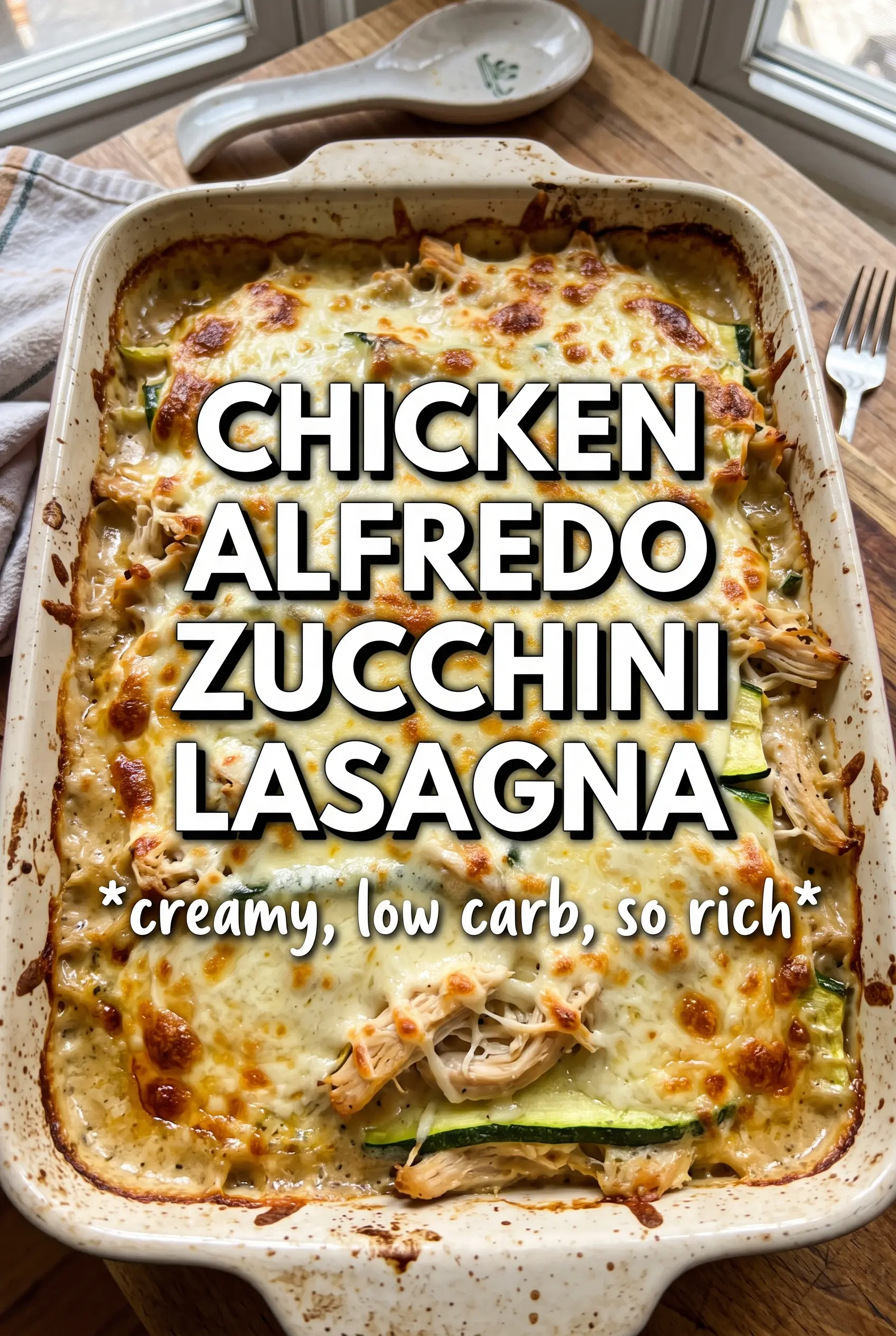
Chicken Alfredo Zucchini Lasagna
Ingredients
Equipment
Method
- Salt the zucchini planks and let sit 20 minutes, then pat dry for better browning.
- Roast the dried zucchini on a sheet pan at 425°F for 10 minutes to remove moisture, then set aside.
- Melt butter in a saucepan over medium heat, then sauté garlic for 1 minute until fragrant.
- Pour in heavy cream and simmer for 5 minutes, then stir in parmesan and nutmeg until fully combined.
- Season with salt and white pepper to taste and keep the sauce smooth and hot.
- Mix ricotta with egg, chopped fresh parsley, salt, and black pepper until evenly combined.
- Preheat the oven to 375°F and grease a 9x13 baking dish.
- Spread 1/2 cup Alfredo on the bottom, then layer zucchini planks, ricotta, shredded chicken, Alfredo sauce, and mozzarella; repeat, ending with Alfredo sauce and mozzarella on top.
- Cover with foil and bake at 375°F for 35 minutes.
- Uncover and bake 12–15 minutes at 375°F until golden and bubbly.
- Rest the chicken Alfredo zucchini lasagna for 15 minutes before slicing to help the layers set.
- Serve with extra parmesan and parsley.