Classic pasta salad works because it knows exactly what job it has to do: stay creamy, hold its shape, and taste even better after a long chill. The best versions are cool and tangy with just enough sweetness to round out the vinegar, and the vegetables stay crisp instead of turning soft and watery. When it’s done right, every bite has a little chew from the pasta, a clean pop of celery, and that familiar picnic-style dressing that makes a bowl disappear fast.
The trick is balancing texture and timing. Rinsing the pasta stops the cooking and cools it down fast, which keeps the mayonnaise dressing from melting into an oily mess. The dressing itself needs enough acid to cut through the richness, and a little sugar helps it taste bright instead of flat. I also like using red onion very finely diced so it blends in without taking over. Below, I’ve included the little details that keep the salad from turning bland, watery, or heavy after it sits.
The dressing coated every noodle without getting gloppy, and after a night in the fridge the pasta salad still had a nice bite. I’d definitely make it again for a cookout.
Classic pasta salad with creamy dressing and crisp vegetables is perfect for cookouts, potlucks, and make-ahead meals.
The Chilling Time Is What Keeps the Dressing Creamy
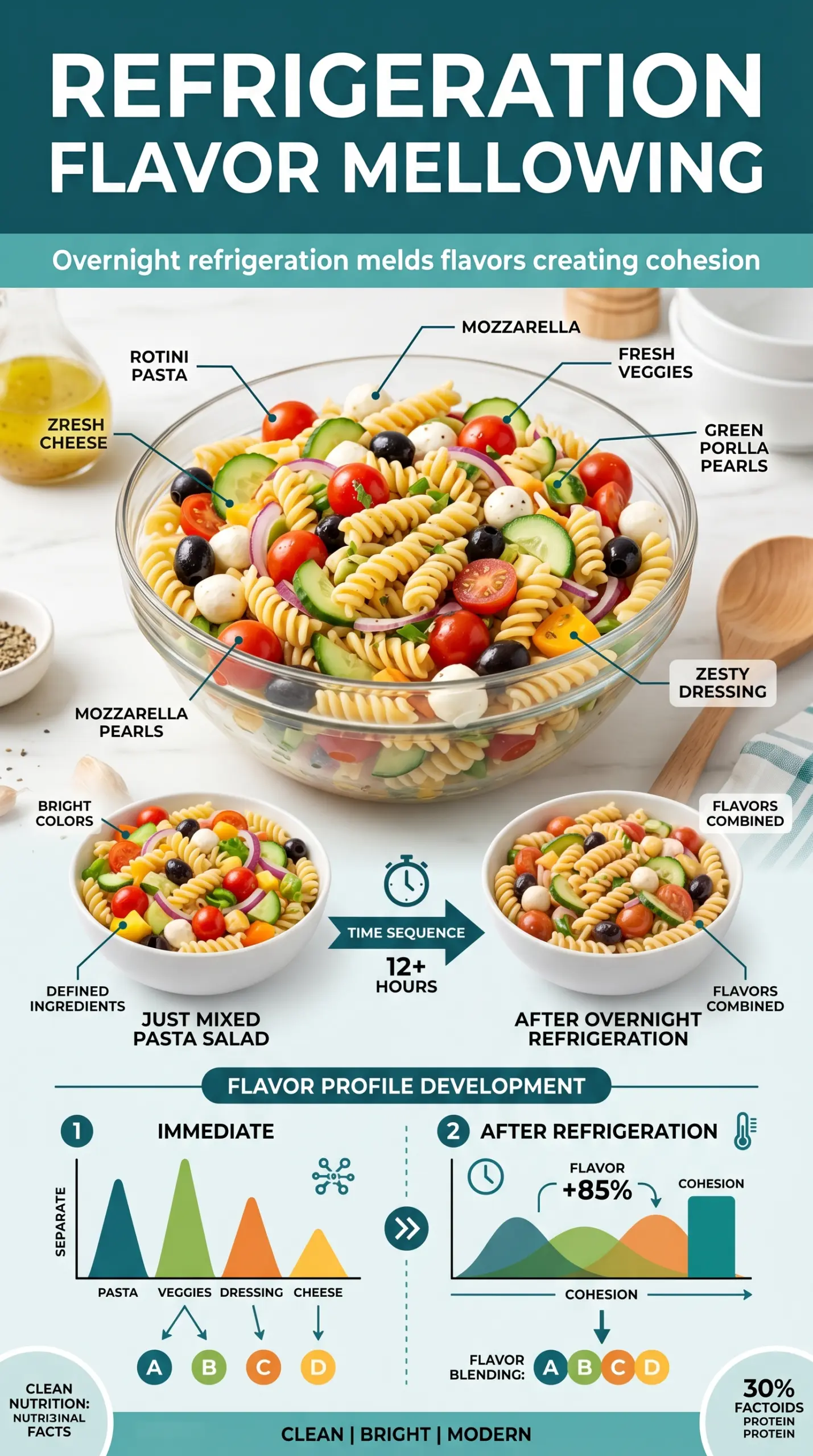
Most pasta salads go wrong because they’re served too soon. Right after mixing, the dressing can taste sharp and loose, and the pasta hasn’t had time to absorb any of it. After a few hours in the fridge, the flavors settle in, the vinegar softens, and the dressing clings to the noodles instead of sitting in a puddle at the bottom of the bowl.
That resting time also helps the texture. The vegetables stay snappy, but the pasta takes on the seasoning so the salad tastes unified instead of like separate ingredients thrown together. If it tastes a little flat after chilling, that usually means it needs another pinch of salt, not more mayo.
What Each Ingredient Is Actually Doing in This Bowl
- Elbow macaroni — This shape holds dressing in its curves and mixes evenly with the vegetables. Any short pasta works in a pinch, but elbows give you the classic texture people expect from old-school pasta salad.
- Mayonnaise — This is the base of the dressing, so use one you like the taste of. A lighter mayo will work, but the salad won’t have the same rich body.
- White vinegar and Dijon mustard — These keep the dressing from tasting heavy. The vinegar brings the tang, and the mustard adds a subtle sharpness that helps the whole bowl taste brighter.
- Celery, red bell pepper, and red onion — These are there for crunch and contrast. Dice them small enough that they don’t overpower each bite, especially the onion, which should disappear into the salad instead of hitting all at once.
- Frozen peas — Thawed peas add sweetness and color without any extra work. Fresh peas are nice when you have them, but frozen peas are the practical choice and hold their shape well here.
Building the Salad So It Stays Creamy, Not Heavy
Cooking the Pasta for Salad, Not for the Pot
Cook the macaroni until just tender, then drain it and rinse it under cold water right away. That rinse stops the cooking and removes the surface starch that can make the dressing gummy. If the pasta is hot when you mix it with mayo, the dressing can loosen too much and look greasy by the time it chills. Let it drain well so you’re not adding extra water to the bowl.
Whisking the Dressing Until It Tastes Balanced
Mix the mayonnaise, vinegar, sugar, mustard, salt, and pepper until smooth before you add the pasta. The dressing should taste a little punchy on its own because the noodles will soften it once everything rests. If it tastes bland now, it’ll taste flatter later. You want a clean tang, a touch of sweetness, and enough salt to make the vegetables stand out.
Tossing and Chilling for the Right Texture
Combine the pasta with the vegetables first, then pour the dressing over and toss until every piece is coated. Stir gently so you don’t mash the peas or break up the pasta. Cover and chill for at least 3 hours, or overnight if you’ve got the time. Right before serving, stir again and check the seasoning, because cold food almost always needs a little more salt than you think.
How to Adjust This Classic Pasta Salad Without Losing the Point
Make It Dairy-Free Without Changing the Texture
This recipe is already dairy-free as written, which is part of why it works so well for potlucks and cookouts. Just check your mayonnaise brand if that matters for your household, then keep the rest of the method the same. The dressing stays creamy and stable without any milk or sour cream.
Use Gluten-Free Pasta for the Same Picnic-Style Bowl
A sturdy gluten-free short pasta works here, but cook it carefully and rinse it promptly so it doesn’t go mushy. Some brands soften faster once dressed, so chill it a little less time before the first taste check. If it seems dry after resting, add a spoonful of mayo and stir.
Swap the Vegetables Based on What’s in the Fridge
Diced cucumber, chopped dill pickles, or small broccoli florets can stand in for one of the vegetables if you want a sharper or crunchier salad. Keep the pieces small and dry so the dressing doesn’t thin out. The more watery the vegetable, the shorter the salad’s best texture window will be.
Storage and Reheating
- Refrigerator: Store covered for up to 4 days. The pasta will keep absorbing dressing, so expect it to get a little thicker by day two.
- Freezer: Don’t freeze it. Mayo-based pasta salad turns watery and grainy after thawing.
- Reheating: This salad is meant to be served cold. If it’s been in the fridge a long time, let it sit out for 10 to 15 minutes and stir in a spoonful of mayo or a splash of vinegar to wake it back up.
Answers to the Questions Worth Asking
Classic Pasta Salad
Ingredients
Equipment
Method
- Cook elbow macaroni according to package directions until tender but still al dente, about 10 minutes. Drain and rinse under cold water until cool.
- Spread the drained pasta on a sheet pan in a single layer to cool and prevent clumping for about 5 minutes at room temperature, then transfer to a large bowl.
- Whisk together mayonnaise, white vinegar, sugar, Dijon mustard, salt, and pepper until smooth, about 1 to 2 minutes. Stop when the dressing looks glossy and evenly combined.
- Combine the cooled pasta, diced celery, diced red bell pepper, finely diced red onion, and thawed peas in a large bowl. Toss to distribute the vegetables evenly.
- Pour the dressing over the salad and toss until every piece is coated, about 1 to 2 minutes. Scrape the bottom of the bowl so no dry pasta remains.
- Refrigerate the pasta salad for at least 3 hours or overnight for best flavor. For a firmer, more set texture, chill longer than 3 hours.
- Stir before serving and adjust seasoning with additional salt and pepper if needed. Taste and make sure the dressing flavor is balanced.