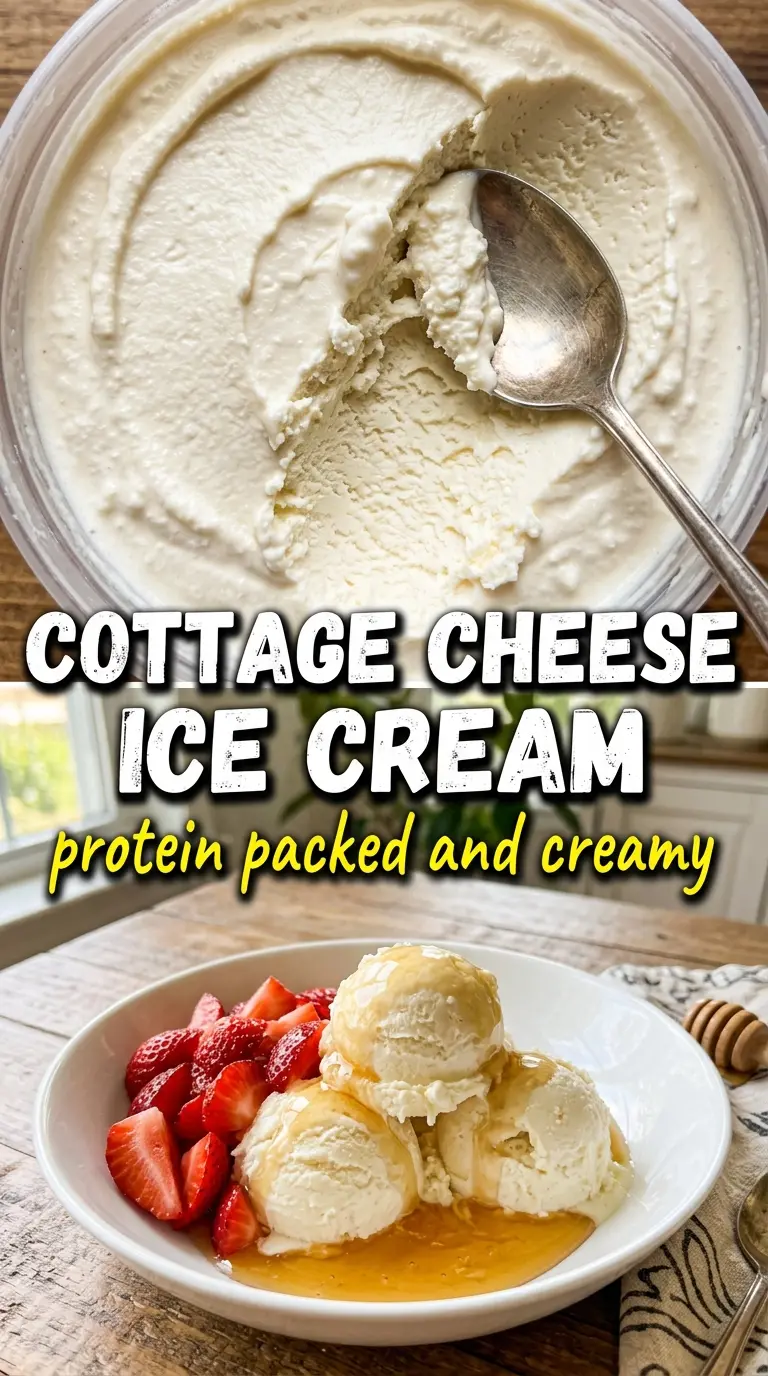
Blended cottage cheese turns into a cold, creamy dessert that tastes far richer than the ingredient list suggests. The texture is the whole trick here: once it’s fully puréed and frozen, it scoops like a soft ice cream with a clean vanilla finish and just enough tang to keep it from tasting flat. It’s the kind of dessert that earns repeat requests because it scratches the ice cream itch without needing an ice cream maker or a long churn time.
The key is getting the base completely smooth before it ever goes into the freezer. Cottage cheese can look silky in the blender and still hide tiny curds, and those curds turn icy later. A high-powered blender helps, but the real win is giving it the full blend time and scraping down the sides so the mixture is glossy before you freeze it. Honey or maple syrup also matters here because they soften the freeze just enough to keep the texture spoonable.
Below, I’ve included the small fixes that matter most: how to get rid of graininess, what to do if you want a sweeter or more tangy result, and the freezer timing that keeps this from turning into a solid block.
I was skeptical about the cottage cheese, but it blended into the smoothest base. Mine needed the full 4 hours in the freezer, and after 5 minutes on the counter it scooped like real ice cream.
Like this cottage cheese ice cream? Save it to Pinterest for a creamy, high-protein dessert that freezes up smooth and scoops like the real thing.
The Part Most Cottage Cheese Ice Cream Gets Wrong
The biggest mistake is freezing the base before it’s completely smooth. Cottage cheese has curds by design, and if even a few survive the blender, they show up after freezing as little icy bits instead of a creamy spoonful. That’s why the blending step matters more than the freezing step. A good base should look like thick vanilla pudding before it ever goes into the container.
Sweetener also affects texture, not just taste. Honey and maple syrup both help keep the mixture softer than granulated sugar would here, so the finished dessert doesn’t freeze into a hard block. The lemon juice is subtle, but it keeps the flavor bright and stops the dairy from tasting heavy. If your ice cream tastes flat, it usually needs a little more salt or another teaspoon of honey, not more vanilla.
- Full-fat cottage cheese — This gives the creamiest result and the best body after freezing. Low-fat cottage cheese works, but it usually freezes icier and tastes less rich.
- Honey or maple syrup — Either one sweetens the base and helps the texture stay scoopable. Honey gives a rounder, floral note; maple brings a deeper sweetness. Use whichever matches the toppings you plan to serve.
- Vanilla extract — Vanilla does the heavy lifting on flavor here because the dairy base is mild. Use pure vanilla if you can, since imitation vanilla can taste thin once the mixture is frozen.
- Lemon juice — Just a little wakes up the whole base and keeps it from tasting like sweetened cottage cheese. Don’t skip it unless you’re adding another strong flavor, like cocoa or fruit puree.
What Each Ingredient Is Actually Doing in This Ice Cream
- Base ingredient (cream, milk, or custard) — This provides the foundation and richness. Quality matters.
- Sweetener (sugar, honey, or condensed milk) — This sweetens and prevents ice crystals. The ratio is critical.
- Flavor element (vanilla, fruit, chocolate, coffee, or other) — This defines the ice cream personality. Use quality ingredients.
- Egg yolks (if making custard base) — These create richness and silky texture. Optional but elevates ice cream.
- Churning (if using ice cream maker) — This incorporates air and prevents ice crystals. Critical for smooth texture.
- Freezing temperature and time — Proper freezing prevents rock-hard texture. Store at 0°F or below.
- Mix-ins (chocolate, cookies, fruit, or swirls) — These add texture and prevent one-dimensional flavor. Add near end of churning.
- Serving temperature (slightly soft, not rock hard) — This provides creamy mouthfeel. Remove from freezer 5 minutes before serving.
Blending, Freezing, and the Five-Minute Wait That Matters
Getting the Base Completely Smooth
Add the cottage cheese, honey, vanilla, salt, and lemon juice to a high-powered blender or food processor and blend until the mixture looks silky and uniform, about 2 minutes. Stop and scrape down the sides if you see any specks or curds clinging to the bowl. If the base still looks grainy, it will freeze that way, so don’t rush this part. You want it thick, glossy, and pourable, not foamy.
Freezing in the Right Container
Pour the blended mixture into a freezer-safe container and smooth the top so it freezes evenly. A shallow container works faster than a deep one because the cold reaches the center more quickly. If your container is too tall and narrow, the middle can stay softer while the edges turn hard, which makes scooping awkward later.
Letting It Set Before Scooping
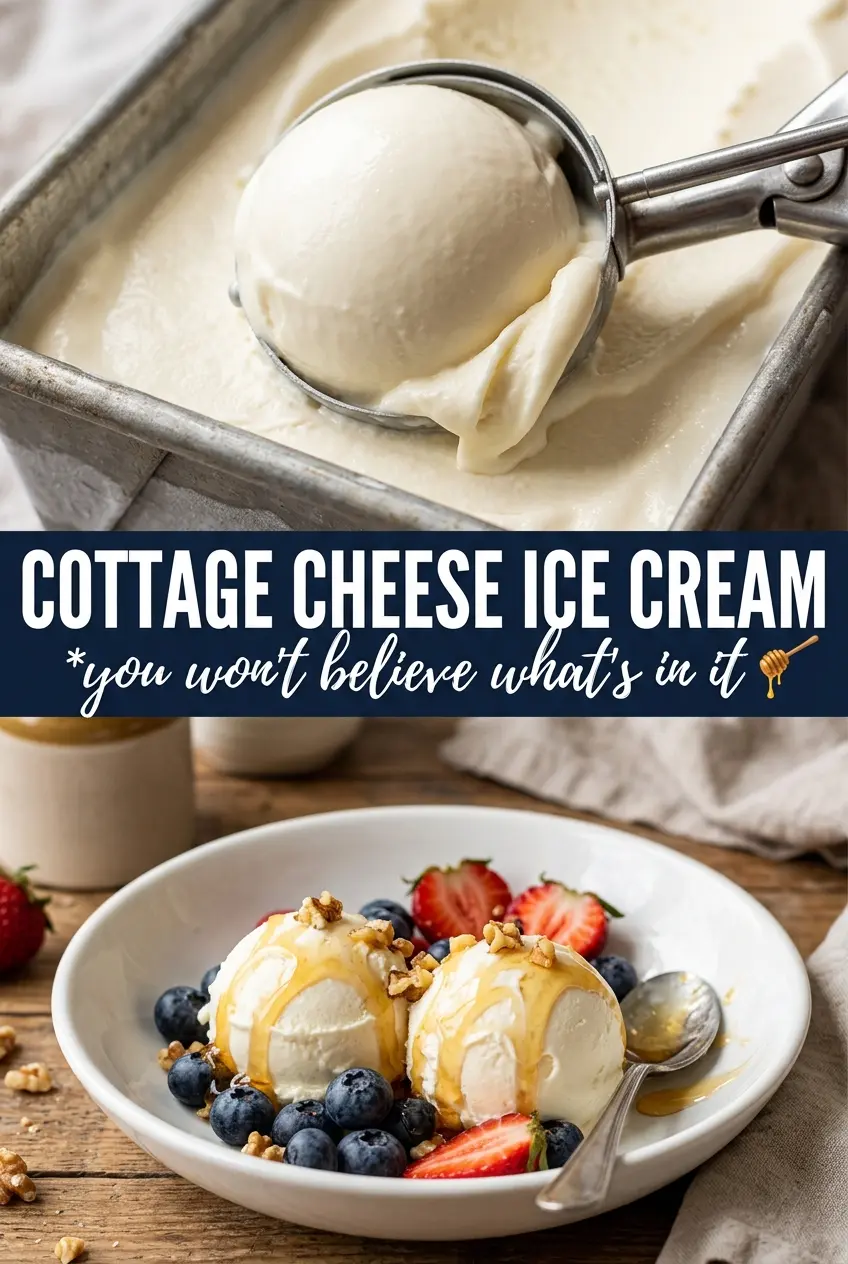
Freeze for about 4 hours, then let the container sit at room temperature for 5 minutes before serving. That short rest is what turns a brick into something scoopable. If you wait too long, the texture gets too soft and starts to collapse, so check it at the 5-minute mark first. Top with berries, chocolate chips, or a drizzle of honey and serve right away.
How to Change the Base Without Losing the Creamy Texture
Dairy-Free Version
This recipe depends on dairy for its creamy body, so a straight dairy-free swap won’t behave the same way. If you need a dairy-free dessert, use a thick coconut yogurt or a blended cashew base and expect a softer, slightly icier result with more pronounced coconut or nut flavor.
Lower-Sugar Version
You can cut the honey or maple syrup back a bit, but don’t remove it completely unless you want a firmer, icier texture. Sweetener isn’t just for taste here; it helps keep the frozen base softer and easier to scoop.
Fruit Swirl Version
Stir in a thick berry puree after blending, not before, so the base still freezes smooth. A loose puree can make the texture icy, while a spoonful of mashed strawberries or raspberries gives you pockets of fruit without watering the mixture down.
Chocolate Chip Version
Fold in chocolate chips after the base is blended and just before freezing so they stay evenly distributed. Mini chips work best because they’re easier to scoop through and don’t overpower the soft texture of the ice cream.
Storage and Reheating
- Refrigerator: Not recommended. This is best eaten from the freezer after a short rest; the texture breaks down quickly in the fridge.
- Freezer: Keeps for about 2 weeks in a sealed container, though the texture is creamiest in the first few days. Press a piece of parchment or plastic wrap directly on the surface to limit ice crystals.
- Reheating: Not applicable, but do let it sit at room temperature for about 5 minutes before scooping. If it’s still too firm, give it 2 more minutes instead of microwaving, which melts the edges and leaves the center icy.
Questions I Get Asked About This Recipe
Cottage Cheese Ice Cream
Ingredients
Equipment
Method
- Blend full-fat cottage cheese, honey or maple syrup, vanilla extract, salt, and lemon juice in a high-powered blender or food processor until completely smooth with no lumps, about 2 minutes. Stop and scrape down the sides if needed for an even, thick texture.
- Pour the blended mixture into a freezer-safe container and freeze for 4 hours until firm. Cover tightly to prevent ice crystals from forming.
- Let the frozen ice cream sit at room temperature for 5 minutes before scooping so it softens for a clean scoop. Top with fresh berries or chocolate chips for topping and serve.