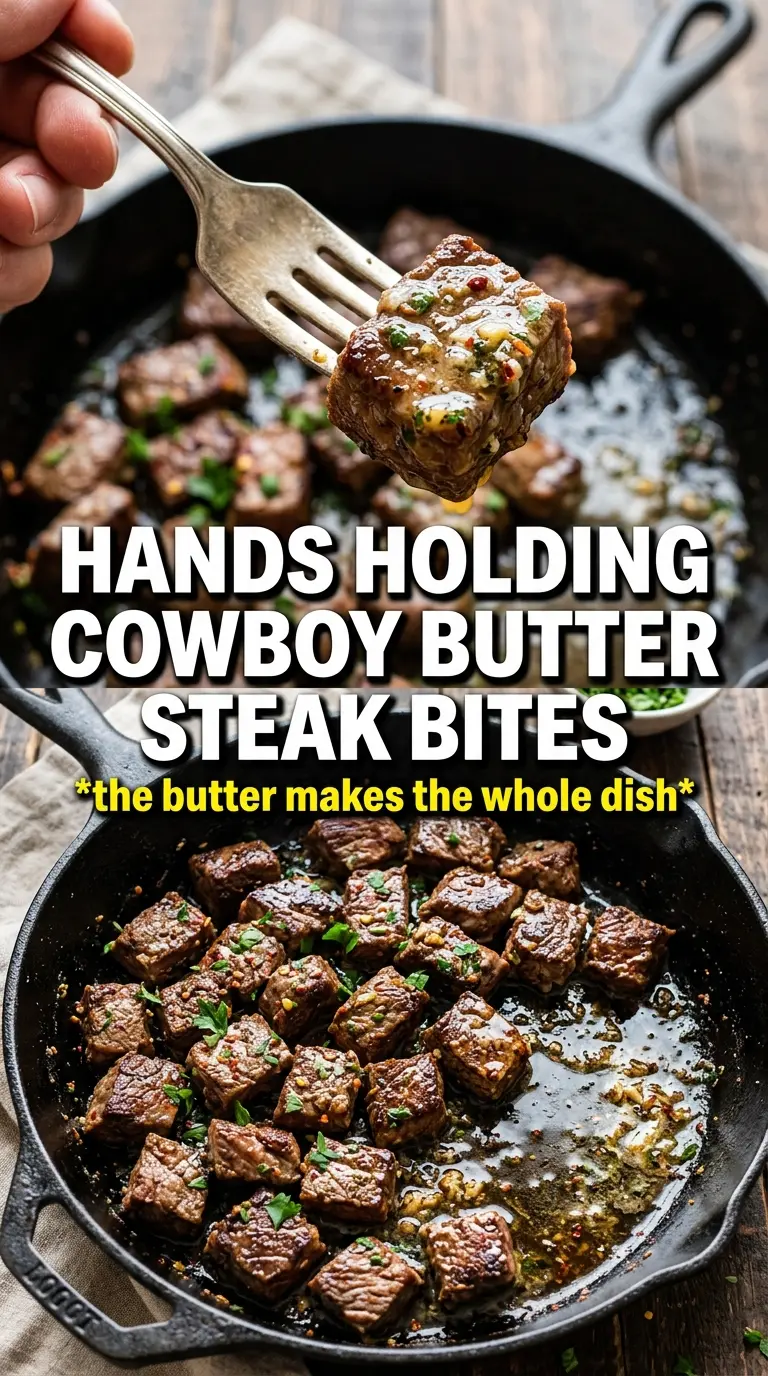
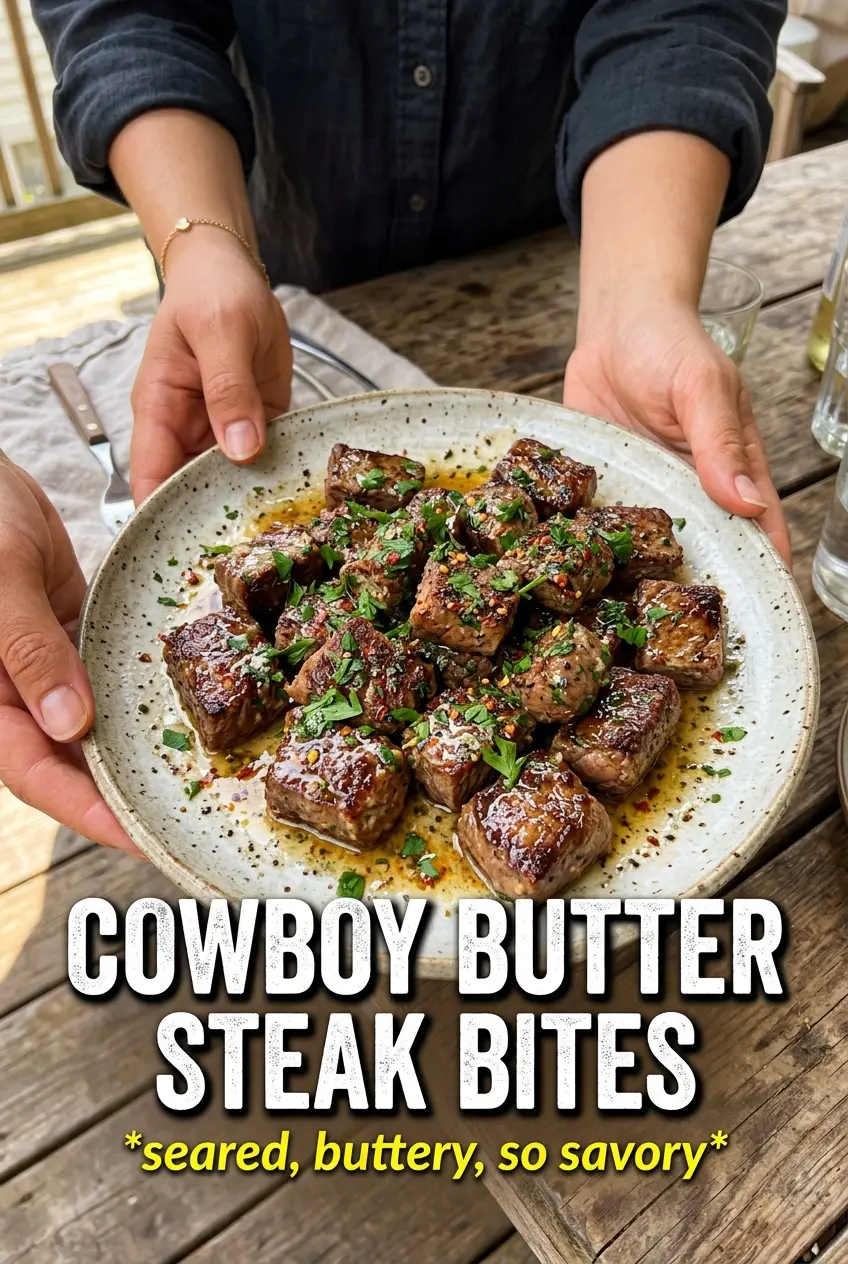
Cowboy butter steak bites hit the plate with a deep seared crust, juicy centers, and a glossy garlic-herb butter that clings to every edge. The whole dish comes together fast, but it still tastes like you paid attention at the stove, which is exactly why it earns repeat status. There’s enough heat from the red pepper flakes and enough brightness from lemon to keep the butter from feeling heavy, and the steak stays the star instead of getting buried under sauce.
What makes this version work is the order. The steak gets hard seared first, in a hot skillet, so it browns before the butter ever goes in. That keeps the pan hot enough for a proper crust and prevents the meat from steaming. Once the steak is out, the butter sauce builds in the same pan, so all those browned bits become part of the finish instead of getting washed away.
Below, I’ve included the one searing detail that matters most, plus a few useful swaps if you want to work with a different cut or adjust the heat level.
The steak got that crisp edge I’ve been chasing, and the cowboy butter picked up all the browned bits in the pan. Mine was done in under 30 minutes and tasted like a steakhouse dinner without the hassle.
Save these cowboy butter steak bites for the night you want a hard sear, a glossy garlic-herb finish, and dinner on the table fast.
The Sear Has to Happen Before the Butter Goes In
The biggest mistake with steak bites is crowding the pan and trying to build the sauce too soon. If the pieces are packed together, they release moisture and steam instead of browning, and once that happens you lose the crust that makes the dish worth making. High heat and space are doing the heavy lifting here.
Cast iron earns its keep in this recipe because it holds heat when the steak hits the pan. Let it get smoking hot before the first piece goes in, then leave the steak alone long enough to form a crust before turning it. If you move the pieces too early, they stick, tear, and never quite pick up that deep browned edge.
- Sirloin — Leaner and a little more economical, but still tender enough for quick, high-heat cooking if you cut it into even cubes.
- Ribeye — The richest option here. The extra marbling gives you more forgiveness, better browning, and a juicier bite.
- Butter — Unsalted butter lets you control the seasoning after the steak is done. Salted butter works in a pinch, but taste before adding more salt at the end.
- Dijon mustard — This doesn’t make the sauce taste like mustard. It adds sharpness and helps the butter cling to the steak instead of sliding off.
- Lemon juice — Fresh lemon cuts through the richness. Bottled juice works if that’s what you have, but the flavor is flatter and less bright.
What Each Part of the Cowboy Butter Is Actually Doing
- Garlic and shallot — They build the savory base, but they only need a minute in the butter. If they brown hard, the sauce turns bitter, so keep them moving and pull the pan off the heat if they start to color too fast.
- Parsley and chives — These bring freshness and keep the sauce from tasting flat. Dried herbs won’t give the same clean finish here, so fresh is worth using.
- Red pepper flakes and smoked paprika — The flakes add heat, and the paprika adds a little smoky depth without making the sauce taste like barbecue. If you want less heat, cut the flakes in half rather than removing them completely.
- Steak juices from the pan — Don’t wipe them out. Those browned bits dissolve into the butter and give the sauce its steakhouse flavor.
Building the Sauce Without Losing the Steak Crust
Getting the Browning First
Season the steak cubes with salt and pepper, then sear them in a single layer over high heat. Two minutes per side is the target, but the real cue is color: you want a deep brown crust before the steak comes out. If the cubes are wet when they hit the pan, pat them dry first or they’ll release steam and pale out instead of searing.
Letting the Butter Work in the Residual Heat
Lower the heat to medium before the butter goes in. That matters because butter burns faster than steak browns, and a screaming hot pan will scorch the garlic before the sauce has a chance to come together. Once the garlic and shallot soften, stir in the parsley, chives, Dijon, lemon juice, red pepper flakes, and smoked paprika, then return the steak and toss just long enough to coat every piece.
Serving at the Right Moment
Serve these steak bites immediately while the butter is still loose and glossy. If they sit too long, the butter tightens up and the crust softens under the sauce. The best texture is a hot seared exterior with a juicy middle and just enough cowboy butter left in the skillet to spoon over the top.
Ways to Adjust the Heat, Cut, or Finish
Make it dairy-free
Use a good plant-based butter that melts cleanly and doesn’t taste sweet. You’ll still get the garlic-herb coating, but the sauce will be a little less rich and a touch softer in flavor.
Use a different cut of beef
Strip steak works well, and tenderloin gives you a more tender bite with less marbling. If you use a leaner cut, don’t overcook it in the skillet after the sear or it will lose the juiciness that makes steak bites worth serving.
Turn down the heat
Cut the red pepper flakes in half and skip the extra pinch at the end. You’ll still get the warm, peppery cowboy butter flavor, but the finish will be milder and more kid-friendly.
Storage and Reheating
- Refrigerator: Store leftovers up to 3 days. The butter will firm up and the steak will lose some crust, which is normal.
- Freezer: Freeze only if you have to; the sauce can separate a bit after thawing and the steak texture won’t be as good. Wrap tightly and use within 2 months.
- Reheating: Reheat gently in a skillet over low heat with a small splash of water or butter. High heat will push the steak past medium and make the garlic taste harsh.
Questions I Get Asked About This Recipe
Cowboy Butter Steak Bites
Ingredients
Equipment
Method
- Season the steak cubes with salt and pepper to taste, ensuring all sides are coated. The surface should look lightly speckled with seasoning.
- Heat a cast iron skillet over high heat until smoking, then sear the steak bites in a single layer without touching for 2 minutes per side. Look for golden-brown crust and sizzling bubbles around the edges.
- Work in batches and set the seared steak aside. Keep the steak crust visible and avoid stacking while it rests.
- Reduce the heat to medium, then add butter to the skillet. The butter should melt and start to foam gently.
- Sauté the garlic and shallot for 1 minute, stirring to prevent browning. The mixture should smell fragrant and look slightly softened.
- Stir in parsley, chives, Dijon mustard, lemon juice, red pepper flakes, and smoked paprika. The sauce should turn glossy and bubbling throughout as the flavors combine.
- Return the steak bites to the skillet and toss in the cowboy butter. Serve immediately when the steak is fully coated and the sauce is still bubbling.


