Crockpot Asian meatballs come out tender in the center, lightly sticky on the outside, and coated in a glossy ginger-soy-hoisin glaze that clings to every bite. The slow cooker does the gentle part, but the flavor starts with a good brown on the meatballs and a sauce that balances salty, sweet, tangy, and just enough heat to keep it interesting. Piled over rice, they taste like the kind of dinner you hoped would happen after a long day and somehow actually did.
This version works because the meatballs aren’t thrown into the crockpot raw and left to steam into pale little spheres. Browning first gives you better texture and a deeper base flavor, and the sauce is built with ingredients that hold up to long cooking instead of turning flat. The cornstarch slurry goes in at the end, which keeps the glaze smooth instead of dull or gummy.
Below, I’ll walk through the one step that keeps the meatballs from falling apart, the ingredient swap that matters most if you only have one protein on hand, and the trick for getting the sauce thick enough to coat without turning pasty.
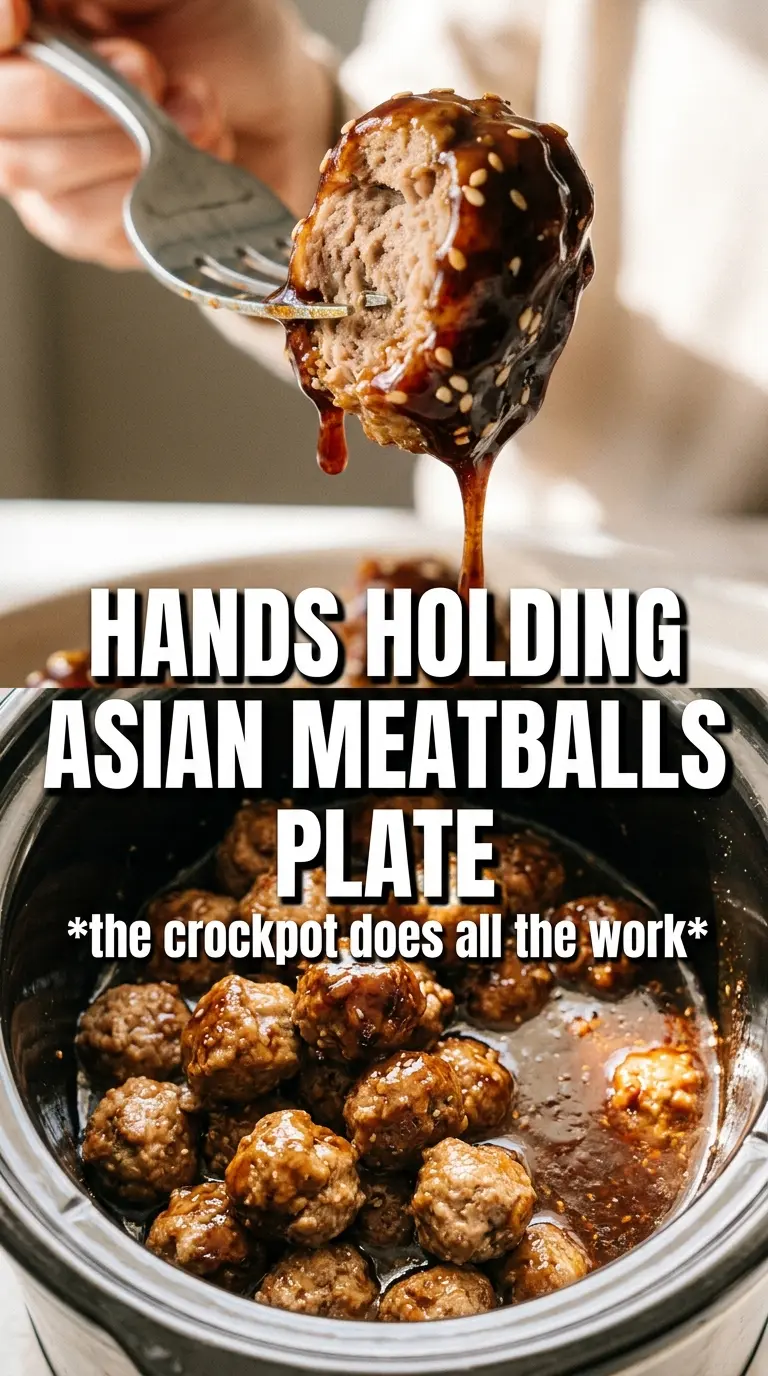
The glaze thickened up right at the end and coated the meatballs instead of pooling at the bottom. I used pork and served them over jasmine rice, and the green onions on top made it taste fresh, not heavy.
Crockpot Asian meatballs with sticky ginger-soy glaze are the kind of dinner that tastes even better when the sauce gets that final glossy finish.
The Browning Step That Keeps These Meatballs from Going Soft
The biggest mistake with crockpot meatballs is treating the slow cooker like it can create texture from nothing. It can’t. If the meatballs go in raw, they cook through, but they don’t develop the same browned edges or the sturdy exterior that helps them hold their shape in the sauce. A quick skillet browning gives you that structure before the gentle heat takes over.
You don’t need to cook them all the way through in the pan. You’re looking for color on the outside and enough firmness that they can be moved without sagging. That short sear also leaves a little fond in the pan, which is worth keeping in mind if you want to deglaze or just enjoy the deeper flavor that comes from not starting from zero.
- Breadcrumbs and egg — These are what keep the meatballs tender without turning crumbly. The breadcrumbs hold onto moisture, and the egg helps the mixture bind cleanly when it cooks.
- Fresh ginger and garlic — Use fresh here. Powder won’t give you the same sharp, bright lift in the glaze or inside the meatballs.
- Hoisin sauce — This is one ingredient I wouldn’t swap casually. It brings sweetness, body, and that deep savory note that makes the glaze taste finished instead of just salty-sweet.
- Rice vinegar — It keeps the sauce from tasting heavy. If you’re out, apple cider vinegar works in a pinch, but use a little less because it reads sharper.
What Each Ingredient Is Doing in the Glaze and Meatballs
- Ground beef or pork — Pork gives a slightly richer, softer bite, while beef tastes meatier and a little firmer. Either one works; if you use very lean beef, expect the meatballs to be a touch less plush.
- Soy sauce in both layers — This is doing more than seasoning. It seasons the meatballs from the inside and gives the glaze its backbone, so low-sodium soy sauce is fine if that’s what you keep on hand.
- Sesame oil — A little goes a long way. It adds the nutty finish that makes the sauce taste like more than a basic sweet-and-sour glaze, so don’t replace all of it with neutral oil.
- Cornstarch slurry — Add it only at the end, with the cooker on High, or the sauce can stay thin and cloudy. The heat activates the starch and turns the glaze glossy enough to coat instead of run.
Building the Sauce So It Stays Glossy Instead of Grainy
Mix the meatball base just until it comes together
Combine the meatball ingredients in a bowl and stop as soon as the mixture looks even. If you work it too much, the meatballs tighten up and turn springy instead of tender. The mixture should hold together when pressed, and it should roll cleanly without sticking to your hands like paste.
Browning before the slow cooker
Shape the meatballs into 1.5-inch balls and brown them in a skillet in batches. You’re not chasing full cooking here; you want surface color and a little crust. If they’re crowded in the pan, they steam, so give them room even if that means doing an extra batch.
Let the sauce cook low, then thicken at the end
Whisk the glaze ingredients together and pour it over the meatballs in the crockpot. Cook on Low until the meatballs are tender and the sauce tastes blended, then stir in the cornstarch slurry and switch to High for the last 20 minutes. If you add the slurry too early, it can lose its power over a long cook and the sauce stays thin.
Finish with the right texture
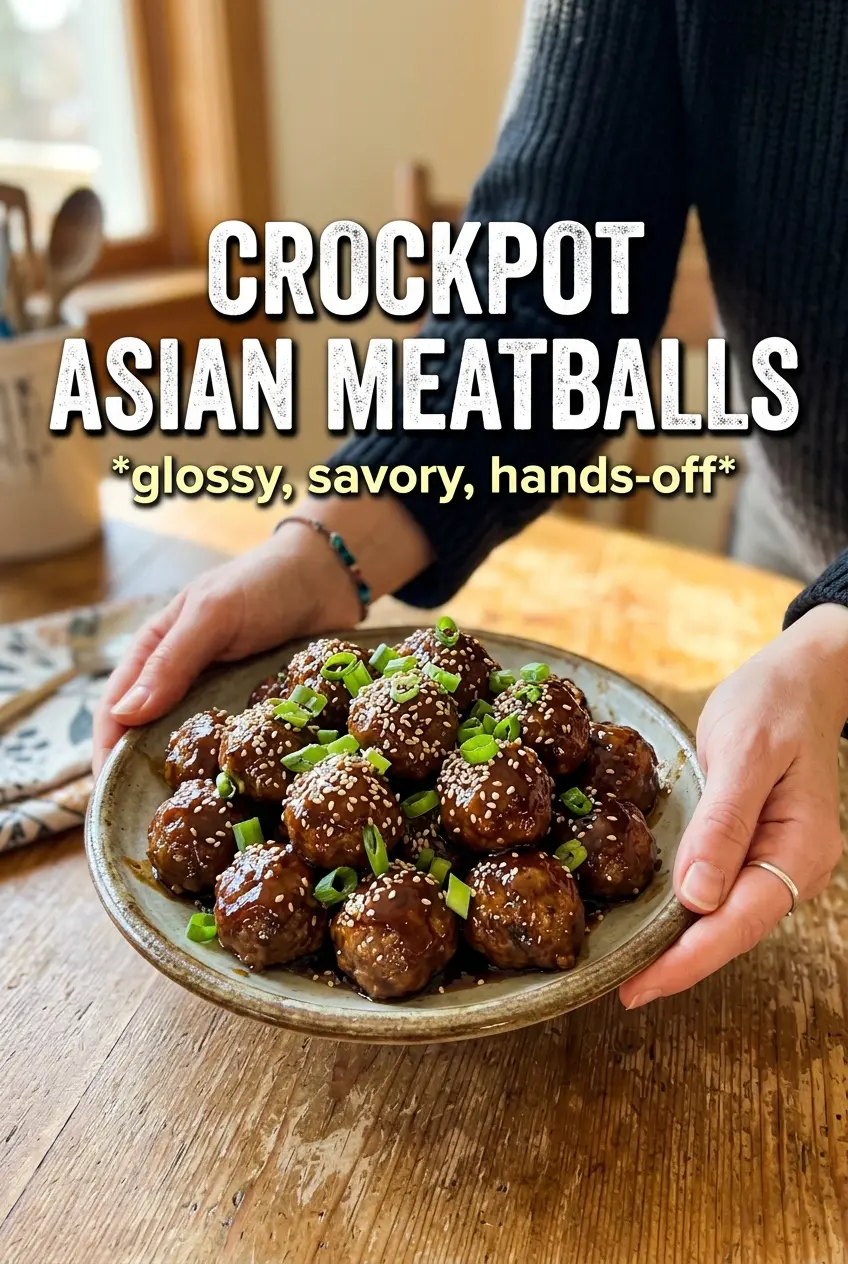
The glaze is ready when it looks shiny and lightly napes the spoon, not when it turns into a paste. Stir gently so the meatballs stay intact. Serve them over rice while the sauce is still hot and loose enough to seep into the grains, then finish with sesame seeds and green onions for crunch and freshness.
How to Adapt These Crockpot Asian Meatballs Without Losing the Point
Pork for richness, beef for a firmer bite
Pork makes the meatballs softer and a little juicier, which fits the sticky glaze nicely. Beef gives a more familiar meatball flavor and holds its shape a bit more firmly. Both work, but if you use extra-lean beef, add a little care when mixing so the texture doesn’t dry out.
Gluten-free version with one clean swap
Use gluten-free breadcrumbs and a certified gluten-free soy sauce or tamari. The texture stays close to the original, and the sauce still thickens the same way because the cornstarch is already doing that job. Hoisin can vary by brand, so check the label there too.
Less sweet, still sticky
Drop the honey to 3 tablespoons if you want a glaze that leans more savory than sweet. You’ll still get shine and body from the hoisin, soy sauce, and cornstarch, but the finished sauce will taste a little sharper and less dessert-like.
Make it hotter without changing the base
Add another half teaspoon of sriracha or finish with chili flakes at the table. More heat works best at the end because long cooking dulls it a little, and this keeps the sauce balanced instead of just sharp.
Storage and Reheating
- Refrigerator: Store in an airtight container for up to 4 days. The sauce thickens as it chills, and the meatballs stay tender.
- Freezer: Freeze for up to 2 months. Cool completely first, then pack the meatballs and sauce together in a freezer-safe container or bag. Thaw overnight in the fridge before reheating.
- Reheating: Warm gently on the stovetop or in the microwave with a splash of water if the glaze looks tight. High heat can make the sauce separate a little and can dry out the meatballs, so go low and slow.
Questions I Get Asked About This Recipe
Crockpot Asian Meatballs
Ingredients
Equipment
Method
- Mix ground beef or pork with breadcrumbs, egg, garlic, fresh ginger, soy sauce, sesame oil, and green onions, then roll into 1.5-inch balls.
- Brown the meatballs in a skillet over medium-high heat until browned on the outside, then transfer them to the Crockpot.
- Whisk together soy sauce, hoisin sauce, honey, rice vinegar, sesame oil, garlic, fresh ginger, and sriracha, then pour the glaze over the meatballs in the Crockpot.
- Cook on Low for 3–4 hours or on High for about 2 hours, until the meatballs are cooked through and simmering in the sauce.
- Stir cornstarch with water to make a slurry, then mix it into the sauce in the Crockpot.
- Cook on High for 20 minutes until the glaze thickens and looks glossy, then serve over rice with sesame seeds and green onions.


