Pasta salad gets a lot better when it eats like a full antipasto platter instead of a bowl of noodles with a few toppings scattered through it. This version has that cold, salty, briny, creamy mix you want from the deli case, with every bite landing differently because there’s salami, pepperoni, provolone, mozzarella, olives, peppers, and artichokes all working together. It’s the kind of side dish people keep going back for because it doesn’t taste flat or one-note after sitting on the table for a while.
The trick is balancing all those bold ingredients without drowning them. Rotini holds the dressing in its ridges, and a quick rinse after cooking keeps the pasta from turning gummy while the salad chills. The dressing also gets a little help from Parmesan and Italian seasoning, which rounds out the jarred dressing and keeps the whole bowl tasting seasoned all the way through instead of just slick on the surface.
Below, I’ll walk through the one step that keeps the texture right after chilling, plus a few smart swaps if you want to make it meatless, lighter, or ahead for a crowd. It’s the kind of party salad that actually benefits from time in the fridge, which makes it easier to serve than most cold pasta dishes.
I made this for a family cookout and it held up beautifully after chilling for two hours. The dressing soaked into the pasta without making it mushy, and the mix of salami, olives, and pepperoncini gave it that true antipasto taste.
Save this antipasto pasta salad for your next potluck, when you need a chilled side dish packed with salami, cheese, olives, and peppers.
The Trick to Keeping Antipasto Pasta Salad Bold Instead of Bland
The biggest mistake with pasta salad like this is treating it like a quick toss-and-serve dish. Cold pasta dulls seasoning, and cured meats, cheese, and olives can all taste muted if the bowl doesn’t rest long enough for the dressing to settle in. That two-hour chill isn’t busywork; it’s the difference between a salad that tastes layered and one that tastes like separate ingredients in the same bowl.
Rinsing the pasta matters here. You want to stop the cooking and cool the noodles fast so the cheese doesn’t start to soften too much, and so the dressing can cling instead of sliding off a hot, steamy surface. Rotini is the right shape because its twists catch little bits of dressing, Parmesan, and chopped peppers in every forkful.
- Chilling time — gives the dressing time to season the pasta itself, not just the surface.
- Rinsed rotini — keeps the texture from going sticky while the salad sits.
- Briny ingredients — olives, pepperoncini, and artichokes keep the bowl from tasting heavy.
What Each Ingredient Is Actually Doing in This Bowl
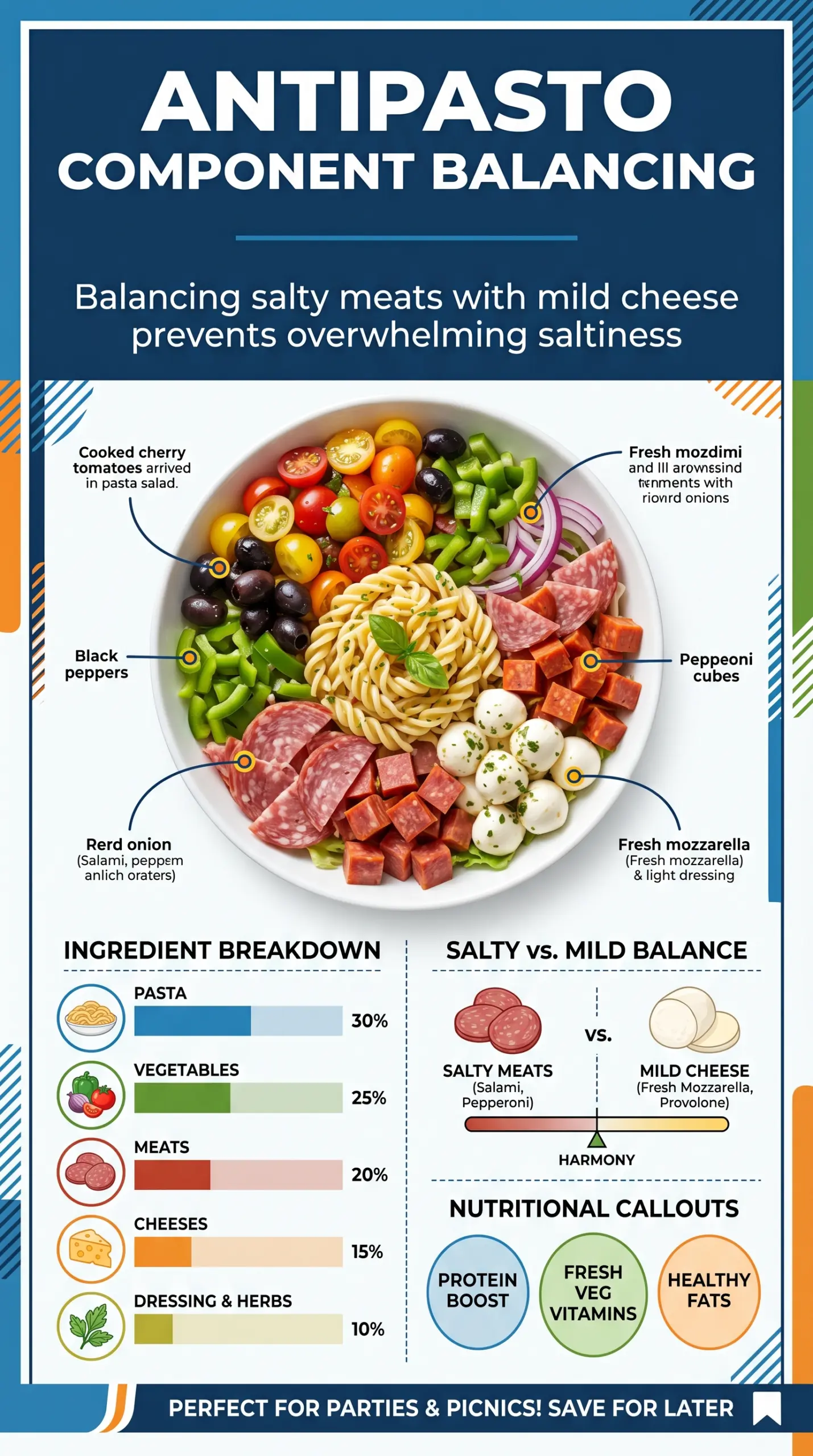
The meats and cheeses aren’t just add-ins; they’re the backbone of the salad. Salami brings salt and a little chew, pepperoni adds spice and fat, and provolone gives you a firmer, milder cheese that stays distinct after chilling. Fresh mozzarella softens the edges of the sharper ingredients, but it’s delicate, so add it gently and don’t overmix once the dressing goes in.
The jarred and marinated vegetables do a lot of work here too. Marinated artichokes, roasted red peppers, pepperoncini, and Kalamata olives bring acidity, which keeps the salad from tasting greasy or flat. If you swap in plain vegetables instead, the salad needs extra dressing or a splash of the marinade from the artichokes to keep that same punch.
- Italian dressing — use one you like enough to eat on its own, because it carries the whole bowl.
- Parmesan — adds a salty, nutty finish that clings to the pasta and helps the dressing taste more seasoned.
- Fresh mozzarella balls — best added whole or halved right before chilling so they keep their soft texture.
- Marinated artichokes — if you can, use the marinade from the jar as part of the seasoning when the salad needs more zip.
Building the Salad So the Dressing Sticks and the Cheese Stays Intact
Cook the pasta past raw, but not soft
Boil the rotini until it’s just tender with a little firmness left in the center. If it’s undercooked, the chilled salad feels chalky; if it’s overcooked, the noodles split when you toss in the meats and cheese. Drain it well, then rinse under cold water until the pasta is fully cool and no longer steaming.
Cut everything to match the pasta
Cube the salami and provolone into bite-size pieces that look close in size to the rotini curls. That keeps every forkful balanced instead of leaving you with giant chunks of meat and bare noodles. Halve the tomatoes, olives, and mozzarella so they’re easy to eat and don’t get crushed while mixing.
Dress it, then let it sit
Add the dressing, Parmesan, and Italian seasoning after everything is combined, then toss gently from the bottom up. You’re coating, not beating the salad, so stop as soon as the pasta looks glossy and the seasonings are distributed. After chilling, give it another toss and add more dressing if the noodles absorbed too much of it.
Make It Meatless Without Losing the Antipasto Feel
Swap the salami and pepperoni for extra artichokes, olives, roasted peppers, and cubes of provolone or a sharp vegetarian cheese. You’ll lose the smoky cured-meat edge, so add a little extra pepperoncini and a touch more Parmesan to keep the salad lively.
Make It Gluten-Free
Use your favorite gluten-free rotini and cook it just to tenderness, since many gluten-free pastas can turn soft fast. Rinse it well and chill it promptly so it doesn’t break apart when you toss it with the heavier antipasto ingredients.
Turn It Into a Heartier Main Dish
Add more pasta and a little extra dressing, then bulk it up with diced cucumber, extra tomatoes, or chickpeas if you want something closer to lunch than a side. The salad still tastes like antipasto, but the extra volume makes it work for a casual dinner too.
Storage and Reheating
- Refrigerator: Keeps for 3 to 4 days in a covered container. The pasta will absorb some dressing, so expect it to taste tighter and less glossy the next day.
- Freezer: Don’t freeze it. The pasta gets mushy, and the mozzarella, tomatoes, and olives all lose the texture that makes the salad worth making.
- Reheating: Serve this cold. If it has thickened in the fridge, let it sit on the counter for 15 to 20 minutes and loosen it with a spoonful or two of dressing before serving.
Answers to the Questions Worth Asking
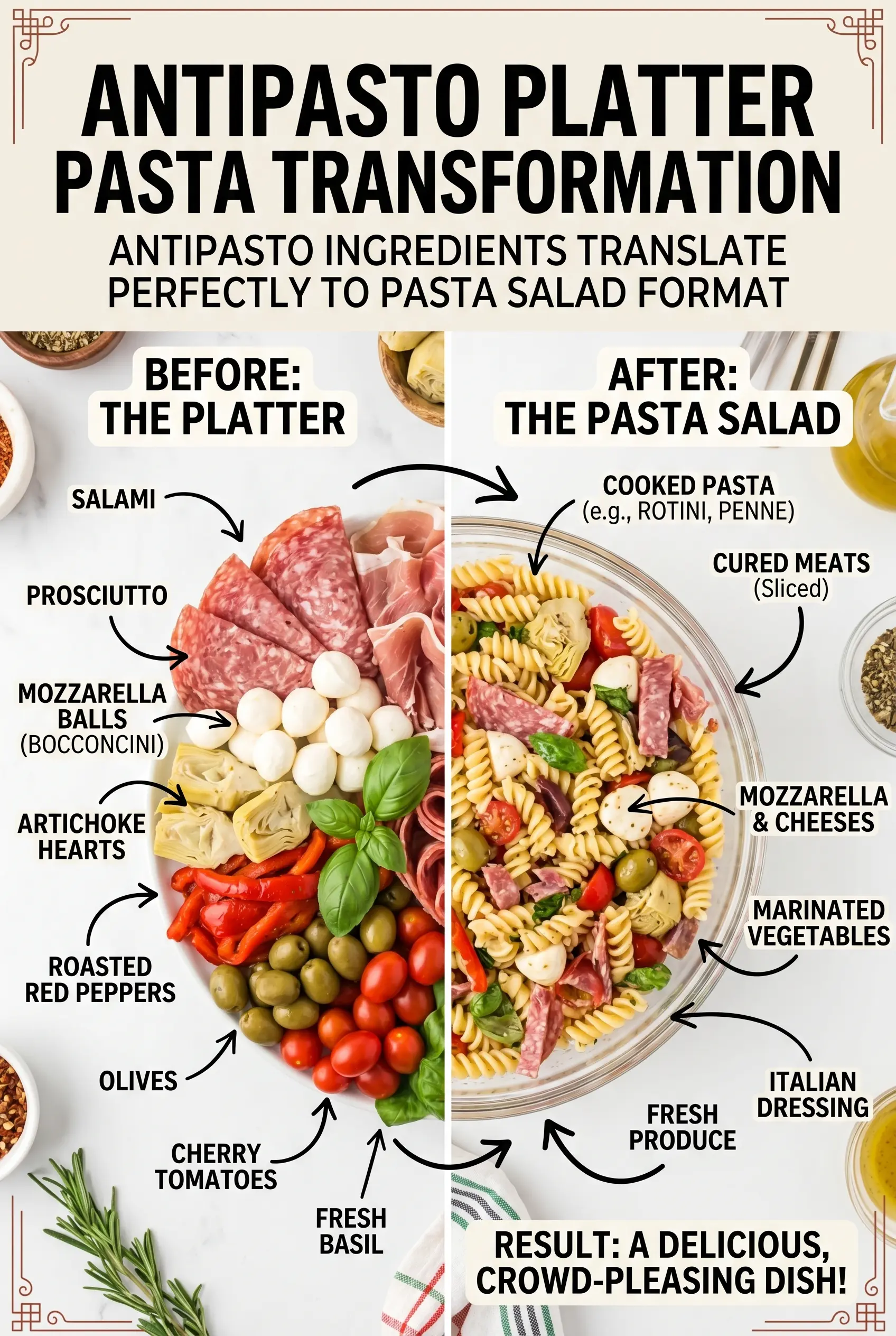
Easy Italian Antipasto Pasta Salad
Ingredients
Method
- Cook rotini pasta according to package directions, until tender. Drain and rinse with cold water to stop the cooking and keep the pasta from clumping.
- Add rotini pasta, salami, pepperoni, provolone, mozzarella, cherry tomatoes, artichokes, roasted peppers, olives, and pepperoncini to a large bowl. Toss gently to distribute everything evenly with a charcuterie-style mix.
- Pour in Italian dressing, then add Parmesan cheese and Italian seasoning. Toss until the pasta is coated and looks glossy, with ingredients visibly suspended throughout.
- Refrigerate the antipasto pasta salad for at least 2 hours to allow flavors to meld. Cover for best results and let it become cold and cohesive before serving.
- Toss again right before serving. Add more Italian dressing if needed to loosen the salad so it stays saucy.