Golden, moist, and sturdy enough to slice cleanly, this gluten-free zucchini bread earns its place on the counter fast. It has the kind of tender crumb that makes people pause for a second bite, then ask what you used to get it that soft without any wheat at all. The top bakes up with a gentle crack and a little caramelized edge, while the inside stays rich and plush instead of gummy or crumbly.
The trick is treating the zucchini like the watery vegetable it is. Squeeze it dry until it’s almost fluffy, or the loaf turns heavy and damp in the middle. Almond flour brings the tenderness, tapioca starch gives the loaf enough structure to hold together, and the yogurt keeps the crumb moist without making it dense. That balance matters more here than in a standard quick bread.
Below, I’m walking through the parts that make this loaf work the way it should, including the cooling time that keeps it from falling apart when you slice it too soon. If you’ve had gluten-free zucchini bread come out soggy, sunken, or oddly gritty before, this version fixes those problems at the source.
I’ve made a lot of gluten-free quick breads, and this one finally sliced cleanly without crumbling. The zucchini stayed moist but not wet, and the loaf held together perfectly after cooling.
Save this gluten-free zucchini bread for a moist, sliceable loaf that doesn’t fall apart after cooling.
The Reason This Loaf Holds Together Instead of Turning Gummy
Gluten-free zucchini bread fails for two reasons: too much moisture and not enough structure. Zucchini carries a lot of water, and almond flour doesn’t behave like wheat flour. If you mix the batter like a cake batter and skip the squeeze, you’ll get a loaf that looks done on top but sinks or feels damp in the center after cooling.
This version leans on tapioca starch to give the crumb some lift and binding power. That matters because almond flour alone can bake up tender but fragile. The eggs and yogurt add richness and help the loaf set cleanly, while the baking soda and baking powder work together to give you a good rise without a heavy texture.
- Dry zucchini is non-negotiable — squeeze it in a clean towel until you’ve pulled out a surprising amount of liquid. That step keeps the loaf from baking up dense.
- Mix just until combined — once the dry ingredients go in, stop as soon as you no longer see streaks. Overmixing makes gluten-free quick breads tight and gummy.
- Let it cool before slicing — this loaf firms up as it rests. If you cut it while it’s hot, it will seem underbaked even when it’s not.
What the Almond Flour, Tapioca, and Yogurt Are Really Doing
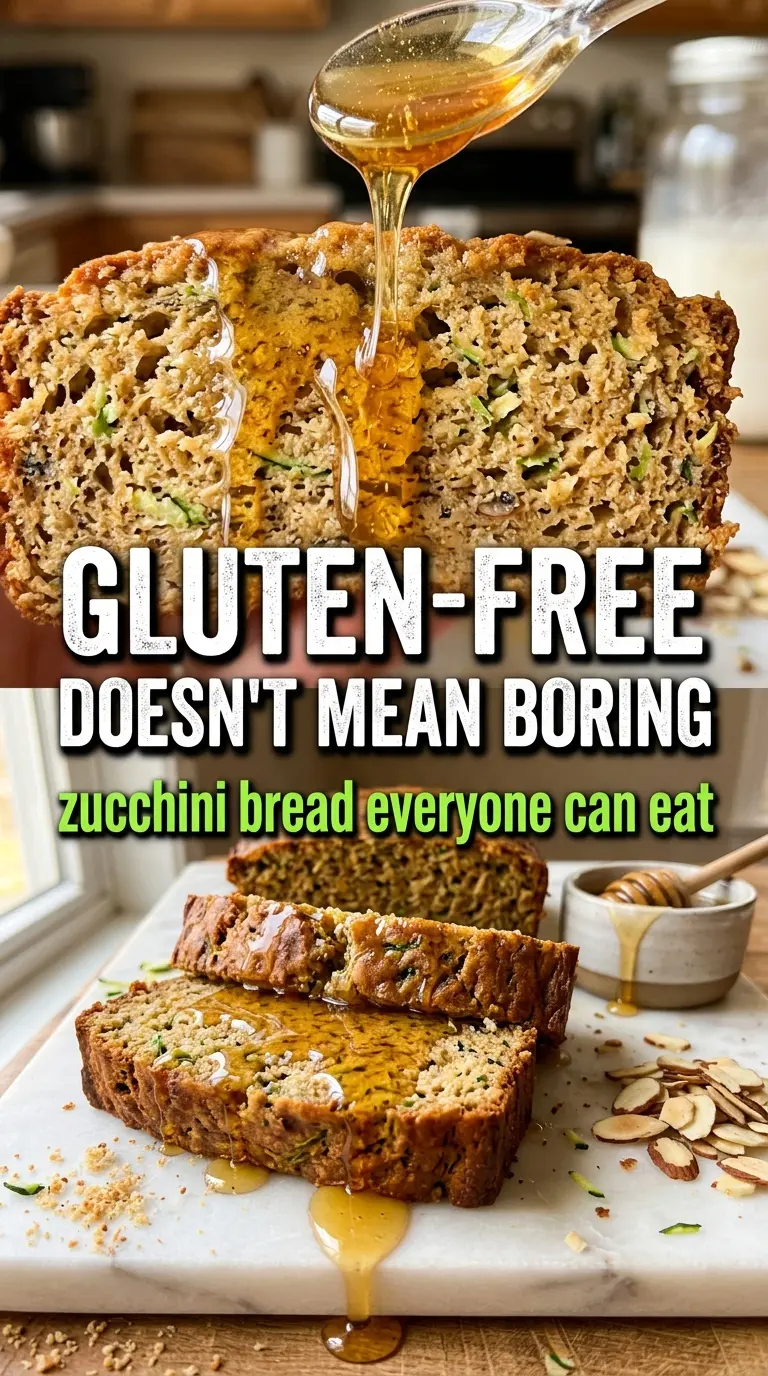
- Almond flour — this gives the loaf its soft, rich crumb and helps keep it naturally gluten-free. Certified almond flour is the best choice here; it’s finer and less gritty than many nut meals. If you swap in a gluten-free all-purpose blend, pick one that includes xanthan gum or another binder.
- Tapioca starch — this is the ingredient that helps the loaf bend without breaking. It adds a little chew and structure, which almond flour needs. If you leave it out, the bread is more likely to crumble.
- Greek yogurt — it adds moisture and a slight tang that keeps the bread from tasting flat. Plain regular yogurt works too, but the batter will be a bit looser. Sour cream is the closest swap if that’s what you have.
- Zucchini — grate it fine so it melts into the batter instead of leaving obvious strands. After squeezing, it should look damp but not wet. Don’t skip the squeeze, even if the zucchini doesn’t seem that watery at first.
- Coconut oil — melted coconut oil gives a soft crumb and a clean, slightly sweet finish. Neutral oil works if that’s easier, but butter changes the texture a little and makes the loaf less tender once chilled.
Building the Batter and Knowing When to Stop
Prep the Pan and Dry the Zucchini First
Start by heating the oven and greasing your loaf pan well, especially in the corners. Then grate the zucchini and squeeze it hard in a towel until the liquid stops dripping out. If you leave excess water in the zucchini, the loaf will need extra bake time and may still sink in the middle after cooling.
Whisk the Dry Ingredients Thoroughly
Combine the almond flour, tapioca starch, baking soda, baking powder, salt, and cinnamon before the wet ingredients go in. You want the leaveners evenly distributed so the loaf rises in a steady, even way instead of with streaks or tunneling. A quick whisk here also breaks up any clumps in the almond flour.
Fold, Don’t Beat
Beat the sugar, eggs, coconut oil, yogurt, and vanilla until smooth, then stir in the zucchini. Add the dry mixture and fold just until no dry pockets remain. If you keep going after that, the batter can turn greasy and tight, and the loaf won’t have that soft, open crumb you want.
Bake Until the Center Springs Back
Pour the batter into the pan and bake until the top is golden and a toothpick inserted in the center comes out clean or with just a few moist crumbs. Almond flour breads need their full bake time, so don’t pull it early just because the top looks browned. If the top darkens too fast, tent it loosely with foil for the last 10 to 15 minutes.
Cool Before You Slice
Let the loaf rest in the pan for about 20 minutes, then move it to a rack. That cooling time isn’t optional here; it’s when the structure finishes setting. If you slice too soon, the crumb will seem wet and fragile even though the bread has baked through.
How to Adapt This Loaf Without Losing the Tender Crumb
Dairy-Free Version
Swap the Greek yogurt for an unsweetened dairy-free yogurt with a thick texture. Coconut yogurt works well, but choose one that isn’t watery or you’ll lose the body that helps this loaf set. The finished bread will still be moist, with a slightly lighter tang.
Gluten-Free All-Purpose Blend Instead of Almond Flour
Use a 1:1 certified gluten-free baking blend in place of the almond flour, and keep the tapioca starch only if the blend doesn’t already include a starch base and binder. The loaf will taste a little less rich and the crumb will be more bread-like, but it still slices nicely. If your blend doesn’t contain xanthan gum, add a small amount according to the package directions.
Chocolate Chip or Walnut Loaf
Fold in the walnuts or chocolate chips at the very end so they don’t sink. Walnuts give the loaf a little crunch and make it feel more breakfast-ready, while chocolate chips push it toward dessert. Keep the total add-ins to about half a cup so the batter still bakes through cleanly.
Storage and Reheating
- Refrigerator: Store tightly wrapped for up to 5 days. The loaf stays moist, but the texture firms up a bit once chilled.
- Freezer: Freezes well. Slice first, wrap the slices individually, and freeze for up to 3 months so you can thaw only what you need.
- Reheating: Warm slices in the toaster oven or microwave just until heated through. Don’t overheat or the almond flour can taste dry and the crumb will go from tender to greasy.
Answers to the Questions Worth Asking
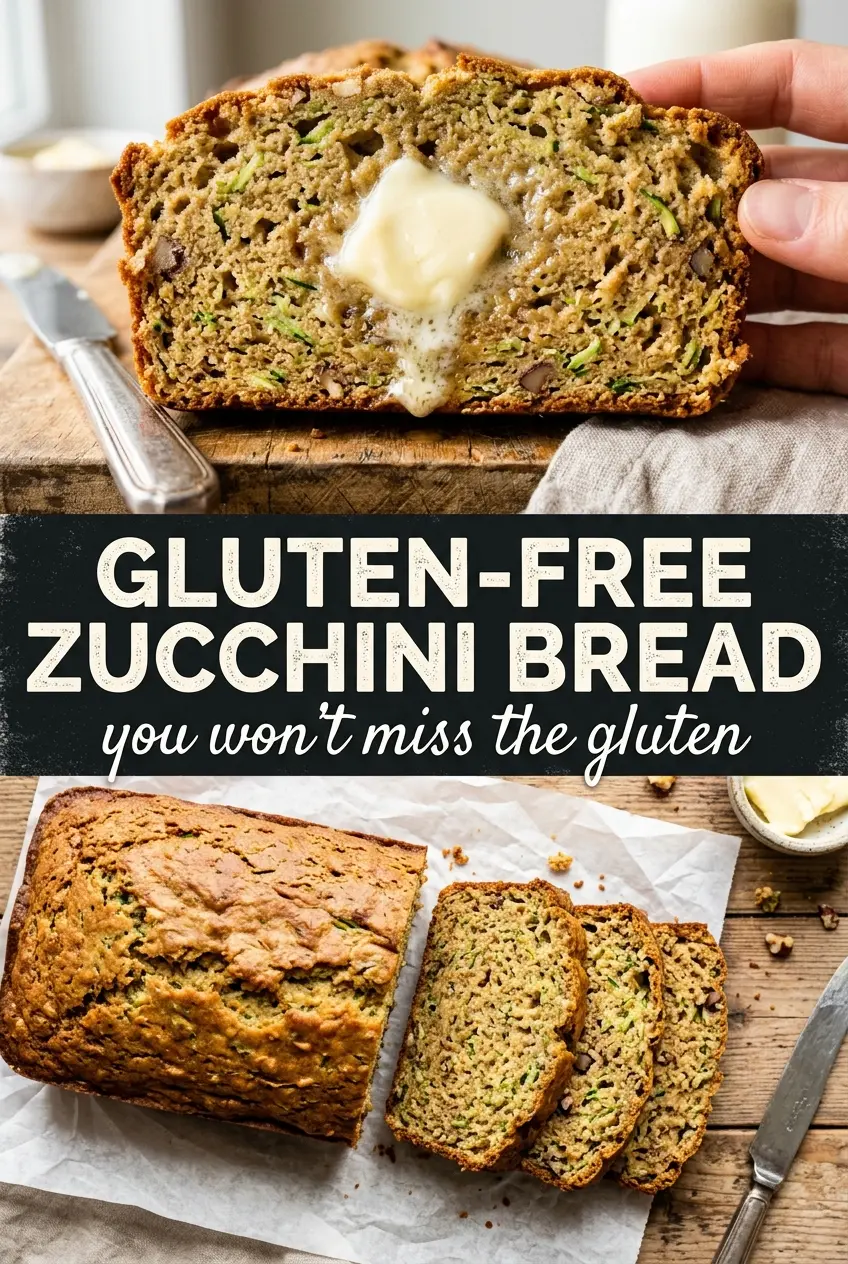
Gluten-Free Zucchini Bread
Ingredients
Equipment
Method
- Preheat the oven to 350°F and grease a 9x5 loaf pan so the batter releases cleanly.
- Whisk almond flour, tapioca starch (if using), baking soda, baking powder, salt, and cinnamon together until evenly combined.
- Beat granulated sugar or coconut sugar, eggs, melted coconut oil, Greek yogurt, and vanilla extract until smooth.
- Stir in the grated, squeezed very dry zucchini so the loaf stays tender without excess moisture.
- Fold the dry ingredients into the wet ingredients just until combined, then fold in walnuts or chocolate chips if using.
- Pour the batter into the loaf pan and bake for 50–60 minutes, until a toothpick comes out clean and the top is golden.
- Keep baking until the center is set because almond-flour zucchini breads need full cooling to hold their crumb.
- Cool for 20 minutes before slicing so the loaf firms as it cools and the slices stay intact.