Healthy zucchini bread earns its place because it stays tender without leaning on a mountain of oil or sugar. The crumb comes out soft and moist, with just enough structure from whole wheat flour and oats to feel hearty instead of heavy. A good loaf should slice cleanly after cooling, hold together on the counter, and still taste like something you’d happily eat for breakfast.
The trick here is balance. Zucchini brings moisture, but it also brings water that can turn a loaf gummy if you skip the squeeze step. Honey or maple syrup adds sweetness with a gentler finish than white sugar, while applesauce helps keep the crumb plush without making the bread greasy. That mix gives you a loaf with a golden crust, a tender center, and a flavor that gets better after it sits overnight.
Below, I’ve included the parts that matter most: how to keep the loaf from sinking in the middle, why the zucchini prep changes the texture, and a few smart swaps if you want to adjust this loaf for your pantry.
The loaf baked up moist but not dense, and the oats gave it a little texture that made it feel more like a breakfast bread than cake. I also loved that it wasn’t overly sweet.
Save this healthy zucchini bread for the mornings when you want a tender whole-grain loaf with a golden crust and just enough natural sweetness.
The Reason This Loaf Stays Moist Without Turning Heavy
Zucchini bread goes wrong in one of two ways: it bakes up dry and crumbly, or it turns damp and gummy in the center. The difference usually comes down to moisture control and flour balance. Whole wheat flour and oats need enough liquid to stay tender, but they also absorb more than white flour, so the batter needs the right ratio or the loaf gets dense before the middle finishes baking.
This version uses applesauce and a modest amount of honey or maple syrup to keep the crumb soft without relying on a lot of oil. The zucchini should be squeezed dry after grating; if it goes in wet, the loaf can sink after baking and leave a slick, underdone layer through the center. A loaf pan also matters here. A 9×5 pan gives the batter enough room to rise without spilling over the edges or baking up squat.
What Each Ingredient Is Doing in This Loaf
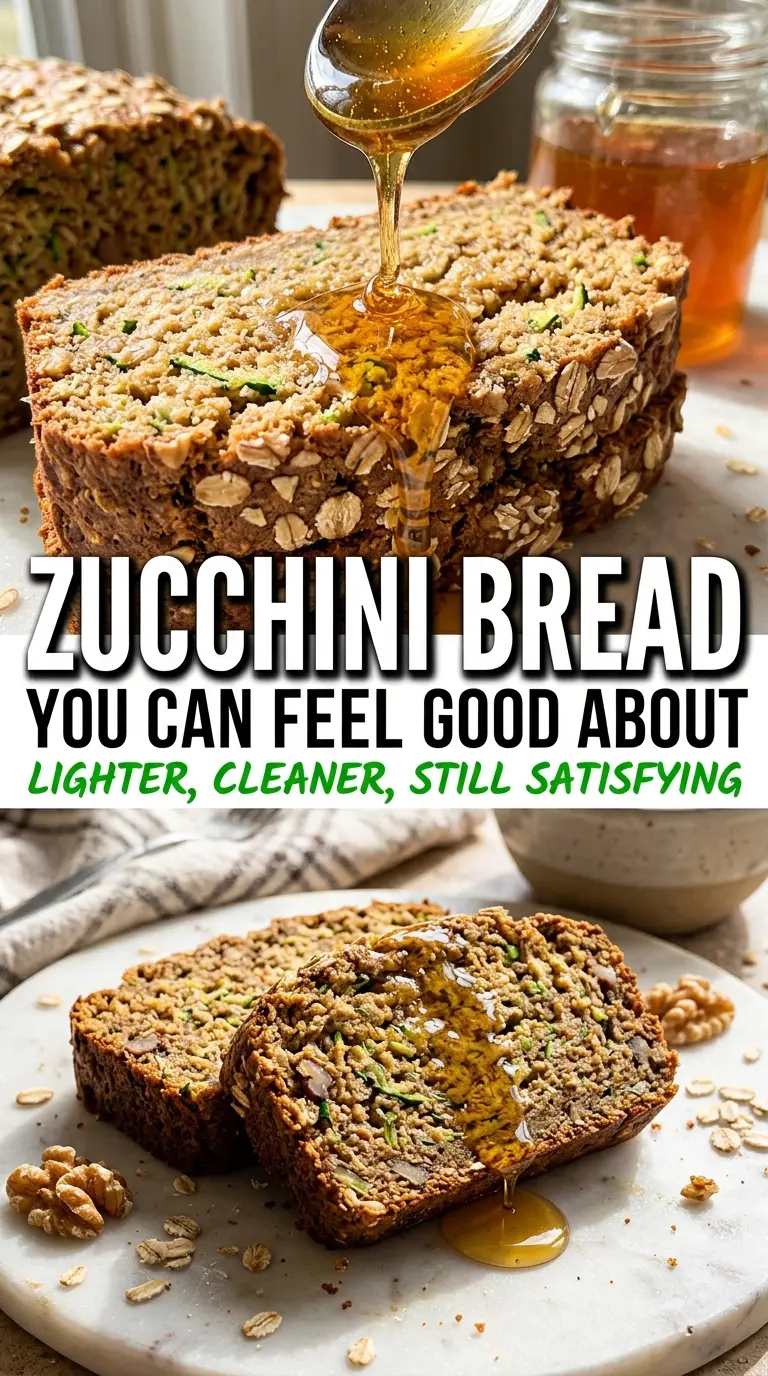
- Whole wheat flour — This brings the hearty, nutty backbone of the loaf. It absorbs more liquid than all-purpose flour, which helps the bread feel substantial, but it can dry things out if you use it alone.
- All-purpose flour — The small amount of white flour softens the texture and keeps the crumb from getting too tight. If you swap it for more whole wheat, the loaf will taste denser and a little drier.
- Rolled oats — Oats give the bread a rustic texture and help it stay satisfying at breakfast. Quick oats can work in a pinch, but they disappear more into the batter and give you less chew.
- Honey or maple syrup — Either one works here. Honey gives a rounder, floral sweetness and browns a little more at the edges; maple syrup adds a deeper, woodsy note. Use the one you already like in baked goods.
- Applesauce — This stands in for extra oil and keeps the loaf soft. Unsweetened is best so the sweetness stays balanced and the bread doesn’t tip into dessert territory.
- Zucchini — Freshly grated zucchini is the whole point, but it needs to be squeezed dry. That one step keeps the crumb from turning soggy and helps the loaf bake through evenly.
- Walnuts or chocolate chips — Both are optional, but they add contrast. Walnuts bring crunch and a little bitterness; chocolate chips push the loaf toward snack cake, so use them if that’s the direction you want.
Building the Batter So the Center Bakes Through
Mix the dry ingredients first
Whisk the flours, oats, baking soda, baking powder, salt, and cinnamon together until the oats are evenly distributed. This keeps the leavening from clumping in one spot, which is how you end up with a loaf that rises unevenly or tastes a little soapy in one bite. The oats should look scattered through the flour, not sitting in a pile at the bottom of the bowl.
Bring the wet ingredients together smoothly
Whisk the honey, eggs, coconut oil, applesauce, and vanilla until the mixture looks glossy and fully blended. If the coconut oil is too hot, it can cook the eggs into little flecks; if it’s too cool, it may harden into tiny bits. Melt it, then let it cool until it’s warm but not steamy before mixing.
Fold the batter just until it comes together
Stir the dry ingredients into the wet with a spatula and stop as soon as you no longer see streaks of flour. Overmixing develops the wheat flour and makes the loaf tough, especially with whole grains in the batter. Fold in the zucchini, and then the walnuts or chocolate chips if you’re using them. The batter should look thick and scoopable, not runny.
Bake until the center is set, not just the top
Scrape the batter into the prepared loaf pan and smooth the top. Bake until a toothpick comes out clean from the center and the top feels springy when you press it lightly. If the loaf is browning too quickly but still needs time, tent it loosely with foil for the last 10 to 15 minutes. Pull it too early and the middle will sink as it cools.
How to Adjust This Loaf Without Losing the Texture
Make it dairy-free
This loaf is already dairy-free as written, so you don’t need to change anything for that diet. The coconut oil keeps the texture soft without butter, and the applesauce helps carry the moisture all the way through the crumb.
Swap the sweetener based on what you have
Honey gives the loaf a slightly richer flavor and a more tender edge, while maple syrup keeps it a touch lighter and less floral. Either one works at the same amount, but don’t swap in granulated sugar without adjusting the liquid, or the batter will lose the softness that makes this bread work.
Go nut-free without changing the base recipe
Leave out the walnuts and the loaf still bakes up with plenty of structure. If you want a little extra texture, use more oats on top before baking instead of adding another mix-in that could weigh the batter down.
Storage and Reheating
- Refrigerator: Store tightly wrapped for up to 5 days. The crumb stays moist, and the flavor gets deeper after the first day.
- Freezer: This freezes well. Slice it first, wrap individual pieces, and freeze for up to 3 months so you can pull out just what you need.
- Reheating: Warm slices in a toaster oven or in a dry skillet over low heat. The common mistake is microwaving too long, which makes the bread rubbery instead of soft.
Answers to the Questions Worth Asking
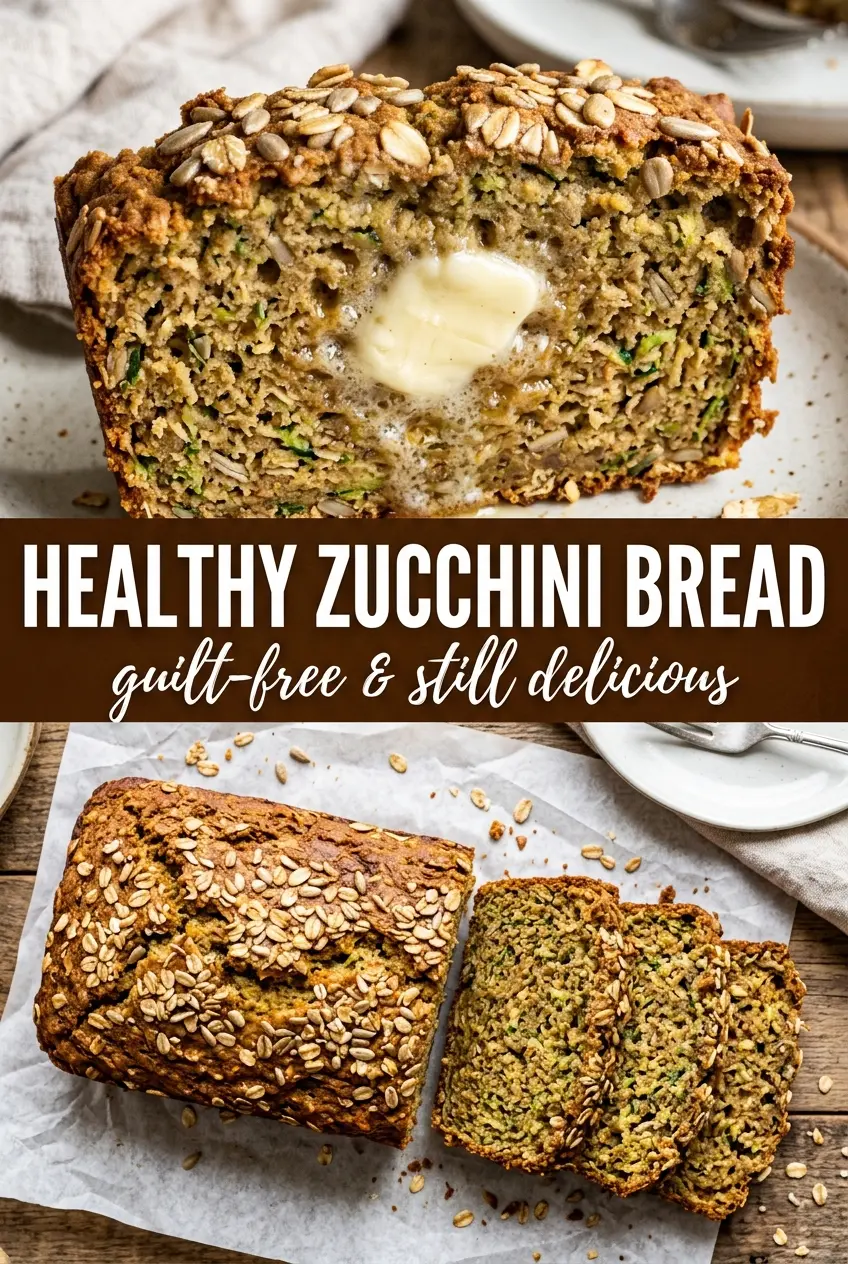
Healthy Zucchini Bread
Ingredients
Equipment
Method
- Preheat the oven to 350°F and grease a 9x5 loaf pan with a light coating, so the loaf releases cleanly after baking.
- Whisk whole wheat flour, all-purpose flour, rolled oats, baking soda, baking powder, salt, and cinnamon together until evenly combined.
- Whisk honey or maple syrup, eggs, melted coconut oil, unsweetened applesauce, and vanilla extract until smooth and glossy.
- Stir in the grated zucchini that has been squeezed dry, distributing it through the wet mixture.
- Fold the dry ingredients into the wet ingredients just until no dry streaks remain, adding walnuts and dark chocolate chips if using.
- Pour the batter into the prepared loaf pan and tap it lightly on the counter to level the top (look for an even surface).
- Bake at 350°F for 50–58 minutes, until a toothpick inserted in the center comes out clean or with only a few moist crumbs.
- Cool the loaf for 15 minutes before slicing, so the crumb sets and holds together.
- Slice and serve warm or at room temperature, noting it tastes even better the next day for better flavor and texture (cue: crumb looks tender and cohesive).