Pasta salad gets a lot more interesting when the bowl isn’t just pasta and dressing. This high-protein version eats like a full meal: tender chickpea or lentil pasta, juicy chicken, creamy mozzarella, and chickpeas all hold onto the Italian dressing in a way that keeps every bite substantial. The vegetables stay crisp, the pasta stays firm, and the whole thing tastes better after a short chill, not worse.
The trick is using protein pasta that can stand up to refrigeration without turning mushy, then cooling it fully before it meets the cheese and dressing. That cold pasta keeps the mozzarella from softening too quickly and helps the dressing cling instead of sliding to the bottom of the bowl. I also like the mix of chicken and chickpeas here because you get two kinds of protein with different textures, which makes the salad feel hearty instead of heavy.
Below, I’ve included the small details that matter most: which ingredient can be swapped without ruining the texture, why the salad needs that hour in the fridge, and how to adjust the dressing so it stays bright and coated instead of dry.
The pasta stayed pleasantly firm after chilling, and the dressing soaked in just enough without making everything soggy. I added a little extra Parmesan before serving and it tasted like a meal, not a side salad.
Pin this high-protein Italian pasta salad for meal prep lunches that stay creamy, chilled, and satisfying all week.
The Chilling Step That Keeps Protein Pasta Salad from Going Soft
Protein pasta behaves a little differently from regular pasta. Chickpea and lentil versions can go from pleasantly firm to pasty if they sit in hot water too long, and they also keep absorbing moisture after draining. That’s why rinsing it cold matters here. It stops the cooking fast and gives you a cleaner texture before the dressing goes on.
The other thing that keeps this salad from getting soggy is the order of assembly. Cool pasta goes in first, then the sturdy ingredients, then the dressing. If you toss warm pasta with mozzarella and tomatoes, you’ll end up with a slick bowl and softened cheese instead of distinct bites. Letting it rest in the fridge gives the pasta time to soak in flavor without collapsing.
What Each Ingredient Is Actually Doing in the Bowl
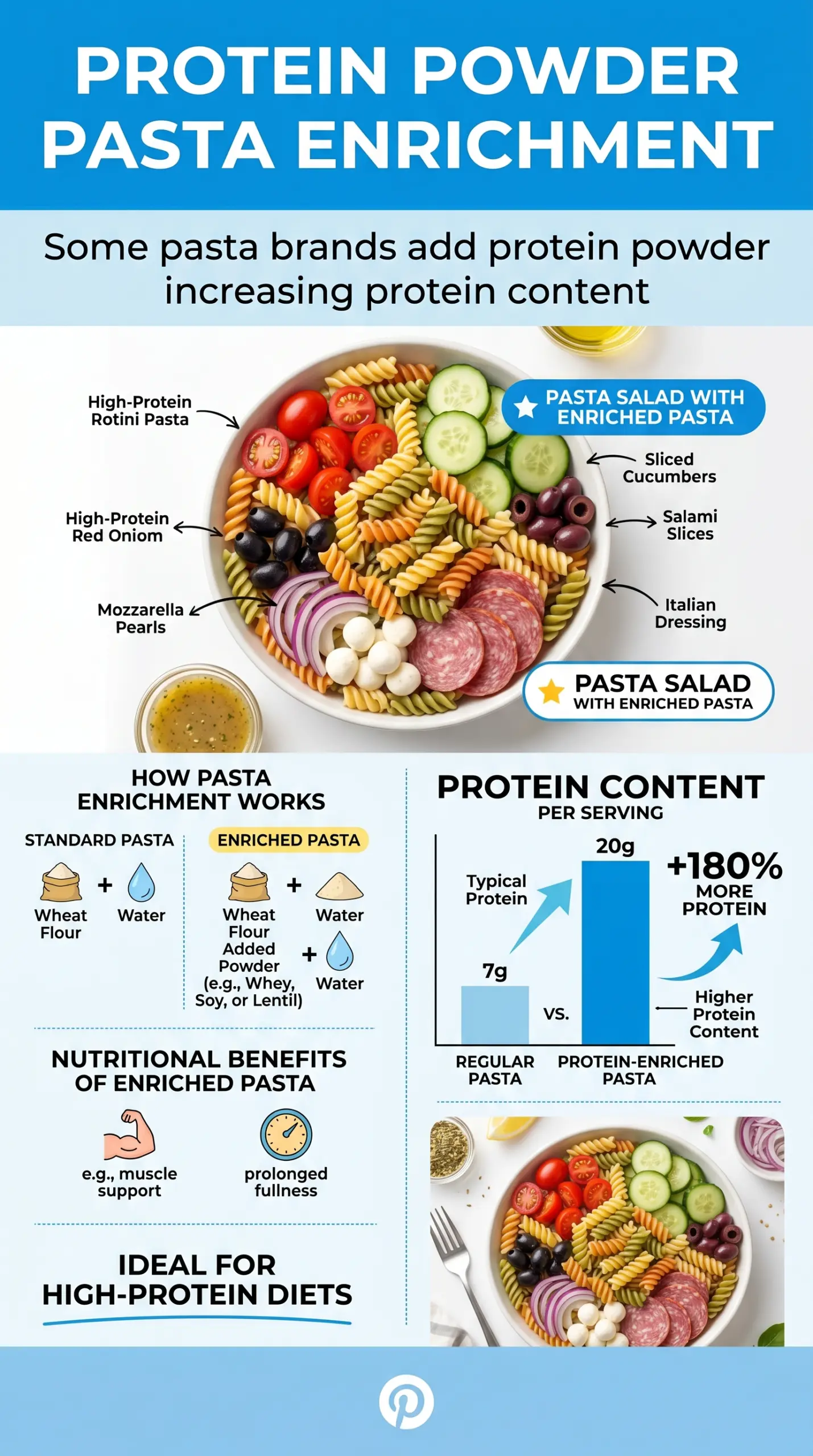
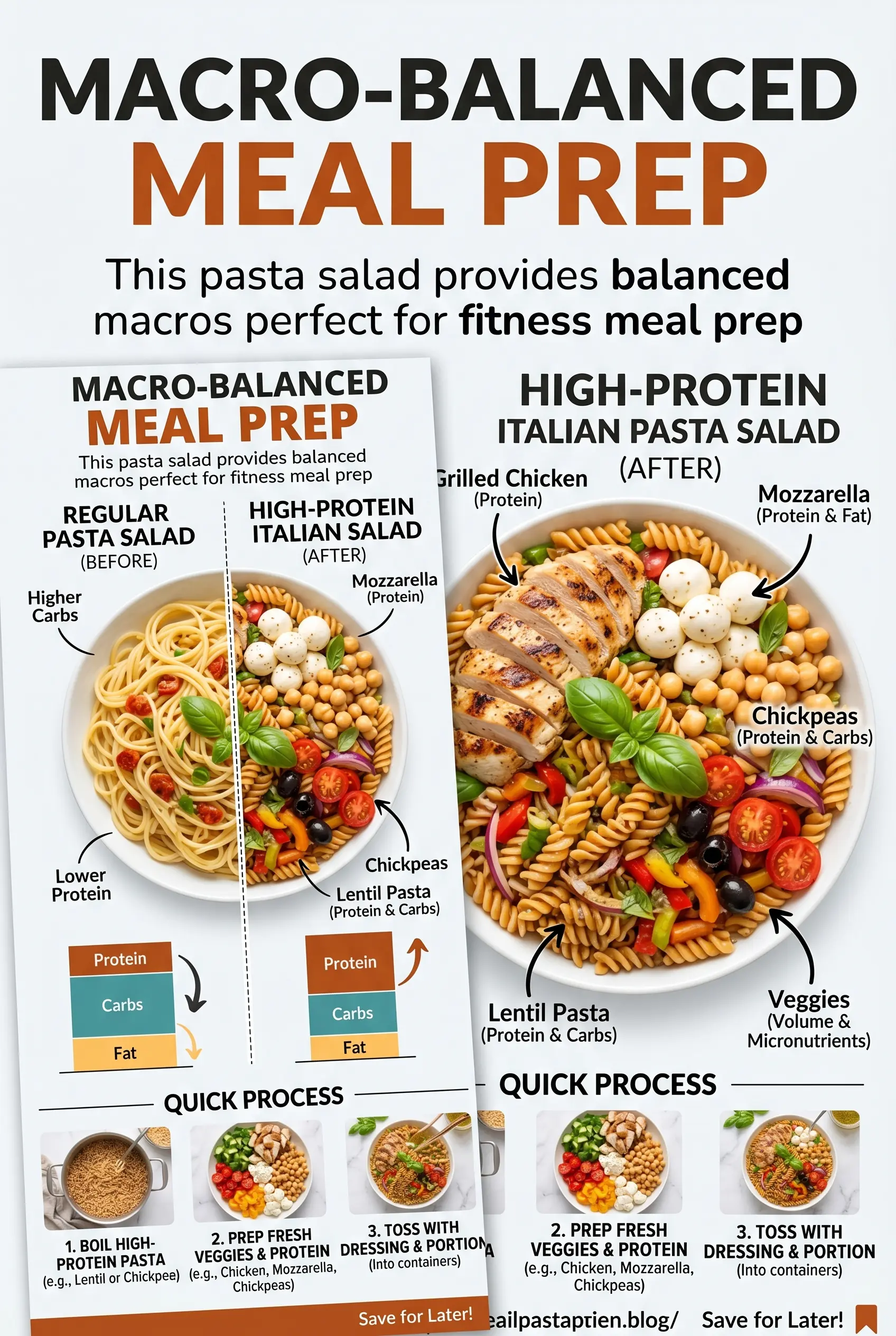
- Protein pasta — This is the base that makes the salad filling enough for lunch or dinner. Chickpea pasta holds its shape a little better; lentil pasta has a firmer bite. Either works, but don’t overcook it by even a minute, because it tightens up as it chills.
- Grilled chicken — Use plain or simply seasoned chicken breast so the dressing can do the heavy lifting. Leftover chicken works well as long as it’s not heavily sauced. Dice it small enough to mix evenly through the pasta.
- Chickpeas — They add extra protein and a soft, nutty bite that works well against the firmer pasta. Rinse them thoroughly so the canning liquid doesn’t muddy the dressing. If you skip them, the salad still works, but it loses some of that hearty bulk.
- Mozzarella — Cubed mozzarella gives creamy pockets throughout the salad. Low-moisture mozzarella is the safest choice if you want clean cubes that stay intact after chilling. Fresh mozzarella can work, but it sheds more liquid and softens faster.
- Italian dressing, Parmesan, and Italian seasoning — The dressing coats the pasta, the Parmesan adds salt and depth, and the seasoning sharpens the herb notes. A bottled Italian dressing is fine here, but pick one with enough acidity to brighten the chickpeas and chicken. If it tastes flat before chilling, it’ll taste flatter after.
- Cherry tomatoes and cucumber — These keep the salad fresh and give it crunch. Halve or dice them small enough that their juices don’t overwhelm the bowl. Seed the cucumber if it’s watery.
Building the Salad So the Dressing Stays on the Pasta
Cook the Pasta Just Past Tender
Cook the protein pasta according to the package directions, but stop when it’s tender with a little chew left at the center. That slight firmness matters because the pasta will keep tightening as it cools. Drain it well, then rinse under cold water until it’s completely cool to the touch. If you leave it even slightly warm, it will start absorbing the dressing unevenly and can clump.
Mix the Heavier Ingredients First
Add the cooled pasta, chicken, mozzarella, chickpeas, tomatoes, and cucumber to a large bowl. Toss these together before adding the dressing so the proteins and vegetables are evenly distributed. If the bowl looks too crowded, use a bigger one than you think you need; cramped mixing is how you end up with broken pasta and uneven seasoning.
Dress, Chill, and Rebalance
Pour in the Italian dressing, Parmesan, and Italian seasoning, then toss until everything is coated. Season with salt and pepper only after the dressing is in the bowl, because the cheese and dressing already bring salt. Chill for at least an hour so the pasta can absorb the flavor. Right before serving, taste again and add a splash more dressing if the pasta has soaked up more than you expected.
How to Adapt This for Different Diets and Meal Prep Plans
Dairy-Free Version
Swap the mozzarella for firm dairy-free mozzarella-style cubes or leave it out and add extra chickpeas. The salad still holds up because the dressing and chicken bring enough body, but it will lose the creamy pockets that make the original version feel richer.
Gluten-Free and High-Protein Already
Use a certified gluten-free chickpea or lentil pasta and check that your Italian dressing is gluten-free. The texture may be a little firmer than wheat pasta, so don’t overcook it. That firmer bite is part of what keeps the salad from turning soft after chilling.
Vegetarian Meal Prep Bowl
Skip the chicken and add another can of chickpeas or some diced roasted red peppers for more texture. You’ll lose some of the savory heft from the chicken, so a little extra Parmesan or a stronger dressing helps keep the salad balanced.
Storage and Reheating
- Refrigerator: Store covered for up to 4 days. The pasta will absorb some dressing as it sits, so expect the salad to look a little drier on day two.
- Freezer: Don’t freeze it. The pasta, cucumber, and mozzarella all change texture in ways that make the salad watery and grainy after thawing.
- Reheating: Serve it cold. If it tightens up in the fridge, stir in a spoonful or two of Italian dressing before serving instead of warming it, since heat softens the vegetables and makes the cheese greasy.
Answers to the Questions Worth Asking
High-Protein Italian Pasta Salad
Ingredients
Equipment
Method
- Cook the protein pasta according to package directions, then drain and rinse with cold water to stop cooking and keep the pasta firm.
- Spread the rinsed pasta on a sheet pan to cool slightly while you prep the remaining ingredients.
- Combine the pasta, diced grilled chicken, cubed mozzarella, drained chickpeas, halved cherry tomatoes, and diced cucumber in a large bowl.
- Add the Italian dressing, grated Parmesan, and Italian seasoning, then toss until everything is evenly coated.
- Season with salt and pepper to taste, tossing again so the seasoning is distributed throughout the salad.
- Refrigerate the salad for at least 1 hour before serving so the flavors meld and the dressing lightly absorbs into the pasta.
- Taste and adjust the dressing if needed, then serve chilled.