Silky, caramel-forward ice cream with a salty finish is exactly what this cottage cheese version delivers, and it earns its keep because it tastes indulgent without needing an ice cream maker. The texture lands somewhere between soft-serve and scoopable gelato if you blend it long enough and give it the right freeze time. The cottage cheese disappears into the base, so what you taste first is brown sugar, caramel, vanilla, and that little spark of sea salt at the end.
The part that makes this work is taking the blending step seriously. Cottage cheese needs more than a quick whirl; it has to be processed until the curds are completely gone or the final texture will turn grainy after freezing. Brown sugar deepens the caramel note, while a small amount of cream cheese adds body and keeps the ice cream from tasting icy. If your caramel sauce is thick, that’s fine — it softens in the blender and helps carry the flavor through the whole batch.
Below, I’ve included the small adjustments that matter most, plus the storage note that keeps the texture scoopable instead of rock hard. There’s also a quick guide for dialing the salt and caramel up or down depending on how bold you want the finish.
I blended it a full 2 minutes like you said and it froze up creamy, not icy. The caramel flavor came through even after freezing, and the flaky salt on top made it taste like a real dessert.
Like this salted caramel cottage cheese ice cream? Save it to Pinterest for the nights when you want a creamy frozen dessert with real caramel flavor and a salty finish.
The Blending Step That Keeps This Ice Cream Creamy After Freezing
Most cottage cheese ice creams fail for one reason: the base never gets fully smooth before it hits the freezer. Once those curds set, they stay set, and you end up with a frozen mixture that tastes fine but eats like tiny ice crystals. The fix is simple, but it matters. Blend until the mixture looks glossy and completely uniform, with no visible grain.
The second thing that helps is balancing sweetness and salt before freezing. Cold dulls flavor, so the base should taste a touch sweeter and saltier than you want the finished scoop to taste. That extra edge fades into a round, caramelized finish after it freezes.
- Long blending time — This is what turns cottage cheese into an actual ice cream base instead of a frozen dairy mix. Two minutes is the floor, not the ceiling, if your blender needs it.
- Brown sugar — This gives you a deeper caramel note than white sugar alone. It also helps the texture feel softer straight from the freezer.
- Sea salt — Use a measured amount in the base, then finish with flaky salt on top. That layered salt is what makes the caramel taste bigger.
- Cream cheese — Optional, but useful if you want a richer spoonful and a less icy finish. A tablespoon is enough to matter without making the base taste tangy.
Why These Ingredients Taste More Like Real Caramel Ice Cream Than You’d Expect
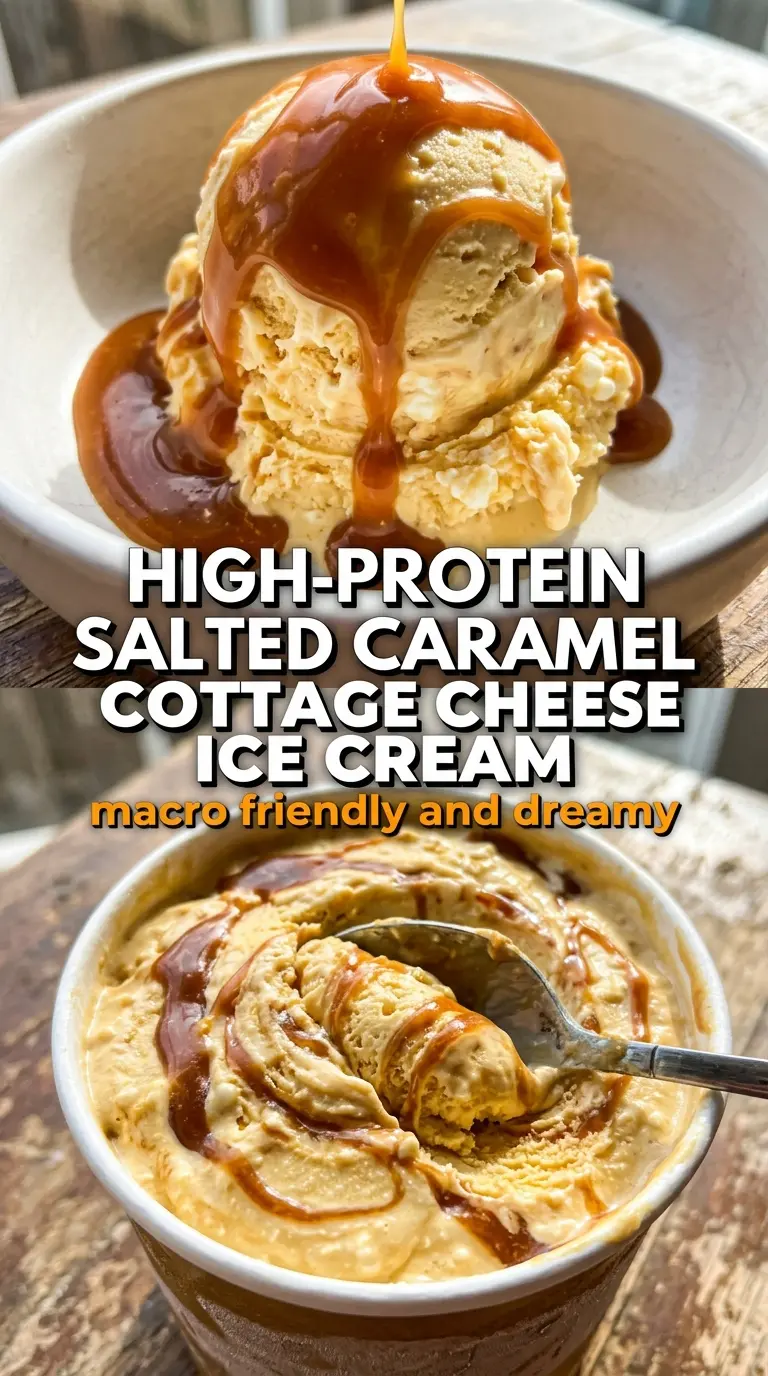
- Full-fat cottage cheese — Use full-fat here. The fat gives you a smoother freeze and a richer mouthfeel, and low-fat cottage cheese tends to freeze harder and taste flatter.
- Caramel sauce — This is the main flavor, so use one you’d actually eat from a spoon. If your sauce is very thick, blend it a little longer so it distributes evenly.
- Brown sugar — Think of this as the ingredient that makes the caramel note deeper and more cooked. You can reduce it slightly if your caramel sauce is very sweet, but don’t cut it out entirely.
- Vanilla extract — Vanilla rounds out the dairy and makes the caramel taste warmer. It won’t stand out on its own, but you’d notice if it were missing.
- Flaky sea salt — This is for the finish, not the freezer base. The texture matters here; fine salt disappears, but flaky salt gives you little bright bursts against the creaminess.
Freezing It Long Enough Without Turning It Icy
Blending Until the Base Is Completely Smooth
Add the cottage cheese, caramel sauce, brown sugar, vanilla, sea salt, and cream cheese to the blender and let it run until the mixture looks silky and even. Stop the blender and scrape the sides once or twice if needed, then blend again. If you can still see curds, keep going. The final texture depends on this stage more than anything else.
Tasting Before It Freezes
Dip a spoon in and taste the base before it goes into the freezer. It should taste a little sweeter and a little saltier than you think it needs to be. Cold mutes both caramel and salt, so an underseasoned base tastes bland once frozen. Adjust in small amounts so you don’t push it too far in either direction.
Freezing for Scoopable Texture
Pour the mixture into a freezer-safe container and freeze it for about 4 hours. A shallow container freezes more evenly than a deep one, which helps the edges and center set at the same pace. If it freezes solid overnight, let it sit on the counter for 5 to 10 minutes before scooping instead of attacking it with a bent spoon.
How to Adjust This Without Losing the Point of the Recipe
Dairy-Free Version
This recipe depends on dairy for texture, so a true dairy-free swap changes the result. If you need one, use a thick coconut yogurt or a plant-based Greek-style yogurt and expect a softer, more tangy ice cream with less of that classic caramel body. You’ll still want the caramel sauce and salt, but the finish will taste lighter and less rich.
Lower-Sugar Caramel Flavor
Cut the brown sugar back a little and lean on a good caramel sauce for the main sweetness. The tradeoff is a firmer freeze and a slightly less rounded caramel note, so let the ice cream sit a few extra minutes before serving.
Extra-Rich Dessert Bowl
Use the optional cream cheese and finish with an extra drizzle of caramel plus flaky salt. This version freezes a little firmer, but it eats the most like a traditional premium ice cream because the fat level is higher and the flavor lingers longer.
Storage and Reheating
- Refrigerator: Not applicable for the finished ice cream. Once blended, it should go straight to the freezer.
- Freezer: Keeps best for up to 2 weeks in a tightly sealed container. After that, the texture gets icier and the caramel flavor softens.
- Reheating: Let it sit at room temperature for 5 to 10 minutes before scooping. The common mistake is trying to force it out of the container too early, which just breaks the scoop and makes the texture seem worse than it is.
Answers to the Questions Worth Asking
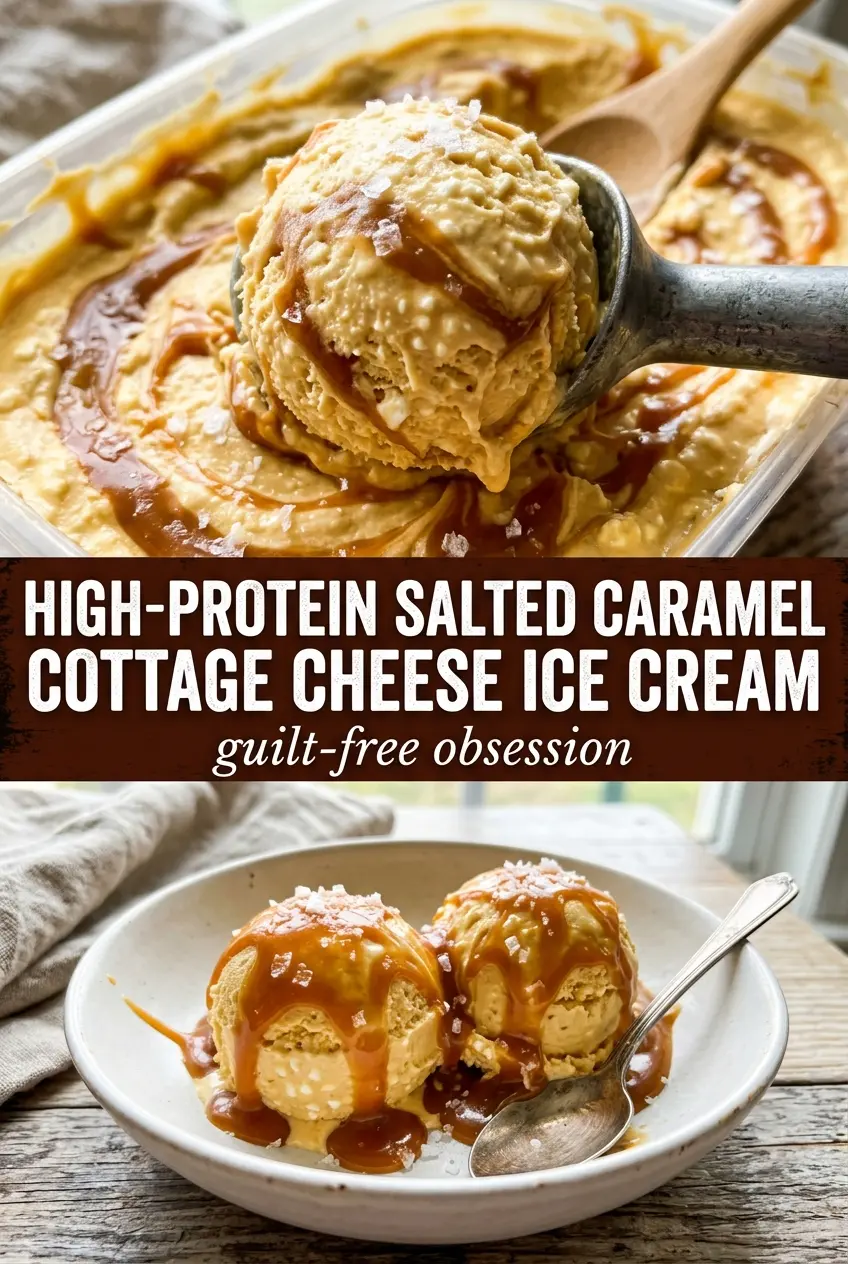
High-Protein Salted Caramel Cottage Cheese Ice Cream
Ingredients
Equipment
Method
- Add full-fat cottage cheese, caramel sauce, brown sugar, vanilla extract, sea salt, and cream cheese to a blender or stand mixer and blend on high for at least 2 minutes until completely smooth with no lumps left.
- Stop and taste, then adjust caramel sauce for sweetness and sea salt for saltiness until it tastes balanced.
- Pour the blended mixture into a freezer-safe container and freeze for 4 hours, until firm enough to scoop.
- When ready to serve, remove the container and let it sit for 5 minutes so the texture softens slightly.
- Spoon into bowls and drizzle with extra caramel sauce and add a pinch of flaky sea salt on top before eating.