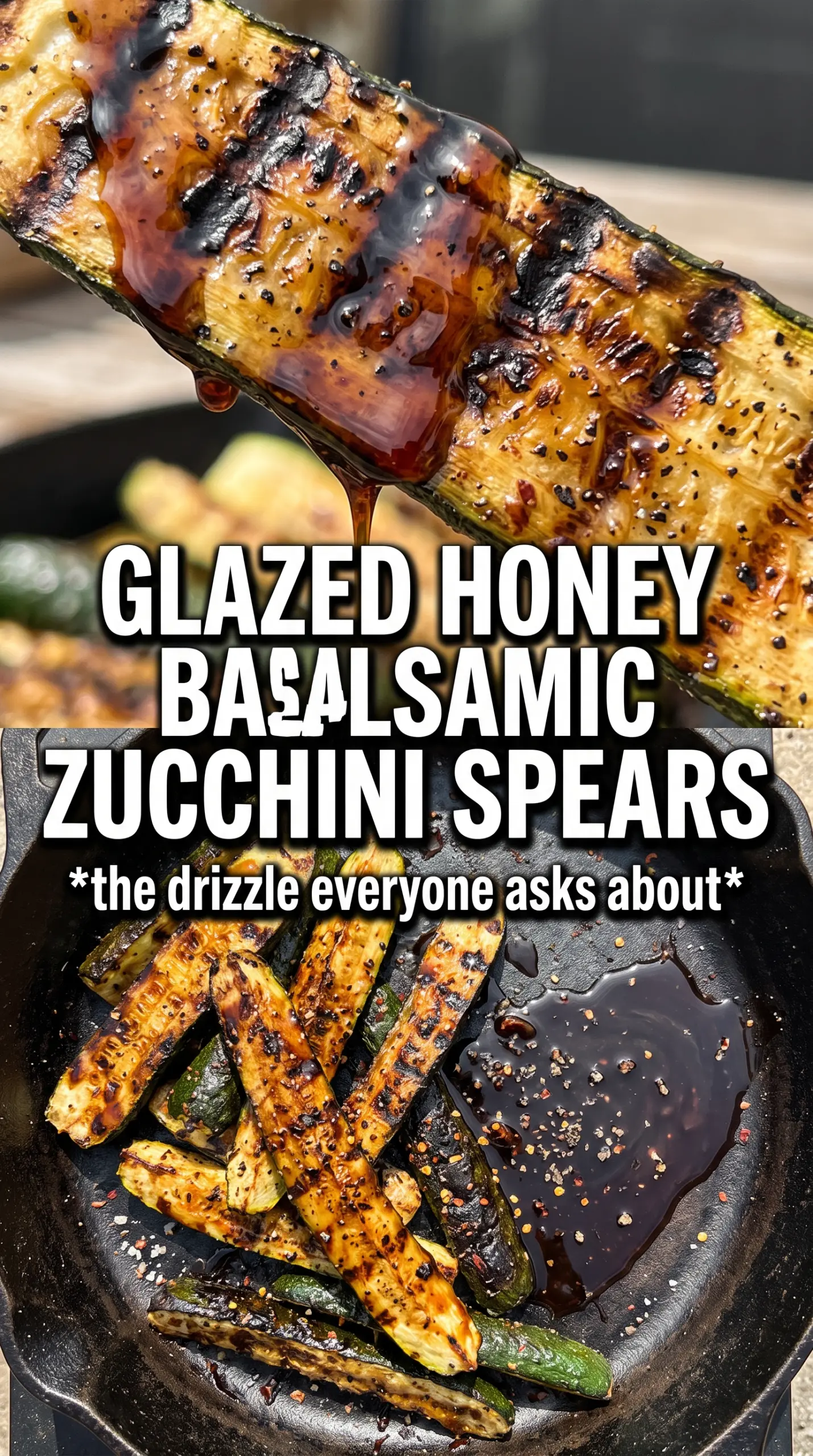
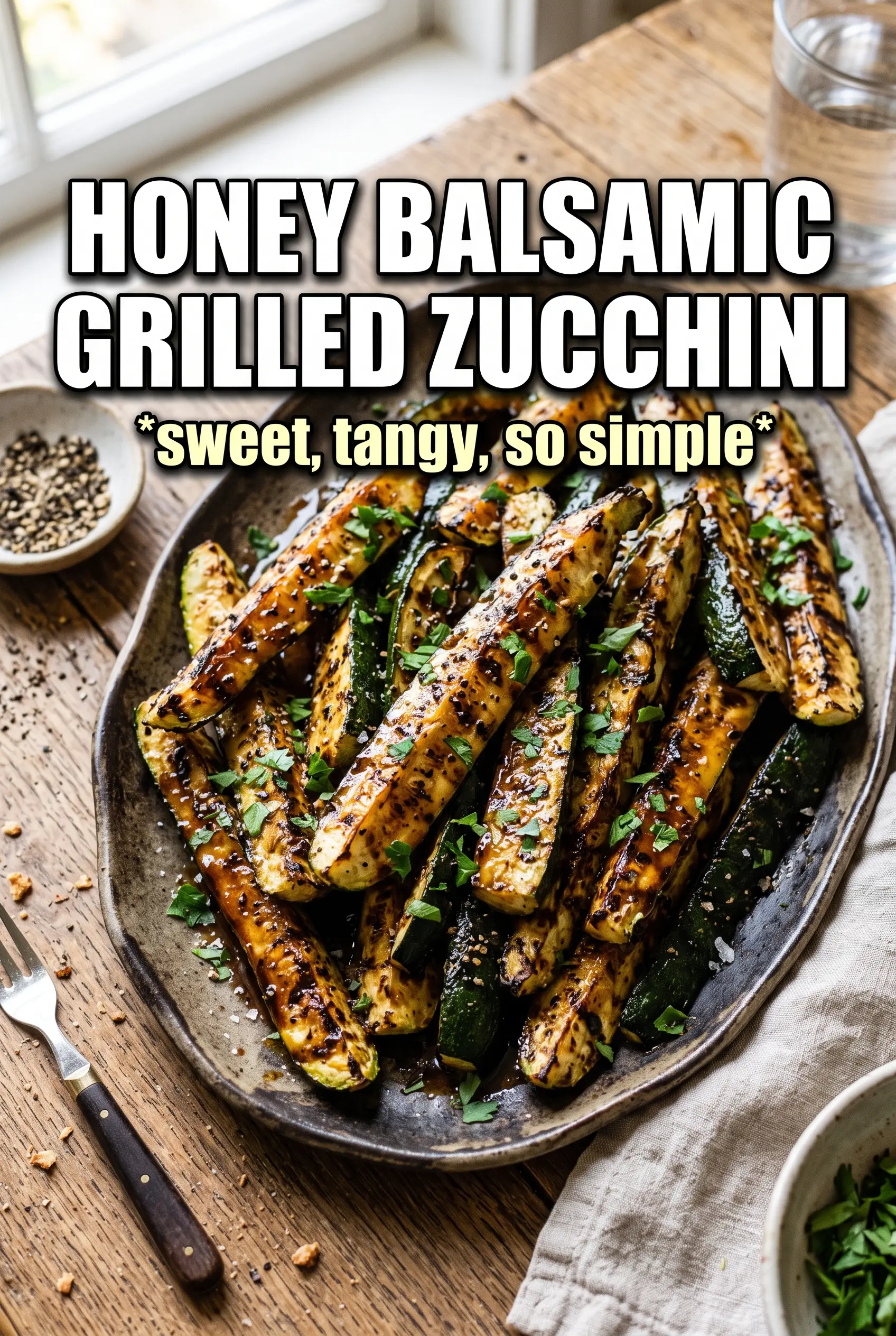
Honey balsamic grilled zucchini gets its appeal from the contrast: tender zucchini with smoky char marks, then a sticky glaze that turns glossy, dark, and just sharp enough to keep every bite from tasting flat. It’s the kind of side dish that disappears fast because it does more than fill space on the plate. The zucchini tastes cooked, but it still has enough structure to pick up the glaze without collapsing into softness.
The trick is in the balance and the timing. Honey helps the balsamic cling and caramelize, but it also means the grill can go from nicely browned to scorched in a hurry, so the heat needs to be hot enough for marks but not raging. Letting the zucchini sit in the glaze for a short marinate gives the surface time to season, and brushing on a little more at the end builds that lacquered finish you want on the platter.
Below, I’ll walk through the small details that keep the glaze from burning and the zucchini from turning limp, plus a few easy swaps if you need to work with what’s already in the kitchen.
The glaze caramelized into that sticky, dark coating without burning, and the zucchini still had a little bite instead of going mushy. I brushed on the extra glaze at the end like you said and it made all the difference.
Save this honey balsamic grilled zucchini for the nights when you want a smoky, sticky side that finishes on the grill in minutes.
The glaze needs the grill, but not the chaos of a flare-up
With a honey-balsamic coating, the biggest mistake is treating the grill like a place to cook first and think later. Honey burns fast, and zucchini gives off moisture, which means the surface can char before the middle picks up enough heat to soften. Medium-high heat is the sweet spot: hot enough to leave those dark lines, steady enough that the glaze turns sticky instead of bitter.
Cutting the zucchini into planks gives you more surface area for the glaze and keeps the pieces from slipping through the grates. Thin rounds don’t hold up as well here. If the planks are sliced too thin, they can fold and dry out before the glaze has a chance to set.
- Grill heat — You want the grates hot and clean, then lightly oiled so the zucchini releases instead of tearing. If the grill is smoking hard before the vegetables go on, back it off a little.
- Marinating time — Fifteen minutes is enough for the glaze to season the zucchini without pulling out so much water that the surface gets soggy.
- Final brush of glaze — This is what gives you that mahogany finish. Add it in the last minute so the honey can caramelize without burning.
What each ingredient is actually doing in this dish
- Zucchini — Medium zucchini with firm, glossy skin hold their shape best. Very large zucchini tend to be watery and seedy, which works against the grilled texture you want.
- Balsamic vinegar — This gives the glaze its tang and deep color. A decent grocery-store balsamic is fine here because the heat concentrates it, but skip the thin, harsh bottles that taste mostly acidic.
- Honey — This is what helps the glaze cling and caramelize. Maple syrup can stand in if needed, but it browns a little differently and tastes less floral.
- Olive oil — Oil keeps the glaze brushable and helps the zucchini char without sticking. Use a good everyday olive oil, not your fanciest finishing oil.
- Garlic and thyme — Garlic gives the glaze some savory edge, while thyme keeps the sweetness from taking over. Fresh thyme is worth using because dried thyme gets dusty in a quick grill recipe like this.
Getting the char marks before the glaze goes from glossy to burnt
Whisking the glaze first
Mix the olive oil, balsamic, honey, garlic, and thyme until the honey disappears into the vinegar and the mixture looks smooth and glossy. If the honey sits in streaks, it won’t coat evenly and you’ll get patchy caramelization. Taste it before it goes on the zucchini; it should be sharp, sweet, and punchy because grilling softens the edges.
Coating and resting the zucchini
Brush the zucchini generously, then let it sit for 15 minutes. That short rest seasons the surface and gives the glaze a head start without making the zucchini watery. If you leave it much longer, the vegetables start to lose firmness and the grill marks don’t stay clean.
Grilling over steady heat
Lay the planks across oiled grates and leave them alone until they release cleanly, about 3 to 4 minutes. If you move them too early, they’ll tear and smear instead of browning. Watch for flare-ups when the honey hits the fire; if that happens, slide the zucchini to a cooler part of the grill for a moment instead of chasing it with more glaze.
Finishing with the last brush of glaze
Brush on the remaining glaze in the final minute so it sets into a sticky coating. This is the moment that gives you the deep mahogany color from the photo. Pull the zucchini as soon as it’s tender with a little bite left; if it goes soft on the grill, it won’t hold that glossy finish on the platter.
How to adapt this when you need a different finish, a different sweetener, or a bigger batch
Dairy-free and naturally gluten-free as written
This recipe already skips dairy and gluten, which makes it an easy side for mixed menus. The one thing to watch is your balsamic vinegar if you’re cooking for someone with strict gluten concerns — use a brand you trust and keep the glaze ingredients simple.
No grill, no problem
A grill pan or cast-iron skillet works well if you keep the heat medium-high and don’t crowd the pan. You won’t get quite the same smoky edge, but you’ll still get dark caramelized spots and a glaze that turns sticky on contact.
Maple instead of honey
Maple syrup can replace the honey in equal measure. The result is a little less floral and a little more woodsy, and it browns fast, so keep the same watchful eye on the grill.
Scaling up for a crowd
Double the zucchini and glaze, but grill in batches so the pan doesn’t steam from overcrowding. If you stack cooked pieces while the rest finish, the bottoms soften, so keep them in a single layer on a warm platter.
Storage and Reheating
- Refrigerator: Store leftovers in an airtight container for up to 3 days. The zucchini softens as it sits, but the flavor holds up well.
- Freezer: I don’t recommend freezing this one. Zucchini turns watery after thawing, and the glaze loses that sticky edge.
- Reheating: Warm leftovers in a skillet over medium heat for a few minutes, just until heated through. The microwave makes the zucchini limp, so it’s the last resort here.
Answers to the questions worth asking
Honey Balsamic Grilled Zucchini
Ingredients
Equipment
Method
- Whisk together olive oil, balsamic vinegar, honey, minced garlic, and fresh thyme leaves until the glaze looks smooth and uniform (no separate streaks).
- Season with salt and black pepper to taste, then whisk once more so the seasoning is evenly distributed.
- Brush the zucchini generously with the honey balsamic glaze, then let it sit for 15 minutes to tacky-coat the surface (use the brush to fully cover cut sides).
- Preheat the grill to medium-high and oil the grates lightly so the zucchini won’t stick.
- Grill the zucchini 3–4 minutes per side, watching for quick caramelization and flare-ups as the honey begins to darken and bubble; flip once the first side shows char-marked grill lines.
- In the last minute of cooking, brush the zucchini with a little extra honey balsamic glaze so it turns darker and sticky at the edges.
- Arrange the zucchini on a platter, drizzle any remaining honey balsamic glaze over the top, and garnish with fresh thyme and flaky salt for a final sweet-salty finish.