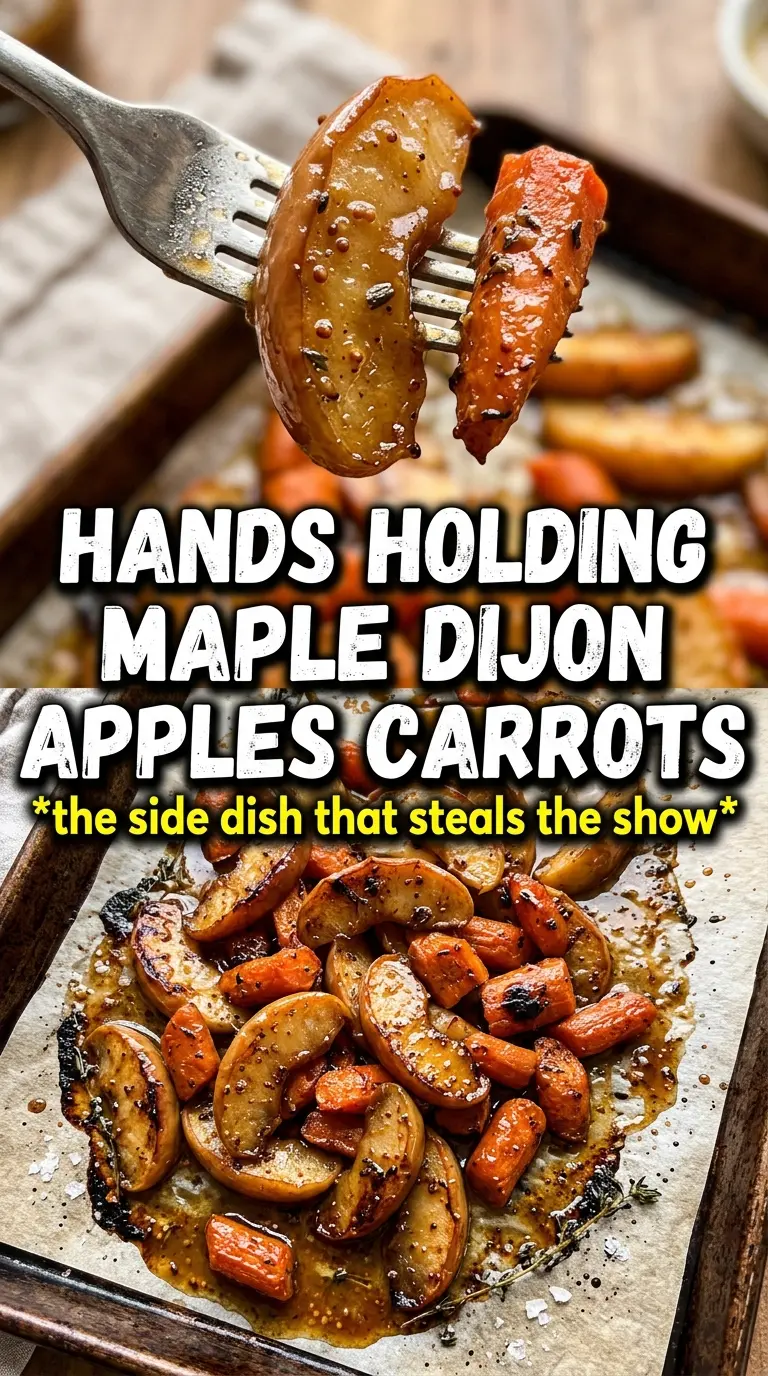
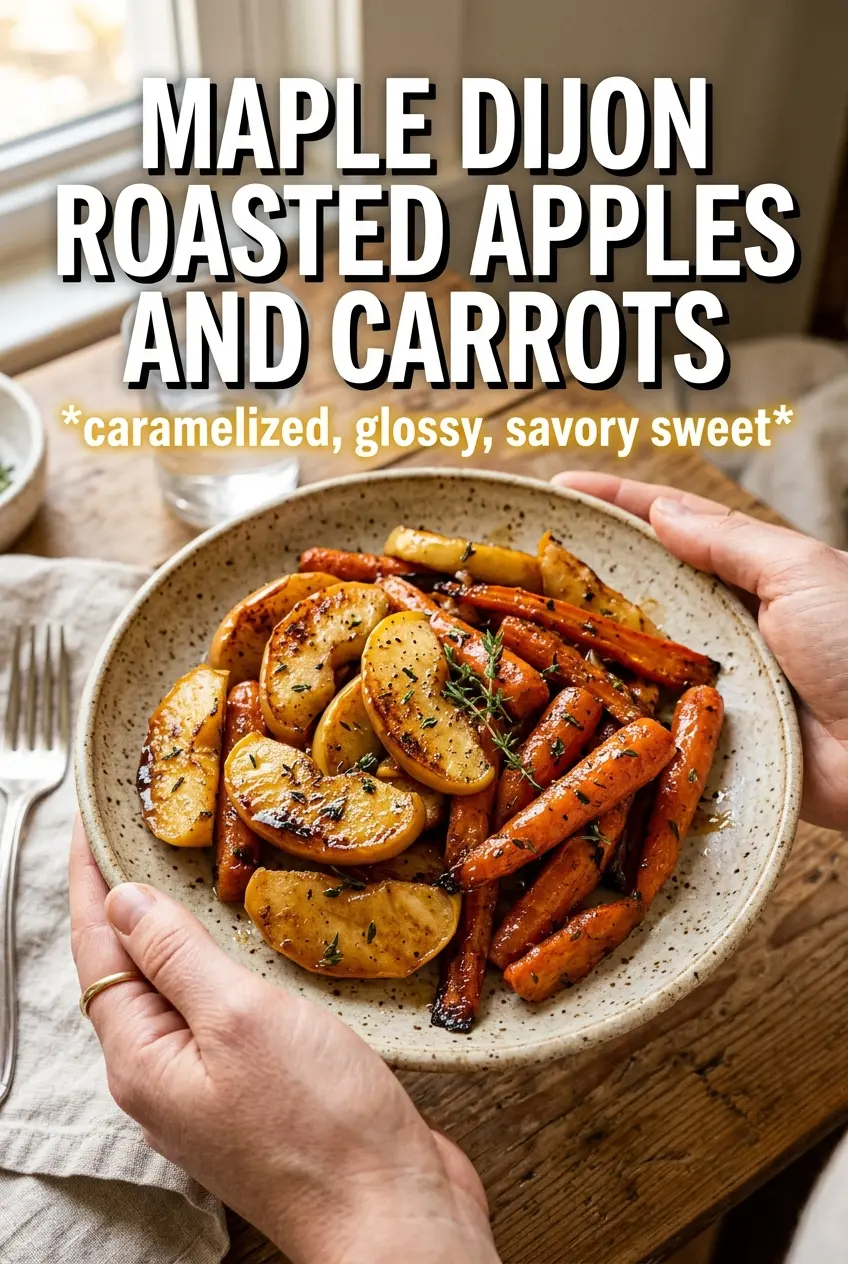
Maple Dijon roasted apples and carrots come out with the kind of contrast that makes a side dish memorable: tender carrot rounds with browned edges, soft apple wedges that still hold their shape, and a glossy glaze that lands somewhere between tangy and sweet. The thyme keeps it grounded, and the cinnamon adds just enough warmth to make the whole pan taste finished, not fussy.
What makes this version work is timing. Carrots need the full roast to turn tender and caramelized, but apples collapse if they go in too early. Adding them halfway through gives you golden edges without turning them to sauce. The maple-Dijon mix also needs enough acid to stay lively, so the apple cider vinegar matters just as much as the syrup.
Below you’ll find the exact roasting schedule that keeps both vegetables and fruit in their best texture, plus a few smart swaps if you need to adjust for what’s in your kitchen. It’s the kind of side that works beside roast chicken, pork, or a holiday table, but it’s simple enough for a weeknight too.
The carrots got those caramelized edges and the apples stayed in wedges instead of turning mushy. I tossed everything right at the halfway point and the glaze thickened up on the pan beautifully.
Save these maple Dijon roasted apples and carrots for the nights when you want a sweet-savory side with real caramelized edges.
The Trick Is Staggering the Fruit So It Roasts, Not Melts
Roasting apples and carrots together sounds straightforward until you hit the timing problem. Carrots are dense and need a head start; apples are fragile and lose their shape fast once the heat gets hold of them. That’s why this recipe roasts the carrots first, then adds the apples later, when the pan already has enough heat to brown them without breaking them down.
The glaze helps, but it’s not doing the work by itself. Maple syrup brings browning, Dijon sharpens the sweetness, and apple cider vinegar keeps the whole tray from tasting flat. If the pan looks dry when the apples go in, don’t panic — the fruit will release a little juice and the glaze will loosen before it tightens again near the end of the roast.
- Carrots — Cut them diagonally into half-inch pieces so they roast evenly and pick up more surface area. Thin slices will scorch before the centers soften.
- Apples — Use a firm variety that holds its shape, like Honeycrisp, Pink Lady, or Fuji. Soft apples turn mushy in the oven and drag the whole tray down.
- Dijon mustard — This is what keeps the glaze from tasting like straight syrup. A basic Dijon works fine; just avoid grainy mustards, which won’t coat as smoothly.
- Fresh thyme — Fresh thyme is worth using here because dried thyme can read dusty in a sweet glaze. If you only have dried, use half as much and rub it between your fingers first.
What Each Ingredient Is Actually Doing in This Recipe
- Primary ingredient (the star) — Quality matters most. Choose the best you can find.
- Cooking medium (oil, butter, or broth) — This carries flavors and prevents dryness.
- Seasonings (salt, pepper, spices, herbs) — Layer flavors so nothing overpowers. Build depth gradually.
- Aromatics (garlic, onion, herbs) — Cook with fat to bloom flavors. Become the foundation.
- Supporting ingredients — Complement the main ingredient without overpowering it.
- Sauce or liquid (if applicable) — Brings flavors together. Balance richness with acid.
- Acid (lemon, vinegar, wine, or other) — Brightens and prevents flat-tasting results.
- Final finish (garnish, glaze, or sauce) — Prevents one-dimensional taste and adds visual appeal.
How to Keep the Glaze Sticky Without Burning the Apples
Building the Maple Dijon Coating
Whisk the glaze until the mustard disappears into the syrup and the oil looks fully emulsified, not streaky. That matters because separated glaze clings unevenly and leaves some pieces bare while others burn. Garlic, thyme, vinegar, cinnamon, salt, and pepper should all be suspended in the mixture before anything hits the pan. If it tastes too sharp in the bowl, it will mellow in the oven; if it tastes flat in the bowl, it won’t wake up later.
Giving the Carrots Their Head Start
Toss the carrots first and spread them in a single layer so they can roast instead of steam. Crowding the pan traps moisture, and moisture is what keeps vegetables pale and soft. After 15 minutes, they should be starting to brown at the edges and look just tender on the outside. If they’re still stiff, give them a few more minutes before the apples go in.
Adding the Apples at the Right Moment
Add the apple wedges to the pan and toss them gently in whatever glaze is left. Keep the wedges big enough to hold up, because smaller pieces will collapse before the carrots are done. The apples are ready when the edges are golden and the centers are tender but not falling apart. If the glaze starts darkening too quickly, shift the pan to a lower rack for the last few minutes.
Finishing for Gloss and Texture
The last few minutes matter most for the final texture. The glaze should look shiny and cling to the carrots and apples instead of pooling on the parchment. Pull the pan when the carrots are tender and the apples are just cooked through; they’ll keep softening from the residual heat after they come out. A shower of fresh thyme right at the end keeps the sweetness from feeling heavy.
How to Adapt This for Different Tables and Pantry Situations
Make It Dairy-Free and Naturally Gluten-Free
This recipe already fits both of those needs without any changes, which is part of why it’s such a useful side dish. Just check your Dijon label if you’re cooking for someone with a gluten sensitivity, since a few specialty brands use additives you might want to avoid.
Swap the Apples for Pears
Firm pears work well if that’s what you have, but they soften faster than apples. Add them in the last 10 to 12 minutes instead of halfway through, and expect a slightly softer, more perfume-like sweetness.
Use Maple Mustard on Root Vegetables Only
If you want to skip the fruit, the same glaze works on carrots, parsnips, or sweet potatoes. The dish turns more savory and earthy, and the roasting time may need a few extra minutes for denser vegetables.
Make It Ahead for a Crowd
You can whisk the glaze and prep the carrots a few hours ahead, then keep them separate until roasting time. I wouldn’t slice the apples too early unless you toss them with a little extra vinegar, because they brown and soften fast once cut.
Storage and Reheating
- Refrigerator: Store leftovers in an airtight container for up to 4 days. The apples will soften more, but the flavor stays good.
- Freezer: I don’t recommend freezing this dish. The apples lose their texture and the carrots turn watery after thawing.
- Reheating: Warm on a parchment-lined sheet pan at 375F until heated through. The oven helps the glaze loosen and re-gloss the edges; the microwave makes the apples collapse.
Questions I Get Asked About This Recipe
Maple Dijon Roasted Apples And Carrots
Ingredients
Equipment
Method
- Preheat the oven to 425F and line a large baking sheet with parchment for easy release.
- Whisk maple syrup, Dijon mustard, olive oil, apple cider vinegar, garlic, fresh thyme leaves, salt, black pepper, and cinnamon together until smooth.
- Toss the sliced carrots in the glaze, spread them on the lined baking sheet, and roast for 15 minutes at 425F.
- Add apple wedges to the pan, tossing gently in the remaining glaze, and roast for 15 more minutes at 425F until the carrots are tender and the apples are golden.
- Garnish with fresh thyme and serve immediately while the glaze is still glossy.


