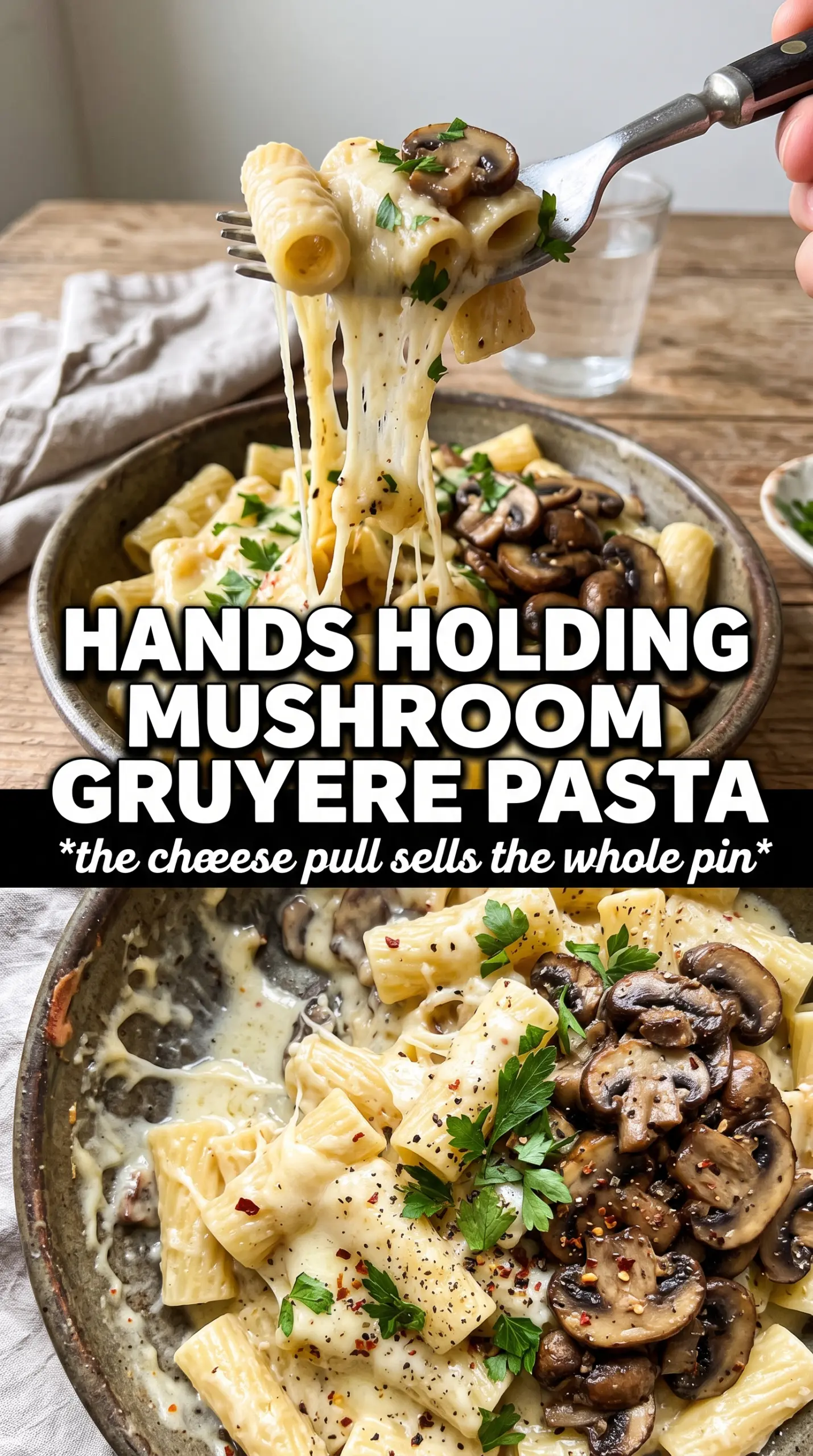
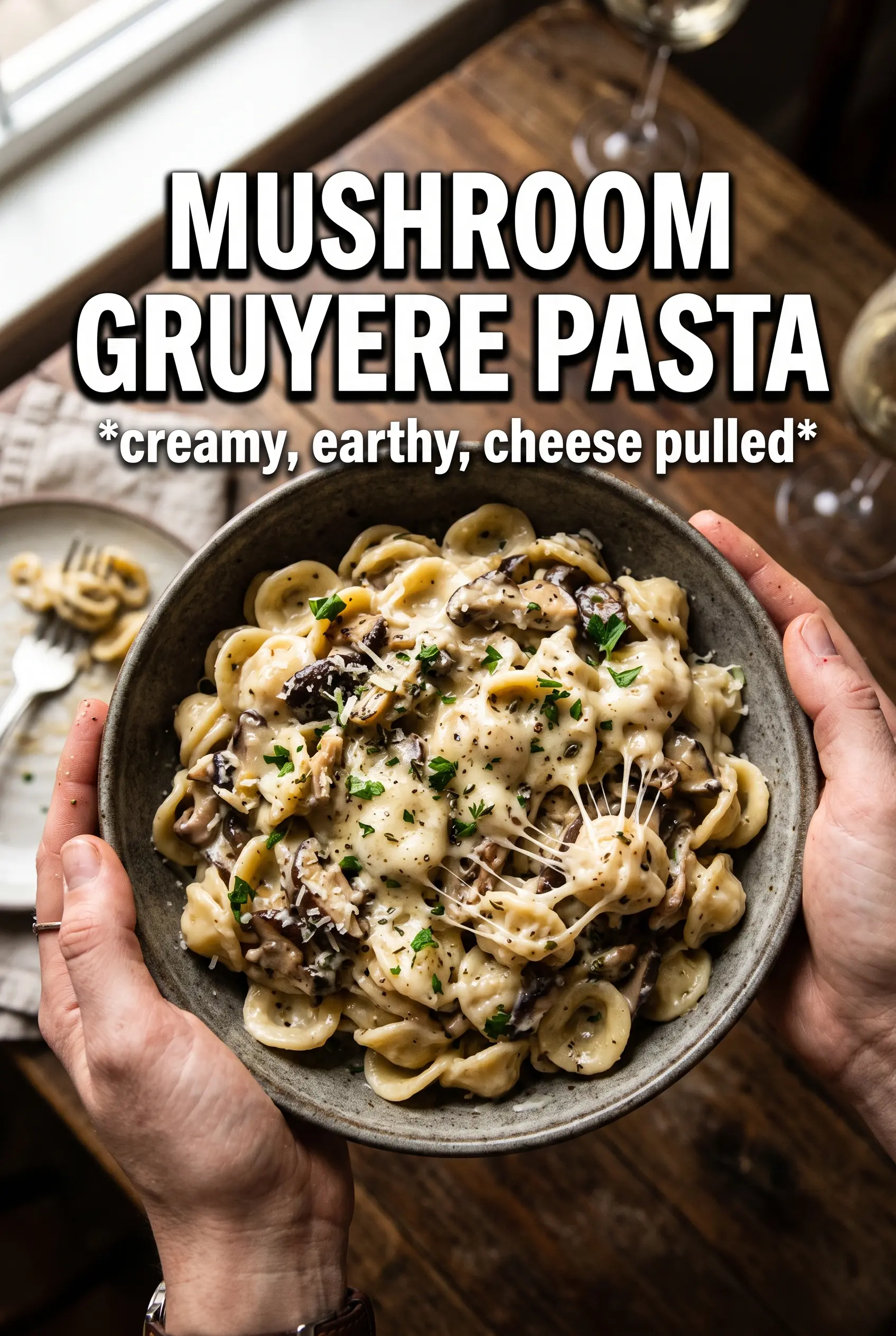
Silky mushroom Gruyere pasta earns its place in the dinner rotation fast: the mushrooms turn deeply golden, the sauce clings to every ridge of rigatoni, and the Gruyere melts into something nutty, savory, and a little luxurious without feeling fussy. It tastes like you put in far more work than you did.
The part that matters most here is the mushroom browning. Let them sit in the hot skillet long enough to lose their moisture and pick up color before you add the shallot and garlic, or you’ll end up steaming them instead of building that rich, meaty base. From there, a splash of wine lifts the browned bits, and the cream, broth, and cheese turn it into a sauce that stays glossy instead of heavy.
Below, I’ll walk through the little details that keep the sauce smooth and the pasta properly coated, plus a few swaps that still give you a dinner worth repeating.
The mushrooms got this deep golden edge instead of turning watery, and the Gruyere melted into the sauce without clumping. I added a little pasta water at the end and it coated the rigatoni perfectly.
Save this mushroom Gruyere pasta for the night you want a creamy skillet dinner with golden mushrooms and a sauce that clings to every bite.
The Mushroom Browning That Keeps the Sauce from Going Flat
The whole dish depends on getting the mushrooms out of their watery stage before anything else joins the pan. High heat and a little patience do the work here. Once they’ve released their moisture and started to pick up deep brown edges, they taste concentrated and savory instead of bland and spongy.
If you crowd the pan, the mushrooms steam and the sauce never gets the same depth. Use a large skillet, and don’t stir constantly in the first few minutes. Let the heat hit the mushrooms directly so they can caramelize before you add the shallot and garlic.
- Mushrooms — A mix gives the best balance. Cremini bring body, shiitake add a deeper savory note, and oyster mushrooms soften into the sauce in a way that feels silky. If you can’t find all three, use whichever mix looks freshest, but keep at least one variety with a meaty texture.
- Gruyere — This is the cheese that gives the sauce its nutty, rounded finish. Pre-shredded cheese won’t melt as smoothly because of the anti-caking coating, so grate it yourself if you want a glossy sauce instead of a grainy one.
- Dry white wine — The wine lifts the browned bits from the skillet and adds brightness that keeps the cream from tasting heavy. If you don’t cook with wine, use extra broth plus a teaspoon of lemon juice at the end to replace some of that lift.
What Each Ingredient Is Actually Doing in This Recipe
- Primary ingredient (the star) — Quality matters most. Choose the best you can find.
- Cooking medium (oil, butter, or broth) — This carries flavors and prevents dryness.
- Seasonings (salt, pepper, spices, herbs) — Layer flavors so nothing overpowers. Build depth gradually.
- Aromatics (garlic, onion, herbs) — Cook with fat to bloom flavors. Become the foundation.
- Supporting ingredients — Complement the main ingredient without overpowering it.
- Sauce or liquid (if applicable) — Brings flavors together. Balance richness with acid.
- Acid (lemon, vinegar, wine, or other) — Brightens and prevents flat-tasting results.
- Final finish (garnish, glaze, or sauce) — Prevents one-dimensional taste and adds visual appeal.
How to Build the Sauce So It Stays Glossy
Cooking the Pasta First
Boil the pasta in well-salted water until it’s just shy of done, then reserve at least 1 cup of the cooking water before draining. That starchy water is what helps the sauce cling, especially if the cheese tightens up as it sits. Don’t rinse the pasta; you want the starch on the surface.
Getting the Mushrooms Deeply Golden
Melt the butter in a large skillet, add the mushrooms, and leave them alone for 4 to 5 minutes so the bottoms brown. Stir, then let them cook a few minutes more until most of the moisture has evaporated and the pan smells nutty instead of damp. If the pan looks crowded or wet the whole time, the heat is too low or the skillet is too small.
Building the Sauce Base
Add the shallot, garlic, and thyme once the mushrooms have color, and cook just until fragrant. Pour in the wine and scrape up every browned bit from the pan, then add the cream and broth and let the sauce simmer until it thickens enough to lightly coat a spoon. Keep it at a gentle simmer; a hard boil can make the cream taste flat and can make the sauce separate later.
Melting in the Gruyere
Take the skillet off the heat before stirring in the Gruyere. Residual heat is enough to melt it, and that lower temperature is what keeps the sauce smooth. Once the cheese disappears, add the pasta and a splash of reserved pasta water, tossing until every piece is coated and glossy.
What to Change When You Need a Different Version
Dairy-Free Version That Still Tastes Rich
Use olive oil instead of butter, full-fat oat cream instead of heavy cream, and a dairy-free mozzarella-style shred in place of the Gruyere. You won’t get the same nutty complexity, but the sauce will still coat the pasta well if you keep the simmer gentle and finish with extra black pepper.
Gluten-Free Pasta Without the Gummy Texture
Use a sturdy gluten-free rigatoni or brown rice pasta and cook it just until barely tender, since it will soften a little more in the sauce. Save the pasta water, but start with less of it because gluten-free pasta water can turn thicker faster. The sauce still works; the key is tossing gently so the noodles don’t break.
Make It Heartier with Chicken
Brown bite-size chicken pieces in the skillet before the mushrooms, then remove them while you build the sauce and add them back at the end. This adds protein without changing the character of the dish, and the browned fond from the chicken gives the sauce even more depth.
Storage and Reheating
- Refrigerator: Store leftovers in an airtight container for up to 3 days. The sauce will thicken as it chills.
- Freezer: I don’t recommend freezing this one. Cream sauces and melted cheese tend to separate after thawing, and the mushrooms lose their texture.
- Reheating: Warm it slowly in a skillet over low heat with a splash of broth or water, stirring often. Microwaving on high tends to make the cheese oily and the pasta dry out before the center heats through.
Answers to the Questions Worth Asking
Mushroom Gruyere Pasta
Ingredients
Equipment
Method
- Cook the rigatoni or pappardelle in boiling salted water until al dente, then reserve 1 cup pasta water and drain the pasta.
- Heat 3 tablespoons unsalted butter in a large skillet, then add sliced mixed mushrooms and cook over high heat without stirring for 4-5 minutes until deeply golden.
- Stir the mushrooms and cook for 3 more minutes until browned, then add minced shallot, minced garlic, and fresh thyme and cook for 2 minutes.
- Pour in the dry white wine to deglaze, then stir in the heavy cream and chicken or vegetable broth and simmer for 5 minutes.
- Reduce heat to low, stir in the shredded Gruyere until fully melted, then toss in the drained pasta and add pasta water as needed for a silky coating.
- Season with salt and pepper to taste, then top with fresh parsley.


