Layers of tender zucchini, deeply browned mushrooms, and creamy ricotta give this mushroom zucchini lasagna the kind of hearty, savory bite that holds its shape when you cut into it. It eats like a classic baked pasta dish, but the zucchini planks keep it lighter without turning it watery or bland.
The trick is giving the zucchini a head start so it sheds excess moisture before it ever hits the baking dish, then cooking the mushrooms hard enough to drive off every bit of liquid. That second step matters more than people think. Mushrooms need actual browning to taste rich and meaty, and if they go into the pan crowded or undercooked, they steam and make the whole lasagna loose.
Below, I’ll walk you through the parts that matter most: how to keep the zucchini from weeping, how to build a mushroom layer with real depth, and what to expect when you slice it after resting.
The zucchini stayed firm, the mushroom sauce got beautifully thick, and the lasagna sliced cleanly after resting. I was worried it would be watery, but it held together better than my regular lasagna.
Save this mushroom zucchini lasagna for the night you want a rich, cheesy bake with no noodles and real mushroom depth.
The Zucchini Has to Lose Water Before the Oven Does the Rest
The most common failure in zucchini lasagna is a pan that looks gorgeous going in and turns soupy on the plate. Zucchini holds a lot of water, and if you layer it straight from the cutting board, that moisture comes out in the oven and dilutes everything around it. Salting the planks first pulls some of that water to the surface, and roasting them briefly gives them a little structure so they don’t collapse into the filling.
The mushrooms need the same kind of attention. If they’re crowded or rushed, they steam and turn muddy instead of savory and concentrated. High heat and patience are what give this lasagna its meaty backbone without needing noodles or meat.
- The zucchini should be sliced thin enough to layer cleanly, but not paper-thin. Too thin and it disappears; too thick and it stays floppy.
- The mushroom mixture should look dry in the pan before the tomatoes go in. That’s the sign the flavor has concentrated instead of getting watered down.
- Resting after baking is not optional here. It lets the ricotta set and keeps the slices from running apart.
What Each Layer Is Actually Doing in This Mushroom Zucchini Lasagna
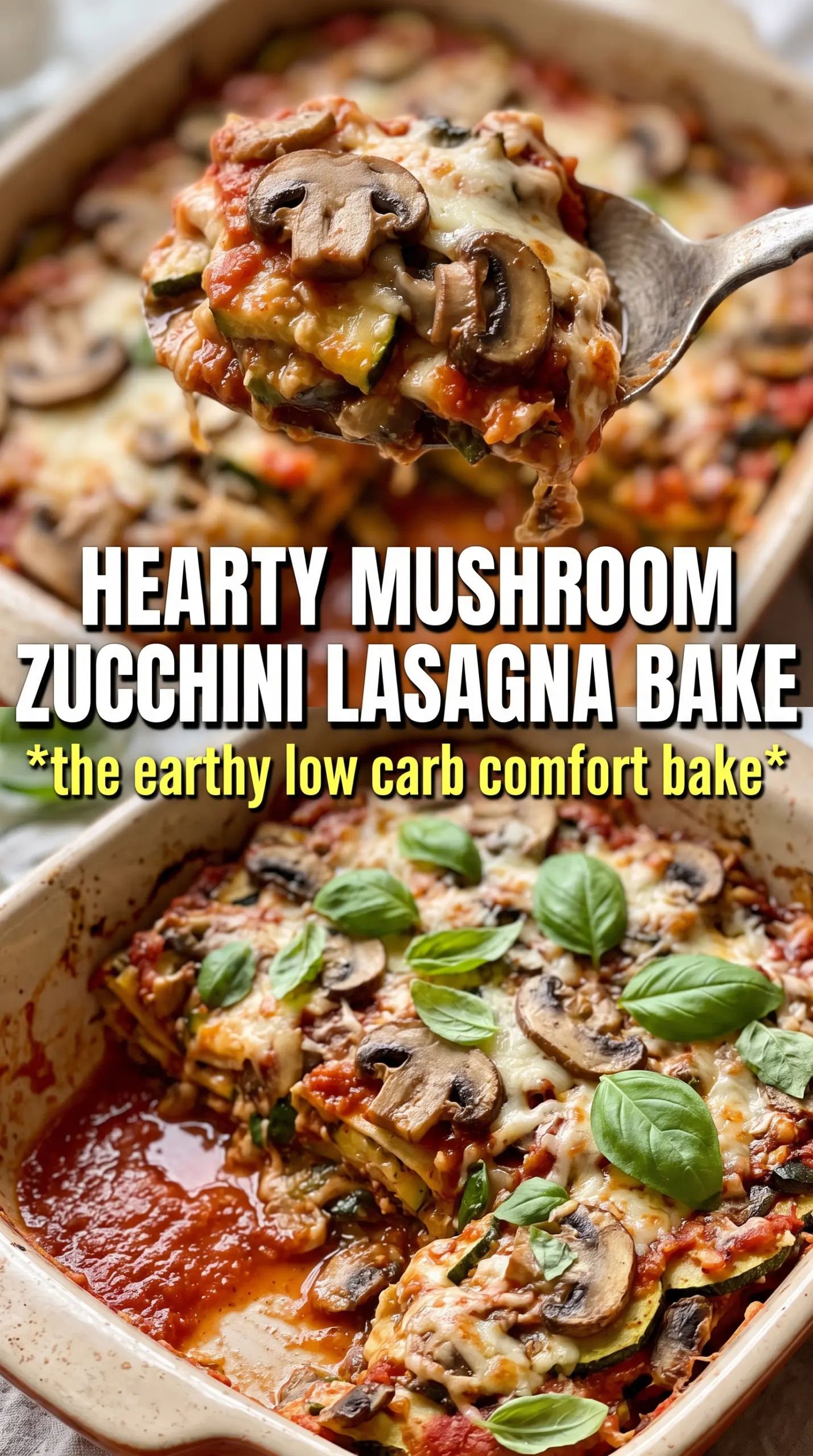
- Zucchini planks — They stand in for noodles, but only if you sweat and roast them first. That step keeps the lasagna from turning watery and helps the layers hold together when sliced.
- Mixed mushrooms — Cremini, shiitake, and portobello give you a deeper, earthier filling than one mushroom alone. If you only have cremini, it still works, but the flavor will be a little softer and less layered.
- Dry red wine — This lifts the browned bits from the pan and gives the tomato base a little edge. Use a wine you’d drink; if you skip it, the sauce still works, but it loses some of that slow-cooked depth.
- Ricotta mixture — The egg and parmesan help it set into a sliceable layer instead of oozing out. Fresh thyme keeps it from tasting heavy, which matters when the filling is already rich.
- Mozzarella — Divide it so some melts into the middle and the rest browns on top. Pre-shredded works in a pinch, but freshly shredded melts smoother and gives you better coverage.
Building the Layers So the Lasagna Slices Cleanly
Drying the Zucchini First
Salt the zucchini planks and let them sit until beads of moisture appear on the surface. Pat them dry instead of rinsing them, then roast just long enough to soften them slightly and drive off even more water. If you skip the roast, the finished dish can still taste good, but it will cut like a spoonful instead of a slice.
Cooking the Mushrooms Until They Go Deep Brown
Cook the mushrooms and onion over high heat until the pan looks nearly dry and the mushrooms have taken on a dark, golden color. That browning is the whole point. Add the garlic only at the end so it doesn’t burn and turn bitter, then pour in the wine and let it evaporate before adding the tomatoes. If there’s still a puddle of liquid when you move on, keep cooking.
Assembling Without Pressing the Layers Flat
Spread a thin layer of mushroom sauce first, then zucchini, ricotta, more sauce, and mozzarella. Keep the layers even, but don’t press down hard as you build or you’ll squeeze moisture out of the vegetables and ricotta. Finish with mozzarella on top so it can brown into a proper crust under the foil-uncovered bake.
Baking Until the Top Is Deeply Golden
Covered baking sets the center without drying the edges. Uncovering near the end is where the real finish happens: the cheese should blister in spots, go deeply golden, and pull slightly from the corners of the dish. If the top browns before the center feels hot and settled, cover it again loosely for the last few minutes.
Make It Gluten-Free Without Changing the Dish
This recipe is naturally gluten-free as written, which is one of the reasons it works so well for a mixed table. Just check that your tomato paste and cheeses are labeled clearly if cross-contact matters in your kitchen. The texture stays the same because the structure comes from the zucchini, ricotta, and reduced mushroom filling, not from noodles.
Dairy-Free Version That Still Holds Together
Use a sturdy dairy-free ricotta or cashew-based filling and a meltable plant-based mozzarella. The flavor will be a little less tangy and rich, so salt the filling a touch more and lean on the thyme for freshness. Avoid thin, spoonable dairy-free cheeses here, or the layers will slide when baked.
Extra-Hearty Mushroom Layer
If you want the filling even meatier, add another half pound of mushrooms and cook them in batches so they brown instead of steam. The lasagna gets a denser, more savory center and a slightly shorter sauce layer, which is helpful if you like a tighter slice. Don’t increase the tomatoes much or you’ll lose the concentrated mushroom flavor that makes this dish work.
Storage and Reheating
- Refrigerator: Store covered for up to 4 days. The layers hold up well, and the flavor gets even better by the next day.
- Freezer: Freeze in portions after cooling completely. Wrap tightly and freeze for up to 2 months, though the zucchini will soften a bit after thawing.
- Reheating: Reheat covered at 350°F until hot through, or warm slices in a skillet with a lid over low heat. The common mistake is blasting it in the microwave, which makes the zucchini release more water and turns the ricotta grainy.
Answers to the Questions Worth Asking
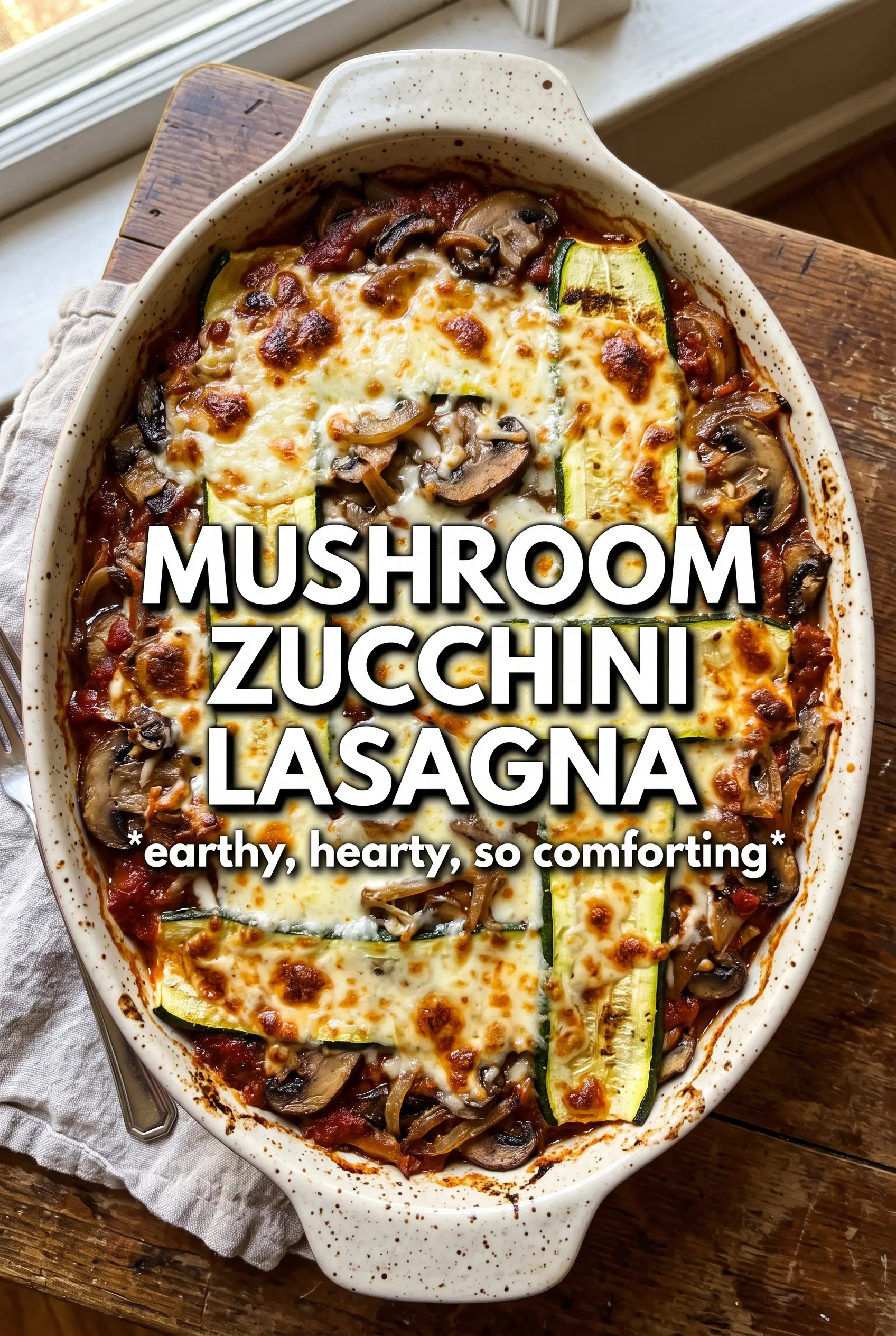
Mushroom Zucchini Lasagna
Ingredients
Equipment
Method
- Salt the zucchini planks and let them sit for 20 minutes to draw out moisture.
- Pat the zucchini dry and roast at 425°F for 10 minutes until slightly softened, then set aside.
- Heat the olive oil in a cast iron skillet over high heat and cook the mushrooms and onion for 8–10 minutes until all liquid evaporates and they turn deeply golden.
- Add the garlic and cook for 30 seconds, stirring until fragrant.
- Pour in the red wine and cook until evaporated.
- Stir in the crushed tomatoes, tomato paste, and Italian seasoning, then simmer for 10 minutes and season with salt and pepper.
- In a bowl, mix ricotta with the egg, parmesan, thyme, salt, and pepper until smooth and thick, with no dry streaks.
- Preheat the oven to 375°F and grease a 9x13 baking dish.
- Assemble the lasagna by spreading mushroom sauce, then layering zucchini planks, ricotta, more mushroom sauce, and mozzarella; repeat and finish with mozzarella.
- Cover with foil and bake for 40 minutes.
- Uncover and bake for 15 minutes until deeply golden on top, with visible browned mozzarella edges.
- Rest for 15 minutes before slicing so the layers set and hold.