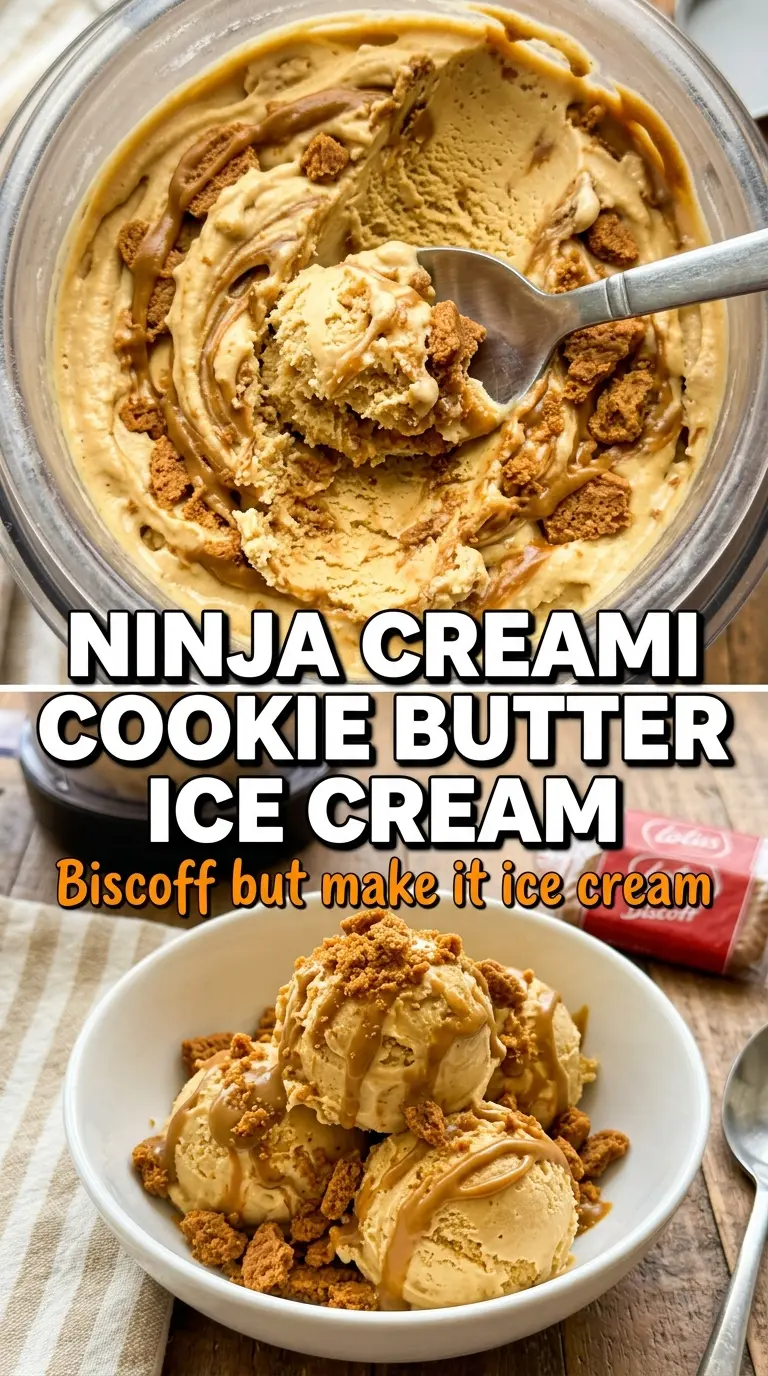
Cookie butter ice cream turns into the kind of dessert that disappears fast because the flavor lands somewhere between caramel, gingerbread, and toasted brown sugar. In the Ninja Creami, that warm speculoos taste gets packed into a scoop that’s dense, smooth, and just rich enough to feel special without being heavy.
The trick is building a base that freezes firm but still spins creamy. Cookie butter brings most of the flavor, but the cream cheese helps the texture stay scoopable instead of icy, and a little cinnamon pushes the Biscoff flavor in the right direction without making it taste like a spice cake. Once the pint is fully frozen, the Creami does the rest of the work — but only if the base is blended completely smooth before it goes in.
Below, I’ve included the small details that matter most, plus a few swaps if you want to adjust the richness or make the base a little lighter. The mix-in step is where the cookie butter ice cream really comes alive, so don’t skip the crushed cookies.
The cookie butter flavor came through beautifully, and the base spun up smooth on the first try after I added a splash of milk. My husband kept sneaking spoonfuls straight from the pint.
Save this Ninja Creami cookie butter ice cream for the nights when you want that deep Biscoff flavor and a smooth, scoopable pint with almost no fuss.
The Base Needs to Freeze Hard, Not Just Cold
The biggest mistake with Ninja Creami ice cream is spinning a base that hasn’t fully frozen through the center. If the pint is even a little slushy in the middle, you’ll get a crumbly, dry texture no matter how good the formula is. This recipe works because the milk, cream, cookie butter, and cream cheese create a base with enough fat and solids to freeze into something the machine can shave cleanly.
Another thing that matters here is smoothness before freezing. Cookie butter can look blended when it still has tiny streaks, and those streaks freeze into little dense pockets that don’t spin evenly. Blend until the mixture looks completely uniform and glossy, then freeze the pint level so the blade can work across a flat surface.
- Cookie butter — This is the flavor backbone. Use a brand with a smooth, spreadable texture; if yours is stiff, warm it for a few seconds so it blends without leaving greasy streaks.
- Cream cheese — Just a tablespoon helps the base stay creamy after freezing. It doesn’t taste tangy once mixed in, but it does keep the texture from turning thin or icy.
- Whole milk and heavy cream — The mix of both gives you a base that freezes firm enough for the machine but still spins rich. Lower-fat milk makes the result leaner and more icy, which is fine if that’s what you want, but it won’t taste as plush.
- Biscoff cookies — These belong in the mix-in stage, not the base. Crushed cookies keep their crunch better when they’re folded in after spinning instead of blended into the pint from the start.
What Each Ingredient Is Actually Doing in This Ice Cream
- Base ingredient (cream, milk, or custard) — This provides the foundation and richness. Quality matters.
- Sweetener (sugar, honey, or condensed milk) — This sweetens and prevents ice crystals. The ratio is critical.
- Flavor element (vanilla, fruit, chocolate, coffee, or other) — This defines the ice cream personality. Use quality ingredients.
- Egg yolks (if making custard base) — These create richness and silky texture. Optional but elevates ice cream.
- Churning (if using ice cream maker) — This incorporates air and prevents ice crystals. Critical for smooth texture.
- Freezing temperature and time — Proper freezing prevents rock-hard texture. Store at 0°F or below.
- Mix-ins (chocolate, cookies, fruit, or swirls) — These add texture and prevent one-dimensional flavor. Add near end of churning.
- Serving temperature (slightly soft, not rock hard) — This provides creamy mouthfeel. Remove from freezer 5 minutes before serving.
Spinning the Pint Without Turning It Crumbly
Blending the Base Until It’s Fully Even
Add the milk, cream, cookie butter, sugar, cream cheese, vanilla, cinnamon, and salt to a blender or use an immersion blender in a tall container. Keep going until the mixture looks smooth and glossy with no visible bits of cream cheese or pockets of cookie butter. If you rush this part, the frozen pint can spin with tiny hard flecks that never quite disappear.
Freezing the Pint the Right Way
Pour the base into the Ninja Creami pint and freeze it on a level surface for a full 24 hours. The top should be flat and the center should feel rock solid when you tap it. If the freezer shelf tilts the pint, the blade can shave unevenly and leave a drier edge on one side.
Spinning, Then Deciding Whether It Needs a Re-Spin
Run the Ice Cream setting first. If the texture comes out powdery or slightly sandy, that usually means the base is frozen correctly but needs a little more moisture from the machine, not a total rescue. Add 1 tablespoon milk and re-spin; that small amount is enough to loosen the texture without making it soupy.
Adding the Cookies at the End
Use the Mix-In function to fold in the crushed Biscoff cookies. Don’t add them before spinning, because they’ll disappear into the base and lose the crisp texture that makes the final scoop feel finished. Warm cookie butter drizzled over the top adds shine and brings the flavor back into the first bite.
How to Adapt the Pint When You Want It Lighter, Richer, or Dairy-Free
Use half-and-half for a lighter finish
Swap part of the heavy cream for half-and-half if you want a less rich result. The ice cream will still spin, but it won’t have the same dense, velvety feel, so this is best if you prefer a slightly softer, leaner scoop.
Make it dairy-free with full-fat coconut milk
Use full-fat canned coconut milk in place of the milk and cream, then keep the cookie butter and vanilla the same if your spread is dairy-free. The texture will be a little more tropical and less classic ice cream shop, but it still spins well because the coconut fat gives the base enough body.
Skip the mix-ins for a smoother spoonful
Leave out the crushed cookies if you want a uniform cookie butter ice cream instead of a cookies-and-cream style texture. You’ll still get the same warm speculoos flavor in every bite, just without the crunch.
Add extra cookie butter after spinning
If you want a more intense Biscoff hit, drizzle a little warmed cookie butter over the spun ice cream instead of increasing it in the base. Too much in the mixture can make the pint freeze softer and spin greasy rather than creamy.
Storage and Reheating
- Refrigerator: Not recommended once spun; the texture melts quickly and won’t come back the same way.
- Freezer: You can refreeze leftovers in the pint, but it will harden again and usually needs another spin before serving.
- Reheating: Let the pint sit at room temperature for 5 to 10 minutes, then run the Ice Cream setting again if it feels too firm. Don’t microwave it — that melts the edges before the center loosens.
Questions I Get Asked About This Recipe
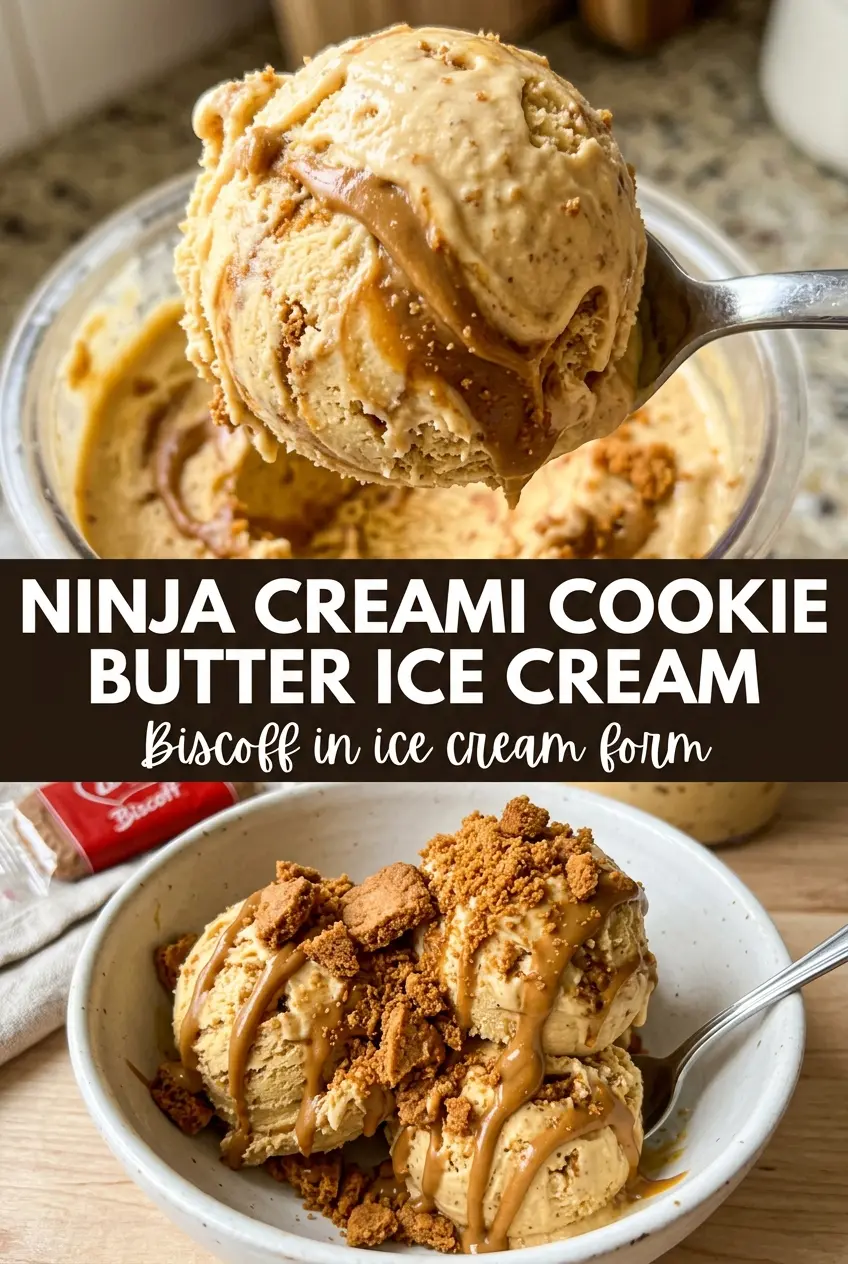
Ninja Creami Cookie Butter Ice Cream
Ingredients
Equipment
Method
- Blend whole milk, heavy cream, cookie butter (Biscoff spread), granulated sugar, cream cheese, vanilla extract, cinnamon, and salt until completely smooth.
- Pour the mixture into the Ninja Creami pint container and freeze for 24 hours, until solid.
- Process on the Ice Cream setting, then re-spin if needed using 1 tablespoon whole milk for texture adjustment.
- Use the Mix-In function to fold in crushed Biscoff cookies so they’re evenly distributed.
- Drizzle warm cookie butter on top and serve immediately.