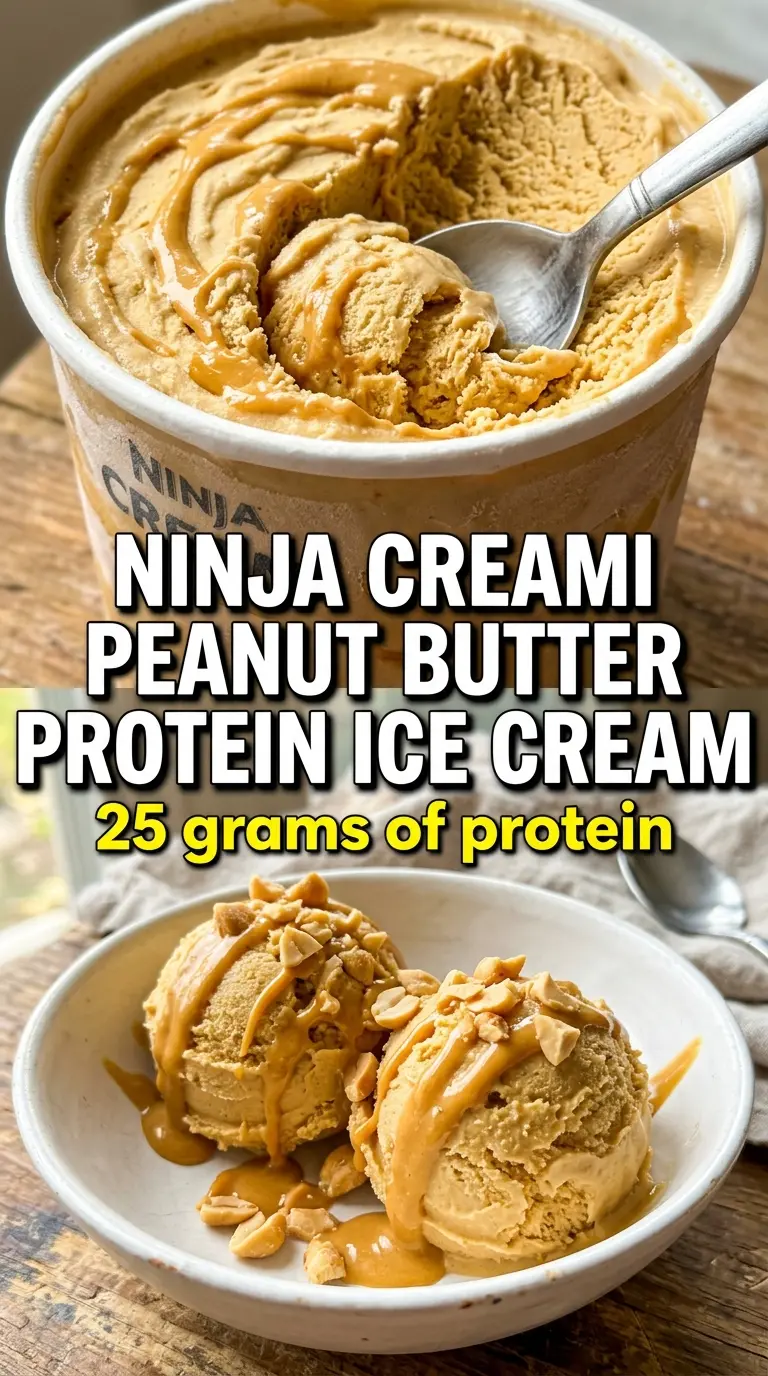
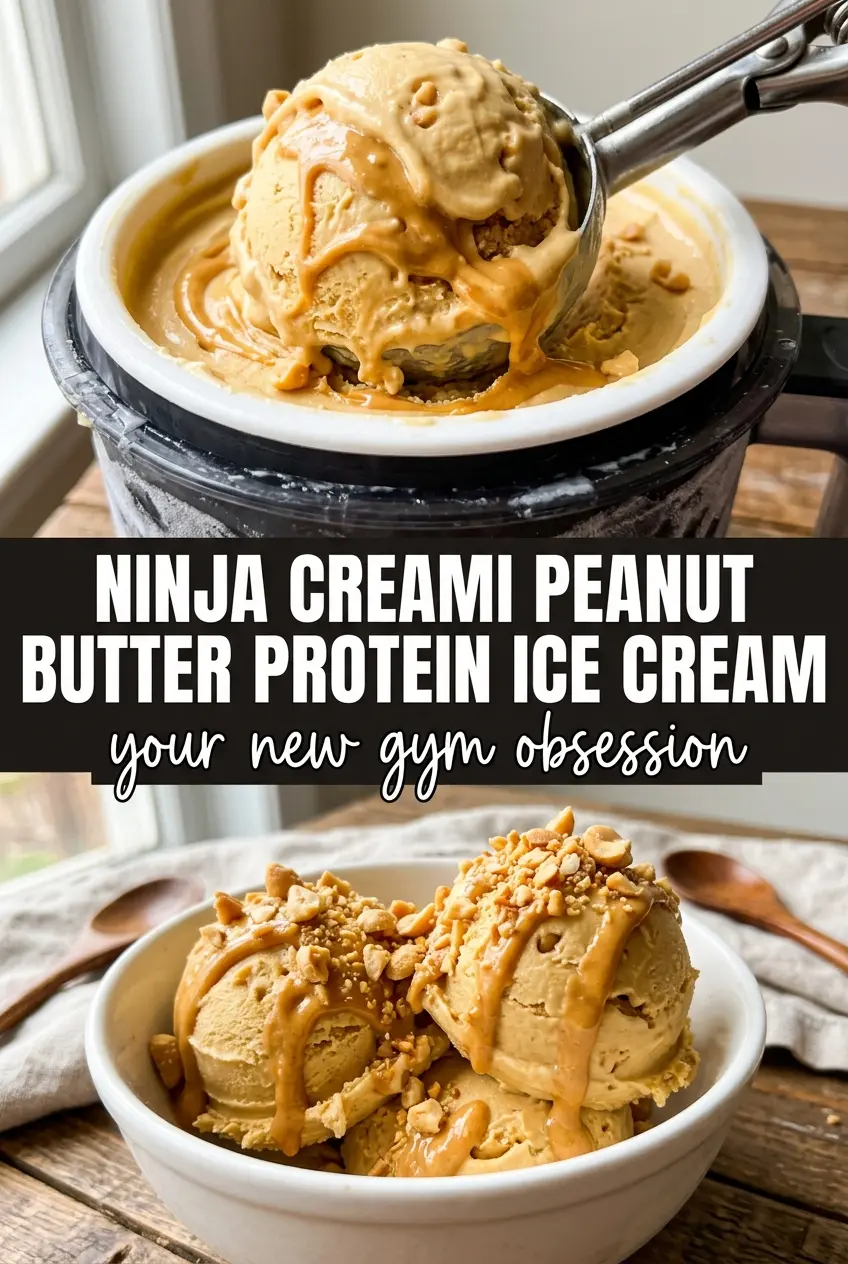
Peanut butter protein ice cream gets a bad reputation when the base turns icy, chalky, or weirdly thin after freezing. This version stays dense and spoonable, with enough peanut butter in the base to taste rich before the mix-ins even go in. The texture lands somewhere between soft-serve and scoopable ice cream, which is exactly what you want from a Ninja Creami pint that starts with simple ingredients.
The key is in the balance. Protein powder brings structure, but it also thickens fast and can turn grainy if it isn’t whisked smooth before freezing. Peanut butter helps round out that chalkiness, while a little sweetener keeps the finished ice cream from tasting flat after a full night in the freezer. If you’ve had protein ice cream that spun up dry or crumbly, this method fixes the two biggest problems: clumps in the base and too much resistance on the first spin.
Below, you’ll find the exact reason the first spin matters, how to rescue a pint that looks crumbly, and a few swaps that still keep the final texture creamy.
The base blended up totally smooth and after the first spin it was only a little crumbly. One re-spin with a splash of milk gave it that thick, creamy peanut butter texture I was hoping for.
Like this rich peanut butter protein pint? Save it to Pinterest for the nights when you want a creamy Ninja Creami dessert with a real protein boost.
The Trick to Creamy Protein Ice Cream Instead of a Chalky Pint
The biggest mistake with protein ice cream is freezing a base that isn’t fully smooth. Once protein powder hits liquid, it can form tiny dry pockets that never fully disappear in the freezer, and those little clumps show up after spinning as a sandy texture. Whisking until the mixture looks completely uniform matters more here than anywhere else.
The second thing that helps is fat. Peanut butter gives the base enough richness to taste like actual dessert, and it also softens the harsh edge that some protein powders leave behind. If your pint comes out crumbly on the first spin, that isn’t a failure. It’s the normal first pass for a base that needs a quick re-spin with a tablespoon of milk.
- Protein powder — Use a powder you already like the taste of on its own. If it tastes dusty in a shaker bottle, it won’t magically taste better after freezing.
- Peanut butter — Creamy peanut butter works best here. Natural peanut butter is fine, but stir it well first so the oil doesn’t leave the base uneven.
- Milk — Whole milk gives the richest texture, but unsweetened almond milk still works if you want a lighter pint. The lower the fat, the more likely you’ll need that re-spin with a splash of milk.
- Sweetener — Sugar keeps the ice cream softer straight from the freezer. Monk fruit sweetener works too, but the final pint may need a minute on the counter before scooping.
- Mix-ins — Peanut butter chips or mini peanut butter cups add texture at the end, not before freezing. If you stir them into the base too early, they sink and break up the texture you’re trying to protect.
What Each Ingredient Is Actually Doing in This Ice Cream
- Base ingredient (cream, milk, or custard) — This provides the foundation and richness. Quality matters.
- Sweetener (sugar, honey, or condensed milk) — This sweetens and prevents ice crystals. The ratio is critical.
- Flavor element (vanilla, fruit, chocolate, coffee, or other) — This defines the ice cream personality. Use quality ingredients.
- Egg yolks (if making custard base) — These create richness and silky texture. Optional but elevates ice cream.
- Churning (if using ice cream maker) — This incorporates air and prevents ice crystals. Critical for smooth texture.
- Freezing temperature and time — Proper freezing prevents rock-hard texture. Store at 0°F or below.
- Mix-ins (chocolate, cookies, fruit, or swirls) — These add texture and prevent one-dimensional flavor. Add near end of churning.
- Serving temperature (slightly soft, not rock hard) — This provides creamy mouthfeel. Remove from freezer 5 minutes before serving.
Freezing the Base So the Texture Spun Is Smooth, Not Icy
Whisking Out the Clumps
Combine the milk, protein powder, peanut butter, sweetener, vanilla, and salt in a bowl and whisk hard until the mixture looks completely smooth and glossy. Scrape the bottom of the bowl with the whisk because protein powder loves to hide there. If you see specks or tiny grains, keep whisking; those don’t dissolve later in the freezer.
Freezing the Pint Solid
Pour the base into the Ninja Creami pint container and freeze it level for a full 24 hours. A tilted pint freezes unevenly and can spin with dry bands on one side. The base needs to be rock solid before it goes into the machine, or the texture turns slushy instead of creamy.
The First Spin and Rescue Re-Spin
Process on Lite Ice Cream first. If the top looks powdery or crumbly after the first spin, add 1 tablespoon milk around the edges and use Re-spin. That small amount of liquid helps the blade catch the dry bits without turning the whole pint soupy. If it still looks rough, another short re-spin usually fixes it better than adding more milk all at once.
Mixing in the Crunch
Add the peanut butter chips or peanut butter cup pieces with the Mix-In setting after the base is already creamy. That keeps the candy from getting pulverized into the ice cream. Serve right away for the thickest texture, because the pint firms up again fast once it sits on the counter.
How to Adjust This Pint Without Losing the Creamy Texture
Make it dairy-free
Use unsweetened almond milk and a plant-based protein powder. The pint will be a little lighter and less rich than the whole milk version, but peanut butter still gives it enough body to feel like dessert. If your dairy-free protein powder is especially thick, add an extra tablespoon of milk during the re-spin only.
Use chocolate peanut butter mix-ins
Swap the peanut butter chips for chopped peanut butter cups or a drizzle of chocolate sauce on top. Chocolate makes the peanut butter taste even deeper, but too much sauce stirred in early can melt into streaks. Keep sauces for the top, not the mix-in step.
Lower-sugar version
Monk fruit sweetener keeps the base sweet without adding sugar, and the peanut butter carries most of the flavor anyway. Just know that sugar helps the finished ice cream stay softer straight from the freezer, so you may want a longer rest on the counter before serving. The texture is still good; it just firms up a touch faster.
Storage and Reheating
- Refrigerator: Not recommended. This is best eaten right after spinning, and the fridge will only soften it into a melted base.
- Freezer: You can refreeze leftovers in the pint, but the texture gets denser and a little icier after the second freeze.
- Reheating: Let the pint sit on the counter for 5 to 10 minutes, then re-spin if needed. Microwaving turns the edges melty before the center loosens, which ruins the texture.
Answers to the Questions Worth Asking
Ninja Creami Peanut Butter Protein Ice Cream
Ingredients
Equipment
Method
- Whisk the milk, protein powder, peanut butter, sweetener, vanilla extract, and salt until very smooth and no protein powder clumps remain.
- Pour the mixture into the Ninja Creami pint container, then freeze for 24 hours until fully set.
- Process on the Lite Ice Cream setting first; if the texture is grainy, add 1 tablespoon milk and re-spin.
- Use the Mix-In setting to fold in the peanut butter chips or mini peanut butter cup pieces.
- Serve immediately for the creamiest, thickest peanut butter protein texture.