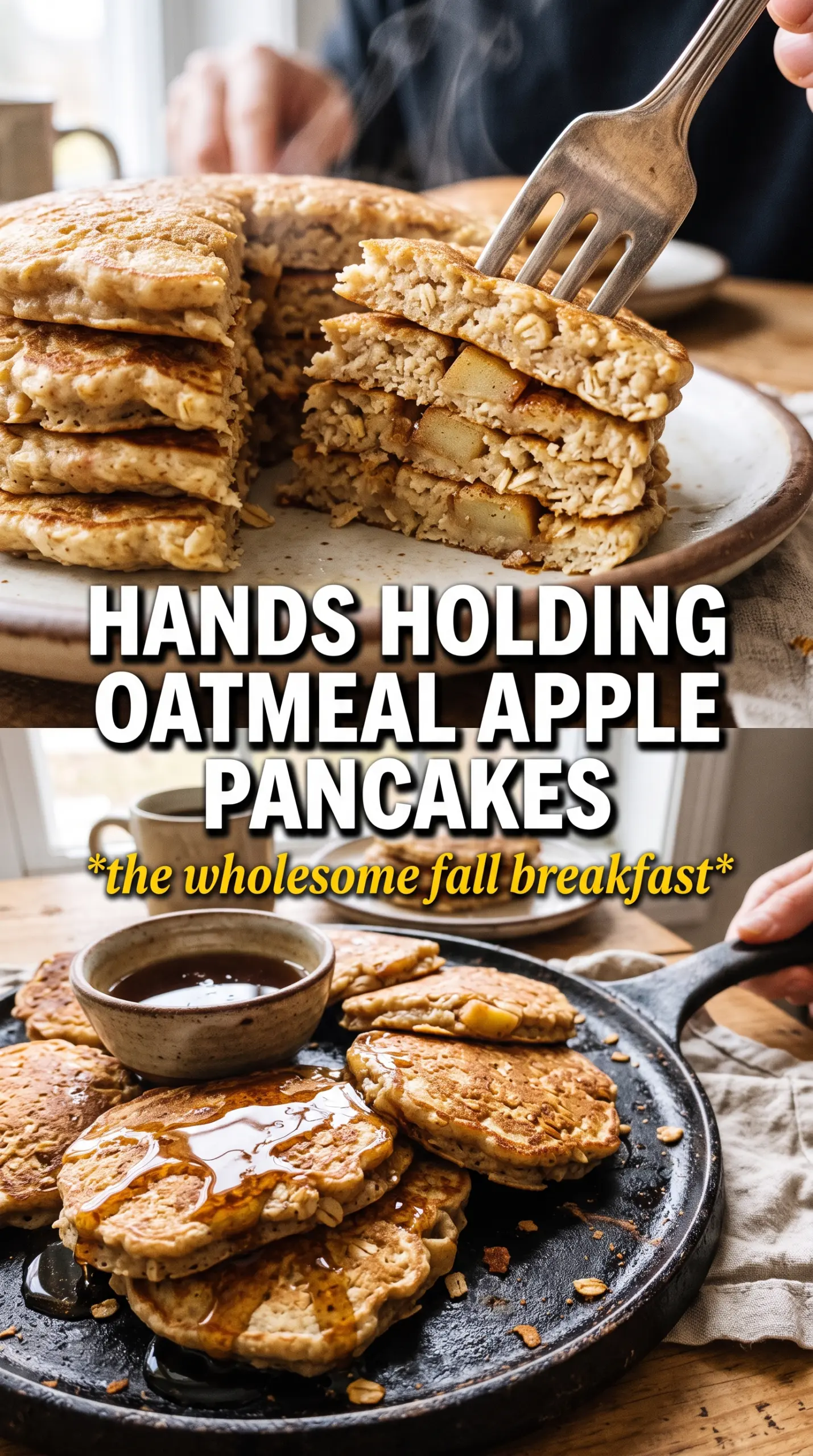
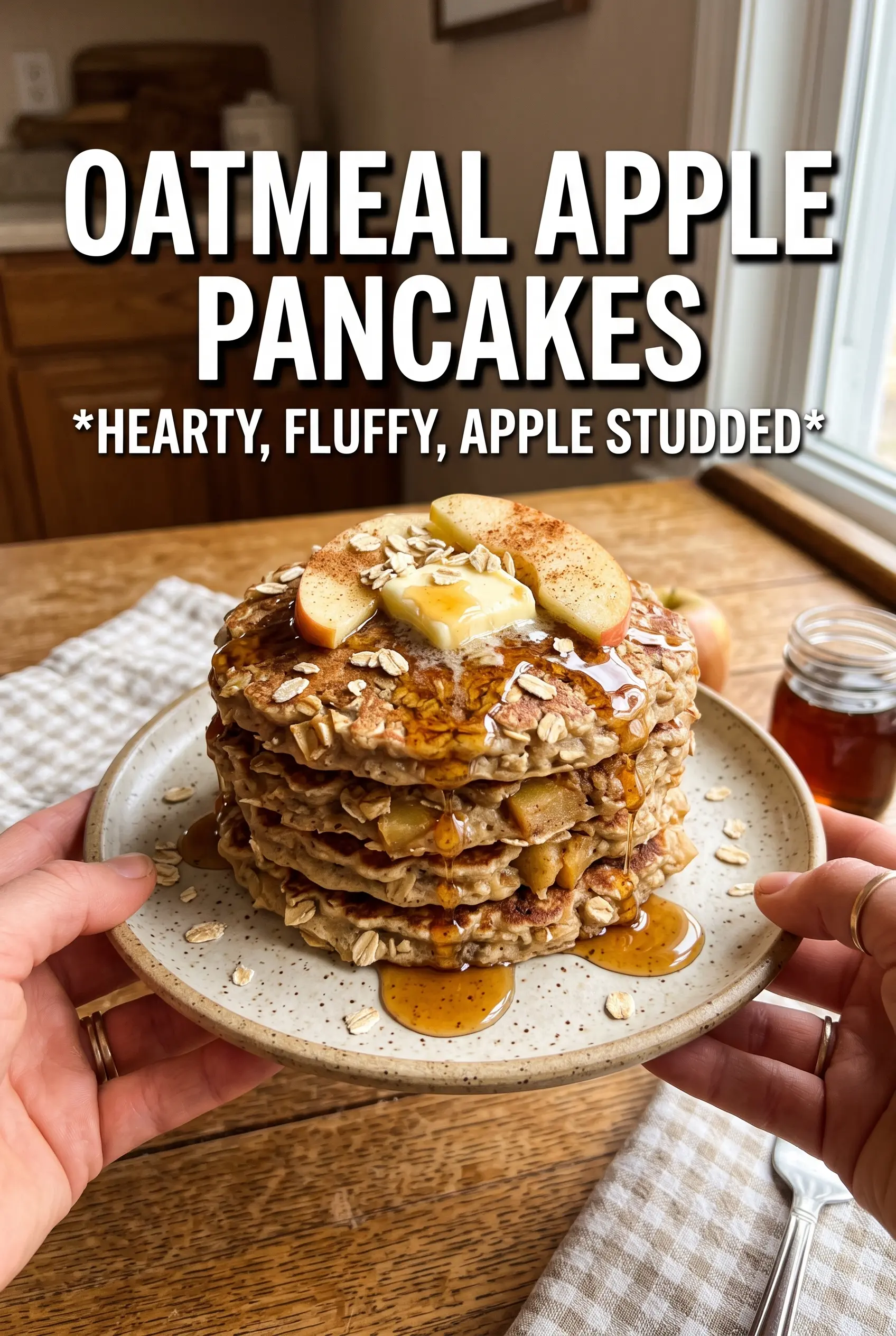
Oatmeal apple pancakes come out thick, tender, and lightly crisp at the edges, with little pockets of soft apple in every bite. The oats give them a heartier texture than standard pancakes, but they still stay fluffy if you keep the batter just barely mixed and let it rest for a few minutes before cooking.
This version works because the oats are only coarsely ground, not turned into flour. That keeps the crumb from getting pasty. Buttermilk brings the batter together and reacts with the baking soda for lift, while the apples add moisture and sweetness without making the pancakes heavy. I like grated apple when I want the pieces to melt into the pancake, and finely diced apple when I want a little more bite.
Below, I’ve included the small details that matter most: how fine to grind the oats, what the batter should look like before it hits the pan, and the easiest way to keep the centers cooked through without burning the outside.
The oats gave these pancakes such a nice texture, and the grated apple stayed moist without making the batter watery. I cooked them on medium heat like you said and they browned evenly instead of burning before the centers set.
Save these oatmeal apple pancakes for the mornings when you want crisp edges, tender centers, and real apple pieces in every bite.
The Reason the Oats Stay Tender Instead of Gritty
The biggest mistake with oatmeal pancakes is grinding the oats too fine or skipping the rest after mixing. Fine oat flour can make the batter dense and gummy, while a short rest gives the oats time to hydrate so the pancakes cook up soft instead of dry and sandy. You want the oats broken down enough to blend into the batter, but not so much that they disappear.
- Rolled oats — Pulse them just 5 or 6 times. You want a coarse meal with a little texture left. Quick oats turn mushy faster, and steel-cut oats won’t soften properly in this short batter.
- Buttermilk — This is what keeps the pancakes tender and gives the baking soda something to react with. If you need a substitute, use milk plus 1 tablespoon lemon juice or vinegar, but the flavor won’t be quite as rich.
- Apple — Grated apple disappears more into the batter and makes the pancakes extra moist. Finely diced apple gives you more visible pieces and a little more bite, but large chunks make the pancakes harder to flip.
What Each Bowl Ingredient Is Doing in the Batter
- All-purpose flour — It gives the pancakes structure so they hold together with the oats and apples. You can swap in a 1:1 gluten-free flour blend here if needed, but don’t replace all of it with oat flour or the pancakes can fall apart.
- Brown sugar — A small amount deepens the flavor and helps the edges brown. You can reduce it a little if your apples are very sweet, but leave some in or the pancakes taste flat.
- Baking powder and baking soda — The combination gives lift and helps the pancakes rise through the heavier oat batter. If your pancakes stay flat, it’s usually because the leavener is old or the batter was overmixed.
- Cinnamon and nutmeg — These don’t just add warmth; they make the apples taste more like apples. Freshly ground nutmeg isn’t required, but it does give the batter a little more depth.
- Butter and vanilla — Butter adds richness and keeps the crumb from tasting dry, while vanilla rounds out the apple and spice. Melt the butter first, then let it cool a minute so it doesn’t scramble the eggs when you whisk everything together.
Cooking Them So the Centers Set Before the Edges Burn
Mixing the batter without overworking it
Whisk the dry ingredients in one bowl and the wet ingredients in another, then fold them together just until the flour disappears. A few streaks are fine. If you beat the batter smooth, the gluten tightens up and the pancakes turn tough instead of fluffy. Fold in the apple last, then let the batter rest for 5 minutes so the oats can absorb some of the liquid.
Getting the skillet to the right heat
Warm a lightly greased skillet or griddle over medium heat, not high. If the pan is too hot, the outside will color before the oats and apple cook through, and the centers will stay wet. The batter should sizzle softly when it hits the pan, not hiss aggressively. If the first pancake browns too fast, lower the heat right away.
Flipping at the right moment
Use about 1/3 cup batter for each pancake and let the first side cook until bubbles form across the surface and the edges look set, about 3 minutes. That edge-set cue matters more than the clock. Flip once, then cook the second side for about 2 minutes until it’s golden and the center springs back lightly when pressed. If you press too hard, you’ll squeeze out the air and flatten them.
Make Them Your Own Without Losing the Texture
Gluten-free version: Use a good 1:1 gluten-free flour blend in place of the all-purpose flour. The pancakes will still be tender, but let the batter rest the full 5 minutes so the blend can hydrate and thicken properly.
Dairy-free swap that still browns well
Replace the buttermilk with unsweetened non-dairy milk plus 1 tablespoon lemon juice or vinegar, and use melted coconut oil or vegan butter instead of dairy butter. The pancakes will be a little less rich, but the texture stays close if you keep the heat moderate.
Extra apple-forward pancakes
Grate the apples instead of dicing them, and use a tart variety like Granny Smith. Grated apple blends into the batter and gives every bite a softer, moister finish, while tart apples keep the sweetness balanced.
Storage and Reheating
- Refrigerator: Store leftovers in an airtight container for up to 3 days. The oats soften a little more as they sit, but the flavor stays good.
- Freezer: These freeze well. Layer cooled pancakes with parchment and freeze in a zip-top bag for up to 2 months.
- Reheating: Reheat in a toaster or a 325°F oven until warm. The mistake to avoid is microwaving them too long, which makes the edges rubbery and the apples soggy.
Questions I Get Asked About This Recipe
Oatmeal Apple Pancakes
Ingredients
Equipment
Method
- Pulse rolled oats in a food processor 5-6 times until coarsely ground, not fine flour, so you still see oat texture.
- Combine ground oats with all-purpose flour, brown sugar, baking powder, baking soda, cinnamon, nutmeg, and salt until evenly distributed.
- Whisk buttermilk, eggs, melted unsalted butter, and vanilla extract until smooth.
- Fold the wet mixture into the dry ingredients until just combined, stopping as soon as no dry streaks remain.
- Fold in the finely diced or grated apple, then rest the batter 5 minutes.
- Heat a griddle or skillet over medium heat and grease lightly so the pancakes brown without sticking.
- Pour about 1/3 cup batter per pancake and cook until bubbles form on top and the edges look set, about 3 minutes.
- Flip and cook 2 more minutes until golden.
- Serve the pancakes with maple syrup, extra apple slices, and a dusting of powdered sugar.


