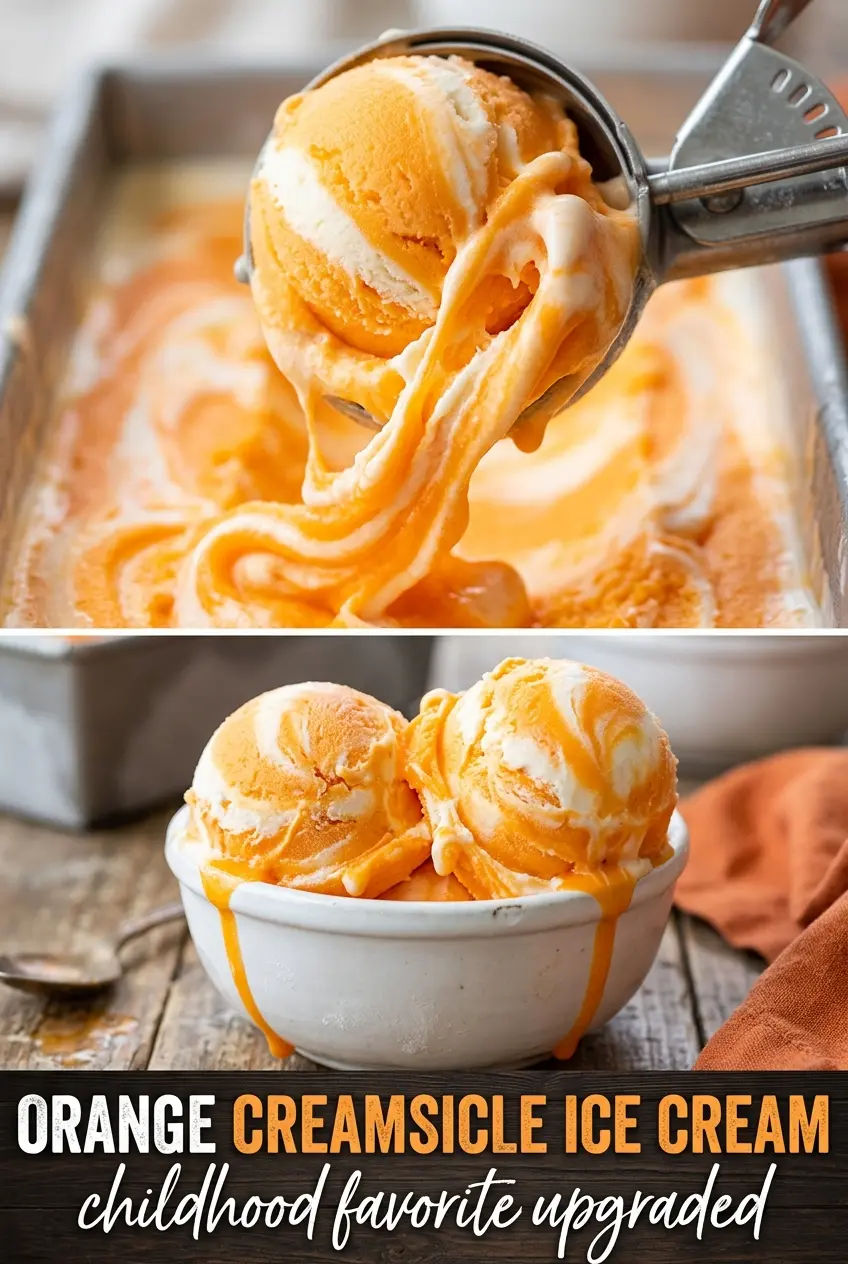
Orange Creamsicle Ice Cream hits that sweet spot between bright citrus and rich vanilla custard, with a texture that stays scoopable instead of icy. The orange ripple cuts through the cream in little bursts, and every bite tastes like the frozen treat people remember from the ice cream truck, only smoother and more balanced.
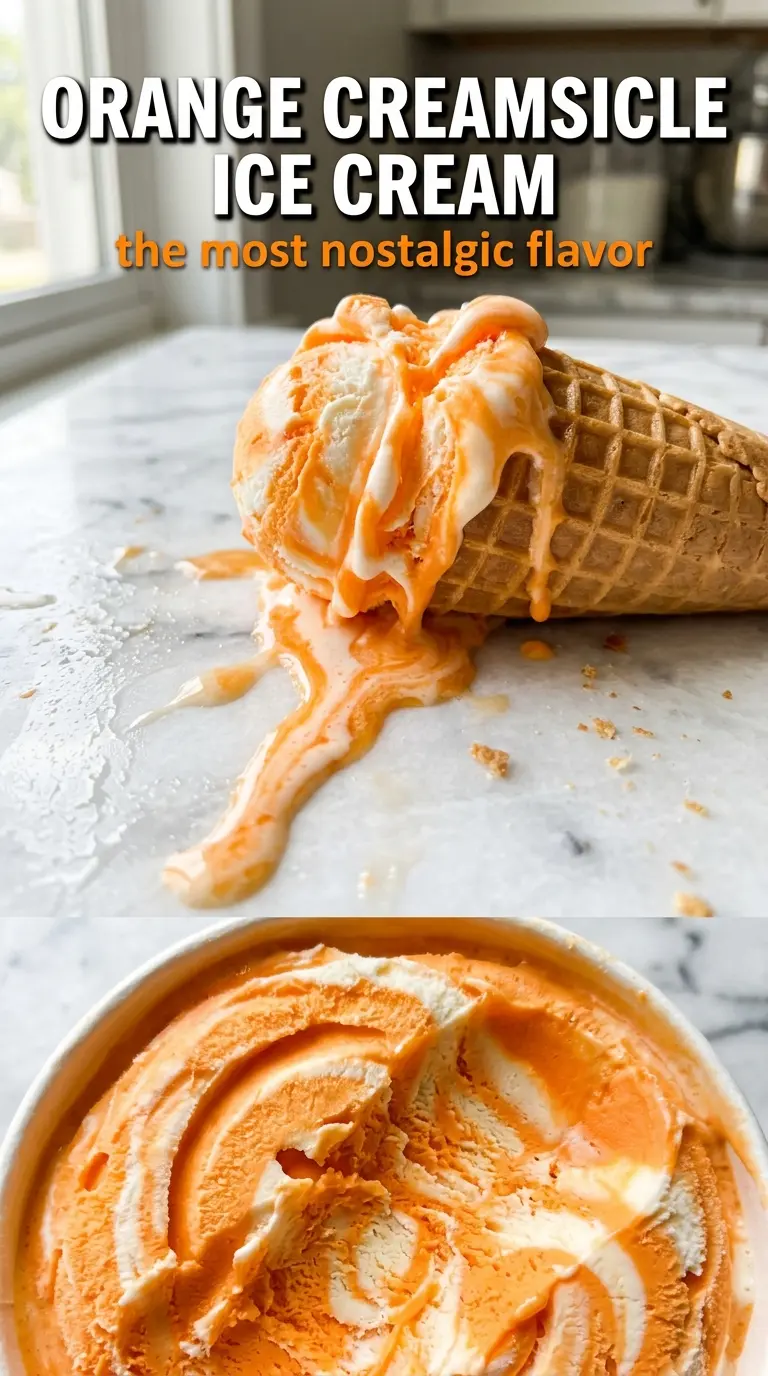
The trick is building the base like a proper custard first, then cooking the orange juice with sugar until it turns lightly syrupy. That keeps the citrus flavor vivid without watering down the ice cream. The swirl goes in at the very end, after the vanilla base has already thickened, so the two flavors stay distinct instead of blending into one pale orange mixture.
Below, I’ve included the part that matters most: how to keep the custard from scrambling, how to get a clean orange swirl, and what to do if you want the same nostalgia without an ice cream maker.
The vanilla base turned out silky, and the orange swirl stayed bright instead of disappearing. I chilled mine overnight and it scooped beautifully straight from the freezer.
Love the orange-and-vanilla swirl? Save this Orange Creamsicle Ice Cream for the days when you want a nostalgic dessert with a clean, creamy finish.
The Custard Base Has to Stay Gentle or It Scrambles
The biggest mistake with homemade ice cream is rushing the custard once the eggs go in. If the heat climbs too fast, you get sweet scrambled eggs instead of a smooth base. Keep the pan over medium-low and whisk constantly, especially along the bottom and sides where the mixture thickens first.
You’re looking for 175°F and a texture that coats the back of a spoon. It should feel thickened, not pudding-like. If it ever starts to look grainy, pull it off the heat immediately and strain it right away; the strainer can save a custard that was just beginning to overcook.
What the Orange Syrup Is Doing That Juice Alone Can’t
Heavy cream gives the ice cream its lush texture. That fat content keeps the churned base from turning hard and icy in the freezer, so this isn’t the place to swap in low-fat dairy.
Whole milk balances the cream so the base stays rich without feeling heavy. You can replace it with half-and-half in a pinch, but the final ice cream will be a little softer and less clean on the palate.
Egg yolks make the custard stable and give it that classic scoop shop body. Don’t skip them unless you’re intentionally making a Philadelphia-style ice cream, because the texture changes a lot.
Fresh orange juice and zest need a quick simmer with sugar. That concentrates the flavor and takes the edge off the acidity, which is why the orange tastes bright instead of sharp. Bottled juice won’t give the same fresh finish, and you’ll miss the perfume from the zest.
Vanilla extract rounds out the citrus and makes the whole dessert taste like the creamsicle you remember. Use real extract here; imitation vanilla can taste flat next to the orange.
Building the Swirl Without Losing It
Heating the Dairy and Tempering the Yolks
Warm the cream and milk until they’re steaming but not boiling. In a separate bowl, whisk the yolks with half the sugar until they lighten a little, then stream in the hot dairy while whisking constantly. That slows the temperature jump and keeps the yolks from turning into little ribbons of cooked egg.
Cooking the Custard to the Right Point
Return everything to the pan and cook over medium-low heat, whisking the whole time, until it reaches 175°F. The mixture will thicken enough to coat the spoon, but it should still pour. If you wait until it feels thick in the pan, you’ve already gone too far.
Reducing the Orange Flavor
Cook the orange juice, zest, and remaining sugar in a small saucepan until slightly syrupy, then cool it completely. This concentrates the citrus and prevents extra water from diluting the churned ice cream. Warm syrup will melt the custard base on contact, which is how the swirl gets muddy instead of streaky.
Churning and Swirling at the End
Churn the chilled custard until it’s thick and soft-serve like. In the last couple of minutes, drizzle in the orange syrup slowly so it ribbons through the ice cream instead of disappearing into it. Transfer the ice cream to a container in spoonfuls, then add a few extra drizzles of syrup between layers if you want visible streaks after freezing.
How to Adapt This for Different Freezers, Diets, and Preferences
Dairy-Free Orange Creamsicle Ice Cream
Use full-fat canned coconut milk in place of the cream and milk, and whisk the custard base just until it thickens slightly. You’ll lose some of the classic dairy richness, but the coconut adds a soft background that plays well with orange. Keep the vanilla and zest strong so the flavor doesn’t go flat.
No-Ice-Cream-Maker Version
Pour the chilled base into a shallow metal pan, freeze it, and stir vigorously every 30 minutes for the first 3 hours. You won’t get the same airy churn, but you can still break up ice crystals and keep the texture spoonable. Add the orange syrup during one of the last stirs so the swirl stays visible.
Extra Bright Citrus Flavor
Add a little more zest, not more juice, if you want a punchier orange taste. Juice adds liquid, but zest carries the oils that taste like fresh oranges. Too much zest can turn bitter, so add it in small increments and taste the syrup before chilling it.
Storage and Reheating
- Refrigerator: Not recommended; this is best frozen, and the custard base will lose its texture if it sits in the fridge after churning.
- Freezer: Store in an airtight container for up to 2 weeks. Press parchment directly on the surface to limit ice crystals and protect the swirl.
- Reheating: No reheating needed. Let it sit at room temperature for 5 to 10 minutes before scooping; that gives the custard time to soften without melting the edges.
Answers to the Questions Worth Asking
Orange Creamsicle Ice Cream
Ingredients
Equipment
Method
- Heat the heavy cream and whole milk until steaming. Visual cue: small bubbles and steam rise from the surface.
- Whisk the hot cream mixture into the egg yolks beaten with 1/2 cup granulated sugar. Visual cue: the custard mixture turns smooth and slightly thickens.
- Return to heat and cook until the custard reaches 175F, whisking to prevent scorching. Time range: about 5 minutes; visual cue: it coats the back of a spoon.
- Strain the custard into a clean bowl. Visual cue: a smooth, lump-free texture without any egg bits.
- Stir in vanilla extract and salt, then cool completely. Visual cue: the mixture cools to room temperature before chilling.
- Combine fresh orange juice, orange zest, and the remaining 1/4 cup granulated sugar in a small saucepan. Visual cue: the sugar dissolves as the liquid warms.
- Simmer for 5 minutes until slightly syrupy, then cool completely. Visual cue: it looks glossy and coats a spoon lightly.
- Churn the vanilla custard in an ice cream maker until thick. Visual cue: it looks like soft-serve and holds peaks.
- In the last 2 minutes, drizzle in the orange syrup to create swirls, and do not fully mix. Visual cue: distinct orange streaks remain.
- Transfer to a container, layering spoonfuls while keeping the swirl pattern. Visual cue: a marbled orange-and-vanilla look on the surface.
- Freeze at least 4 hours. Visual cue: the ice cream becomes firm enough to scoop cleanly.