Crisp-edged, custardy, and packed with soft cinnamon apples, this overnight French toast casserole turns into the kind of breakfast people hover around before the pan even hits the table. The bread bakes up puffed and golden on top, with a soft, rich center that holds its shape just enough to slice cleanly. The streusel gives you that buttery crackle on top, and the apples melt into the custard without disappearing completely.
What makes this version work is the balance: brioche or challah gives you enough richness to soak up the custard without collapsing, while the apples add moisture and keep every bite from feeling heavy. The overnight rest matters here. It gives the bread time to absorb the egg mixture all the way through, so you don’t end up with a dry top and a soupy bottom. A little maple syrup in the custard pulls the whole dish toward warm, caramelized flavor before it even goes in the oven.
Below, I’ve included the one step that matters most for texture, plus a few swaps that keep the casserole working when you need to use a different bread or feed a smaller crowd.
The bread soaked overnight and baked up with that perfect custardy middle. The apples stayed tender, the top got crisp, and the streusel was the first thing gone.
Save this overnight cinnamon apple baked French toast casserole for slow mornings when you want a golden, puffed breakfast with a crisp streusel top.
The Overnight Rest Is What Keeps the Center Custardy
If the bread goes straight into the oven after the custard is poured, the outside of the casserole bakes before the inside has time to absorb enough liquid. That’s how you end up with dry chunks on top and wet bread at the bottom. Overnight chilling fixes that by giving the egg mixture time to soak into every cube, especially the denser pieces in the middle of the dish.
Pressing the bread down gently after pouring the custard helps, but don’t smash it flat. You want the cubes to settle into the liquid, not turn into bread paste. The other thing that matters is the rest before baking: taking the dish out of the fridge for about 30 minutes keeps the center from going into the oven ice-cold, which can throw off the bake and leave you with a pale, under-set middle.
- Challah or brioche — These breads are rich enough to stand up to a full custard soak without disintegrating. Day-old bread works best because it absorbs liquid more evenly than very fresh bread.
- Apples — Firm apples hold their shape and give the casserole little bursts of soft fruit instead of turning to mush. If yours are very sweet, cut the brown sugar in the custard slightly.
- Maple syrup in the custard — This adds depth that plain sugar can’t give. It bakes into the bread instead of just sitting on top, so every bite tastes seasoned all the way through.
What Each Ingredient Is Doing in the Dish
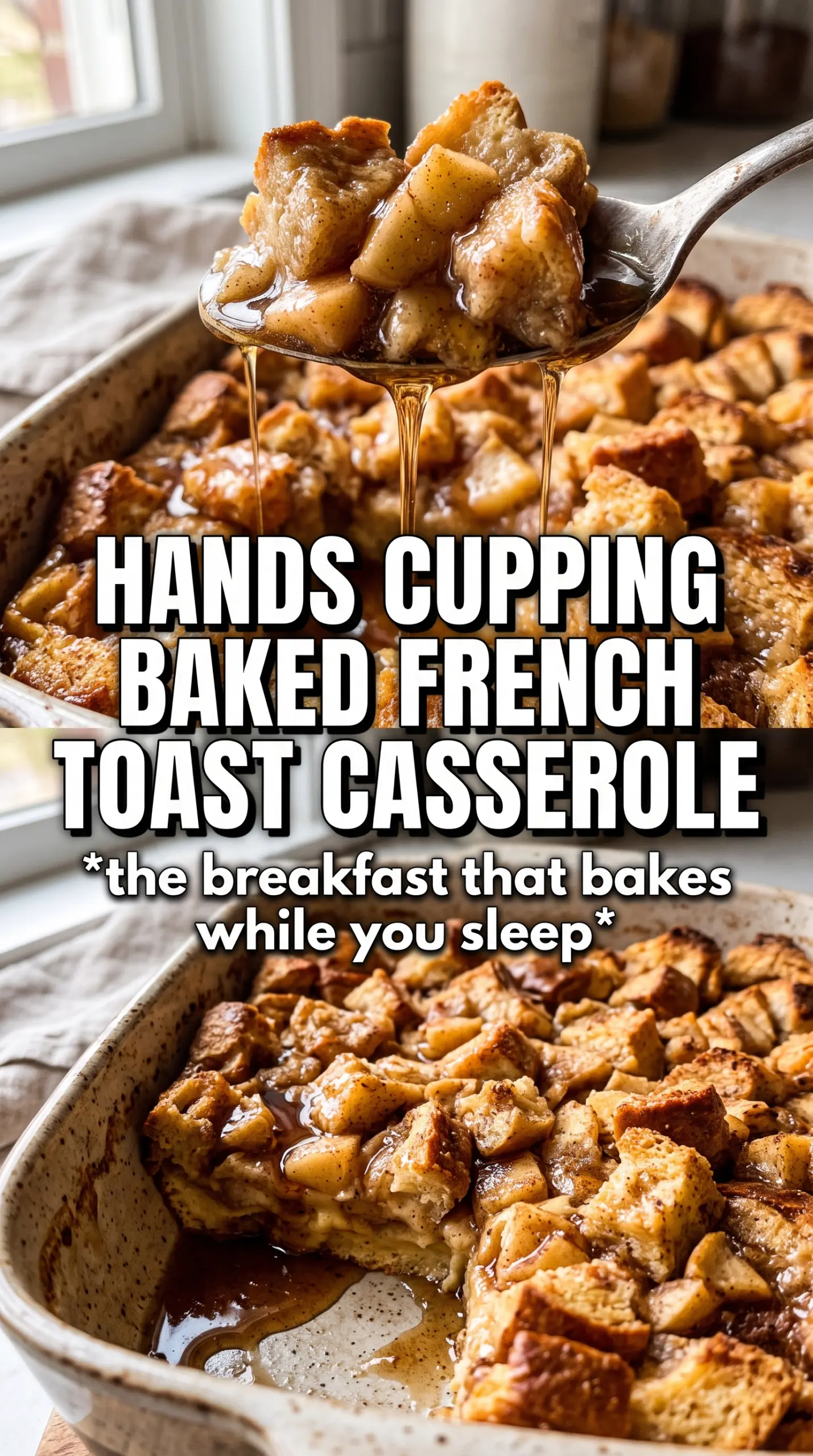
- Brioche or challah — This is the structure. Its rich, eggy crumb soaks up custard without turning soggy, and it bakes into soft layers instead of a dense bread pudding texture. Thick cubes hold their shape better than torn pieces.
- Apples — They bring moisture, sharpness, and enough texture to keep the casserole from tasting one-note. Peel them so the skins don’t curl up and toughen while baking.
- Eggs, milk, and cream — This is the custard base, and the cream matters. You can swap in half-and-half if needed, but the finished casserole will be a little less plush. Whole milk keeps the texture balanced instead of heavy.
- Maple syrup and brown sugar — Maple gives a round, caramel note, while brown sugar deepens the baked apple flavor. If you replace both with white sugar, the casserole still works, but it tastes flatter.
- Cinnamon, nutmeg, and vanilla — These season the custard so the flavor is baked in, not just dusted on top. The nutmeg is subtle, but don’t leave it out; it makes the cinnamon taste warmer and more complete.
- Cold butter for the streusel — Cold butter is what keeps the topping crumbly. If the butter softens too much, the streusel melts into the top instead of baking into crisp little clumps.
Building the Casserole So the Top Stays Crisp
Layering the Bread and Apples
Grease the dish well, then spread the bread cubes and diced apples in an even layer so the custard can move through the whole pan. If you pile everything in one corner, the center will soak differently from the edges and bake unevenly. A good even layer gives you those soft custardy bites all the way through instead of dry pockets near the top.
Whisking the Custard Until It Looks Uniform
Whisk the eggs, milk, cream, maple syrup, sugar, spices, vanilla, and salt until the mixture looks completely blended and a little frothy on top. You don’t want streaks of egg white or unmixed brown sugar, because those can leave specks of baked egg in the finished casserole. Pour it slowly over the bread so the liquid has time to settle into the gaps.
Making the Streusel Crumbly, Not Pasty
Cut the cold butter into the flour, brown sugar, and cinnamon until the mixture forms uneven crumbs with some larger bits. Those bigger pieces are what bake into the best crunchy topping. If the butter starts to melt into a dough, stop and chill the bowl for a few minutes before continuing.
Baking Until the Center Sets
Bake until the top is deeply golden, puffed around the edges, and the center no longer looks wet or sloshy when you give the pan a gentle shake. The casserole will still have a slight wobble in the middle, but it shouldn’t look liquid. If the top browns too fast, lay a loose piece of foil over it for the last stretch of baking and keep going until the center is set.
Three Ways to Adapt This Casserole Without Losing the Texture
Dairy-Free Version
Use full-fat coconut milk or an unsweetened dairy-free cream in place of the cream, and swap the milk for an unsweetened non-dairy milk with some body, like oat milk. The casserole will still set, but the flavor turns a little less rich and more subtly sweet. Keep the butter in the streusel if you can, or use a plant-based butter that stays firm when cold.
Gluten-Free Bread Swap
Use a sturdy gluten-free loaf that’s a little dry rather than soft sandwich bread, since soft GF bread can turn gummy after an overnight soak. Cut it into larger cubes so it keeps more structure. The casserole may need a few extra minutes in the oven, especially if the bread is very dense.
Make It Ahead for a Smaller Crowd
Halve the recipe and bake it in an 8×8-inch or 9×9-inch dish, but keep the soaking time overnight so the texture stays consistent. The bake time will be shorter, so start checking earlier for a golden top and a center that no longer looks wet. Smaller pans brown faster, so tent with foil if needed.
Extra Maple, Less Sugar
If you want the maple flavor to lead, reduce the brown sugar in the custard and serve the finished casserole with warm maple syrup instead of powdered sugar. You’ll get a cleaner maple-cinnamon finish and a little less sweetness overall. Don’t cut the sugar too far or the custard can taste flat against the apples.
Storage and Reheating
- Refrigerator: Store covered for up to 4 days. The top softens as it sits, but the flavor stays good.
- Freezer: Freeze baked slices tightly wrapped for up to 2 months. The texture is a little softer after thawing, but it still works well for make-ahead breakfasts.
- Reheating: Warm individual portions in a 325F oven or toaster oven until heated through. The microwave works in a pinch, but it softens the streusel instead of bringing it back to crisp.
Answers to the Questions Worth Asking
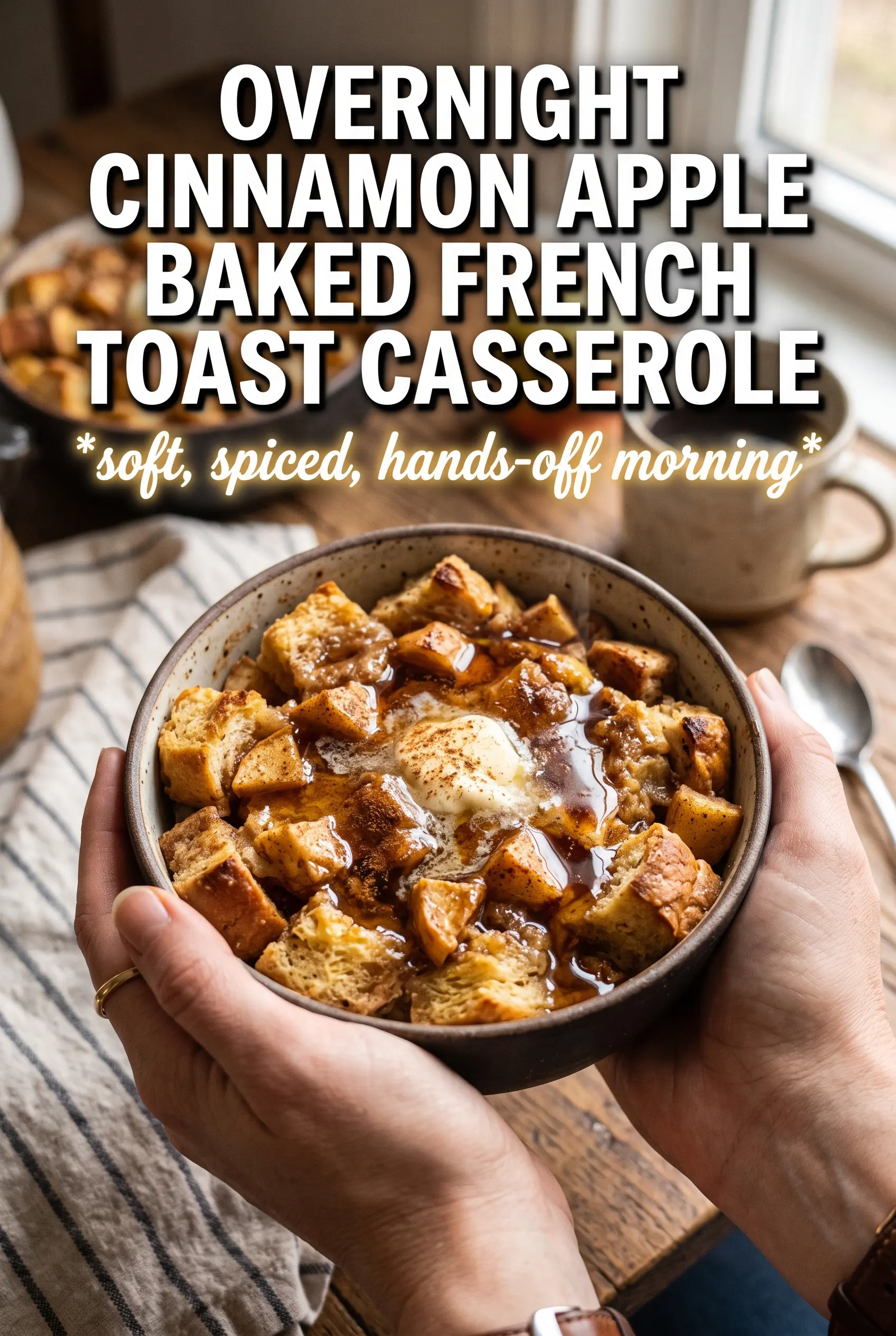
Overnight Cinnamon Apple Baked French Toast Casserole
Ingredients
Equipment
Method
- Grease a 9x13 baking dish, then arrange the brioche/challah cubes and diced apples in an even layer.
- In a mixing bowl, whisk eggs, whole milk, heavy cream, maple syrup, brown sugar, cinnamon, nutmeg, vanilla extract, and salt until smooth.
- Pour the custard over the bread and apples, making sure everything is moistened.
- Press the bread down gently to absorb the custard, then cover tightly.
- Refrigerate overnight, about 8 hours, until the bread is fully soaked.
- Make the streusel by combining flour, brown sugar, and cinnamon, then cut in cold butter until crumbly.
- Remove the casserole from the fridge and let it stand for 30 minutes while you preheat the oven to 350°F.
- Scatter the streusel evenly over the top of the casserole.
- Bake at 350°F for 50–55 minutes, until the center is set and the top is golden and puffed.
- Serve warm with a drizzle of maple syrup and a dusting of powdered sugar.


