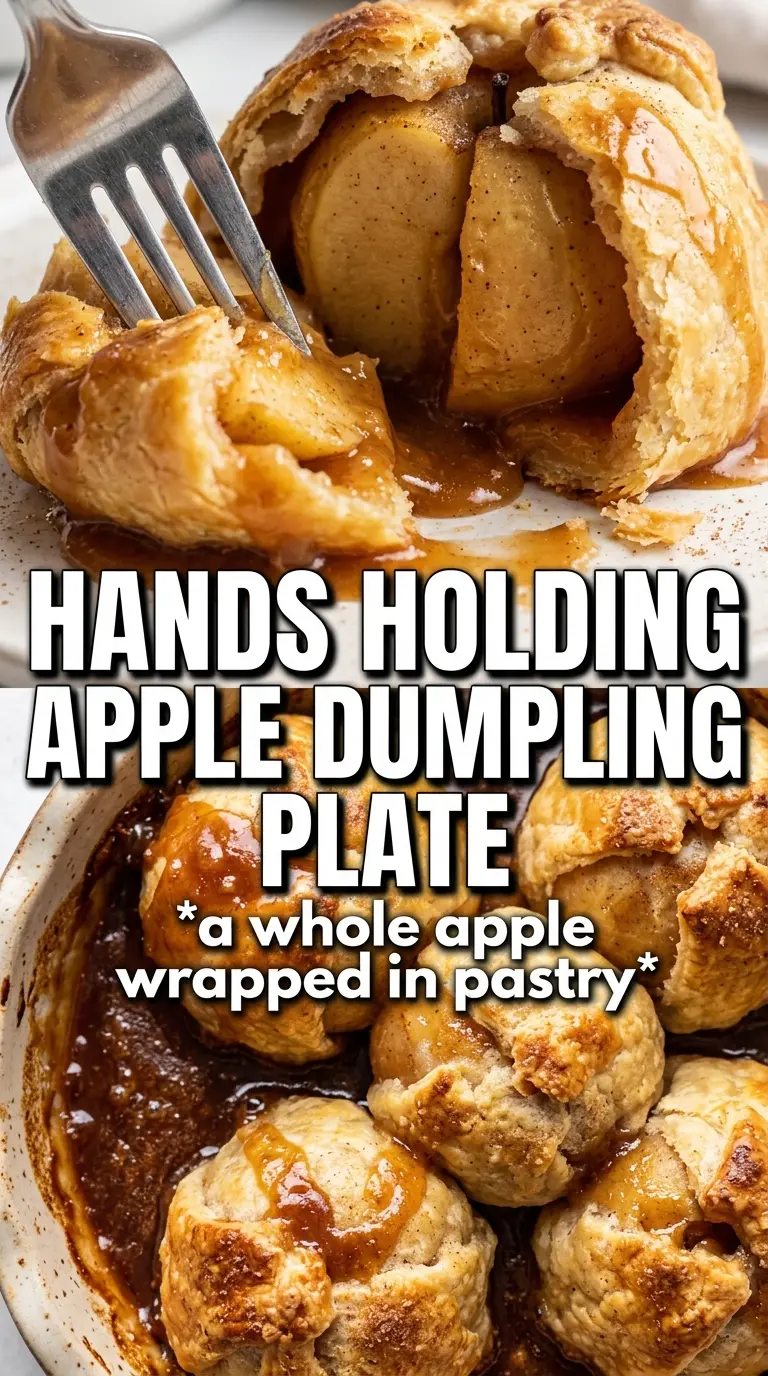
Golden pastry, tender baked apples, and a cinnamon-brown sugar syrup pooling in the bottom of the pan make Pennsylvania Dutch apple dumplings the kind of dessert people remember. The pastry bakes up crisp on the outside and soft where it drinks in the syrup, while the apple inside turns spoon-tender without collapsing into applesauce. Every bite has that contrast of flaky crust, warm fruit, and a sweet sauce that begs to be spooned over the top.
This version keeps the filling simple on purpose. Small whole apples hold their shape better than large ones, and the syrup is poured around the dumplings instead of over them so the pastry can brown instead of turning soggy. The butter in the apple cavity melts into the cinnamon sugar and seasons the fruit from the inside out, which is what gives each dumpling that old-fashioned, bakery-style finish.
Below you’ll find the detail that matters most for this dessert: how to wrap the pastry so it seals without tearing, how to judge when the apples are done, and a few smart swaps if you need to work with what you already have in the kitchen.
The pastry stayed crisp on top, and the syrup thickened just enough in the pan without turning gluey. I used Honeycrisp apples and the centers baked soft while still holding their shape.
Save these Pennsylvania Dutch Apple Dumplings for the night you want flaky pastry, tender apples, and warm cinnamon syrup in one pan.
The Part That Keeps the Pastry From Turning Heavy
The biggest mistake with apple dumplings is rushing the assembly so the dough tears, then leaking syrup creeps into the seam and softens the pastry from the inside. Cold dough is the fix. It rolls more cleanly, seals better, and bakes into defined layers instead of a dense wrapper. If the dough starts to get sticky while you work, stop and chill it for a few minutes before continuing.
The other detail that matters is the syrup placement. It belongs around the dumplings, not poured directly over the tops, because the exposed pastry needs direct oven heat to brown. The syrup bubbles up as the apples bake, and that steam helps soften the fruit without flooding the crust.
- Keep the dough cold — Cold shortening or butter creates little pockets that turn into flakiness in the oven. Warm dough smears and loses that lift.
- Seal the seams firmly — Pinch the pastry together where it meets over the apple, especially near the stem end, or the filling can escape as the apples shrink.
- Use small apples — Smaller fruit bakes through at the same time the pastry finishes. Large apples often leave you with dough that’s done before the center softens.
What Each Ingredient Is Doing in the Pan
- All-purpose flour — This gives the pastry enough structure to wrap around the apples without shattering, while still staying tender after baking.
- Cold shortening or butter — Shortening gives the flakiest, most stable crust, while butter brings more flavor. I like butter if I want richer pastry, but shortening is a little easier for clean wrapping. Either one needs to stay cold.
- Ice water — Just enough moisture brings the dough together. Too much water makes it tough, and too little leaves dry patches that crack when you roll it.
- Small whole apples — This is where quality matters. Use firm apples that hold shape in the oven, like Granny Smith, Jonagold, or Honeycrisp. Soft apples collapse before the pastry finishes.
- Brown sugar and cinnamon — These season the inside of the apple and help build the syrup that pools in the baking dish. The brown sugar melts into a caramel-like sauce that tastes deeper than plain granulated sugar alone.
- Unsalted butter — A little butter in the apple cavity and syrup adds richness and helps the cinnamon sugar melt into something glossy instead of grainy.
Wrapping, Filling, and Baking the Dumplings So They Stay Put
Mixing the Pastry
Stir the flour and salt together first, then cut in the cold shortening or butter until the mixture looks like coarse crumbs with a few pea-sized pieces left. Those chunks are what create flakiness later, so don’t overwork them into a paste. Add the ice water a tablespoon at a time and stop as soon as the dough comes together when pressed. If it feels sticky, it’s already too wet for easy wrapping.
Filling the Apples
Peel and core the apples, then set one in the center of each dough circle. Pack brown sugar, cinnamon, and a piece of butter into the cavity. The filling should sit inside the apple, not spill over the top, or it will leak out and burn on the baking dish. A firm fill gives you the best contrast between the sweet center and the tender fruit.
Sealing the Pastry
Bring the pastry up around the apple and pinch the edges together where they meet. Turn the dumpling seam-side down if you need help keeping it closed while you move it to the dish. If the dough tears, patch it with a small scrap and press the seam back together with your fingertips. The goal is a complete seal, but it doesn’t need to look perfect before baking.
Adding the Syrup and Baking
Bring the syrup ingredients to a boil on the stove so the sugar dissolves fully, then pour it around the dumplings in the pan. Bake until the pastry is deep golden and the apples can be pierced easily with a paring knife. If the tops brown too fast, lay a loose sheet of foil over the dish for the last part of baking. The syrup should look bubbling and slightly thickened at the edges when the dumplings come out.
How to Change These Dumplings Without Losing the Good Part
Butter crust instead of shortening
Use cold butter in place of shortening for a richer, more flavorful pastry. The dough may be a little softer and less forgiving to roll, but the tradeoff is worth it if you want a more bakery-style crust. Keep everything chilled and work quickly so the butter stays in little pieces.
Gluten-free version
A one-for-one gluten-free flour blend can work for the pastry, but it usually needs a touch more water and a gentler hand. Roll it between sheets of parchment if the dough starts cracking. The finished crust is a little more delicate, but the flavor and syrupy apple filling still come through.
Different apples, different result
Tart apples like Granny Smith give you the cleanest contrast against the sweet syrup, while sweeter apples like Honeycrisp or Fuji make the filling softer and milder. Avoid apples that get mealy in the oven, or the center will lose its shape before the pastry is finished.
Storage and Reheating
- Refrigerator: Store leftovers covered for up to 3 days. The pastry softens a little as it sits, but the flavor stays excellent.
- Freezer: These freeze well after baking. Wrap individually and freeze for up to 2 months, then thaw in the refrigerator before reheating.
- Reheating: Warm in a 325°F oven until heated through. The oven keeps the crust from going limp; the microwave will make the pastry chewy and the syrup watery.
Questions I Get Asked About This Recipe
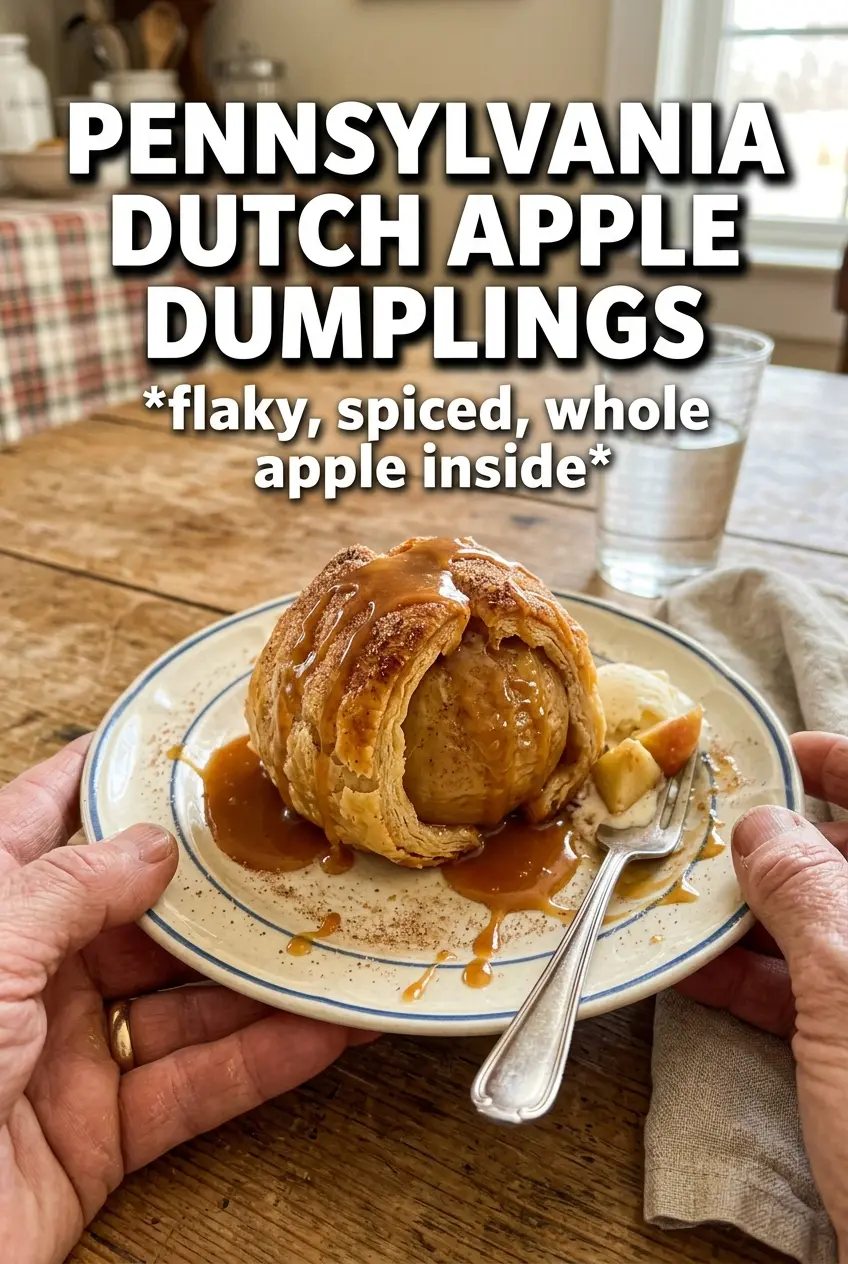
Pennsylvania Dutch Apple Dumplings
Ingredients
Equipment
Method
- Preheat the oven to 375F and grease a 9x13 baking dish with light coating so the dumplings don’t stick.
- Combine all-purpose flour and salt in a bowl, then cut in cold shortening or butter until the mixture is crumbly with no large chunks.
- Add ice water a little at a time until the dough comes together, then divide it into 6 portions.
- Roll each dough portion into a circle large enough to wrap one apple.
- Place an apple on each circle and fill the core cavity with 1 tablespoon brown sugar, 1/2 teaspoon cinnamon, and a pat of butter.
- Wrap the pastry around each apple, pinching edges to seal, then place each dumpling seam-side down in the prepared dish.
- Combine water, granulated sugar, brown sugar, unsalted butter, and cinnamon in a saucepan and bring to a boil, then keep it at a boil briefly before using.
- Pour the hot syrup around the dumplings so the liquid pools in the dish rather than covering the tops.
- Bake 40-45 minutes at 375F until the pastry is golden and the apples are tender, with a glossy syrup sheen around each dumpling.


