Roasted garlic butternut squash pasta lands on the table with a sauce that’s silky, golden, and clingy enough to coat every ridge of rigatoni. The squash brings sweetness and body, but the roasted garlic keeps it from tasting flat or one-note, so the whole bowl feels rich without being heavy. A little parmesan sharpens the edges, and crispy sage gives each bite a crackly finish that makes the whole dish feel complete.
The trick here is roasting both the squash and the garlic until they’re fully soft, not just browned on the outside. If the squash is underdone, the sauce turns grainy instead of plush. If the garlic isn’t roasted long enough, it stays sharp and slices through the sauce instead of folding into it. Blending the squash with cream, broth, and just enough pasta water gives you a sauce that’s smooth but still loose enough to coat the pasta properly.
Below, I’ve included the small details that matter most: how to keep the sauce from turning pasty, what the roasted garlic is doing here, and the simplest way to adjust the richness if you want a lighter bowl.
The sauce came out unbelievably smooth, and the roasted garlic made it taste deep and savory instead of just sweet squash. I added the pasta water like you said and it coated the rigatoni perfectly.
Save this roasted garlic butternut squash pasta for a creamy rigatoni dinner with crispy sage and a smooth, golden sauce.
The Reason This Sauce Stays Silky Instead of Turning Pasty
Butternut squash can make a gorgeous pasta sauce, but it has one common problem: it turns thick fast and can go gluey if you treat it like a regular cream sauce. The difference here is that the squash gets roasted until completely tender, then blended with broth and pasta water so the finished sauce stays supple. That extra liquid matters because squash thickens as it sits, especially once the parmesan goes in.
Roasted garlic changes the whole balance of the dish. Raw garlic would taste sharp and separate from the sweetness of the squash, but roasted garlic turns soft, nutty, and mellow enough to disappear into the base. If your sauce ever tastes flat, it’s usually because it needs either more salt or a sharper edge from parmesan, not more cream.
What Each Ingredient Is Actually Doing In This Dish
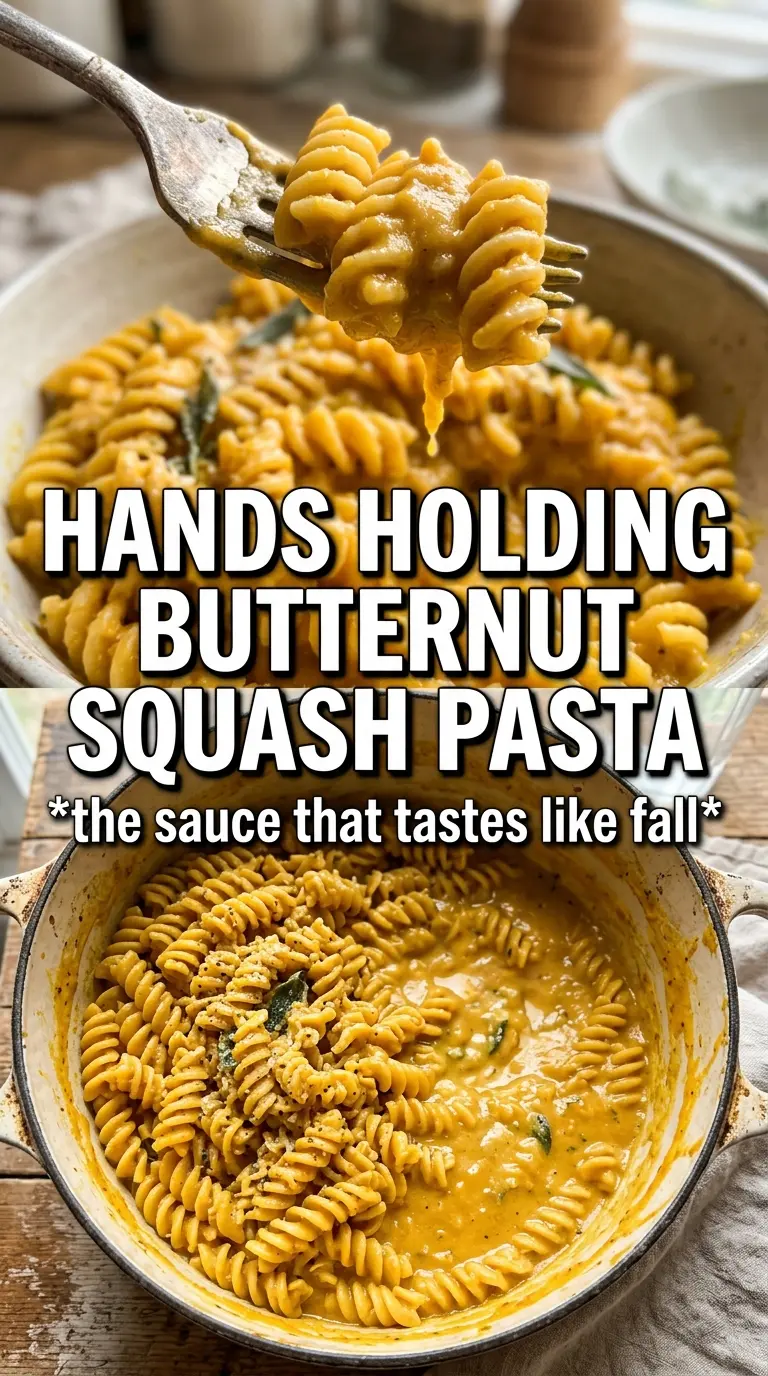
- Butternut squash — This is the body of the sauce. Roast it until a knife slides through with no resistance; if it’s even a little firm, the blender will leave tiny bits that read as grainy in the final sauce.
- Garlic — Roasting the whole head turns the cloves sweet and spreadable. You can’t get the same mellow depth from sautéed garlic here, because that would keep the sauce sharper and less round.
- Heavy cream — It adds richness and helps the sauce emulsify, but it shouldn’t be the only liquid. The broth and pasta water keep the sauce from tasting heavy.
- Vegetable broth — This loosens the purée without watering it down. If yours is salty, hold back a little extra seasoning until the end.
- Parmesan — This is the savory anchor. Use the real stuff and grate it finely so it melts smoothly; pre-shredded cheese can leave the sauce a little grainy.
- Fresh sage — Fried crisp, it gives the dish a crackling top note that cuts through the creaminess. Dried sage won’t give you the same finish.
- Nutmeg and red pepper flakes — Nutmeg warms the squash without calling attention to itself, and the pepper flakes keep the sauce from tasting one-dimensional. They’re quiet, but they matter.
- Rigatoni or penne — Tube pasta holds the sauce inside and out. Long noodles work, but you lose some of that satisfying bite against the thick sauce.
Getting the Roast, Blend, and Toss Right
Roasting Until the Squash Collapses
Cut the squash in half, brush the cut sides with olive oil, and roast it cut-side down until the flesh is deeply tender and the edges are taking on color. The garlic head goes in at the same time, wrapped in oil and roasted until the cloves are soft enough to squeeze out like paste. If either one feels firm in the center, keep roasting; underdone squash is the fastest way to get a sauce that tastes chalky instead of lush.
Blending Into a Smooth Base
Scoop the squash into a blender with the roasted garlic, cream, broth, nutmeg, and red pepper flakes, then blend until completely smooth. Stop and scrape down the sides if needed, because any stubborn bits of squash will show up in the finished sauce. If the mixture looks too thick to move, add a splash more broth before blending again. You want it pourable, not stiff.
Finishing the Sauce in the Pan
Pour the purée into a skillet and let it simmer for about five minutes so the flavors knit together and the excess moisture cooks off. Stir in the parmesan off the strongest heat, then toss with the pasta and add pasta water a little at a time until the sauce clings instead of sitting in the bottom of the pan. If the sauce starts to look tight, that’s your cue to add more pasta water; if it looks loose, give it another minute.
The Crispy Sage Finish
Fry the sage leaves in a thin layer of oil just until they darken and crisp, then drain them on paper towels. They should sound delicate when you touch them, not limp or leathery. Break them over the pasta right before serving so they keep their texture. If they sit in the sauce too long, they soften fast and lose the contrast that makes them worth adding.
How to Adapt This for Different Kitchens and Different Cravings
Dairy-Free Version
Swap the cream for unsweetened oat cream or full-fat coconut milk, and use a dairy-free parmesan-style cheese if you want that salty finish. Oat cream keeps the flavor closest to the original; coconut milk works, but it brings a faint sweetness that leans the dish a little farther from classic Italian-American comfort.
Gluten-Free Bowl
Use your favorite gluten-free short pasta and pull it from the water while it still has a little bite. Gluten-free pasta can go soft fast once it meets the thick sauce, so toss it immediately and serve right away rather than letting it sit in the pan.
A Lighter Sauce
Replace half the cream with extra vegetable broth and add the parmesan gradually until the sauce tastes balanced. You’ll lose a little of the plush, restaurant-style feel, but the squash and garlic still carry enough richness that the dish doesn’t turn thin.
Storage and Reheating
- Refrigerator: Store leftovers in an airtight container for up to 4 days. The sauce will thicken as it chills.
- Freezer: The sauce freezes well on its own for up to 2 months, but the finished pasta is better fresh. Freeze the sauce separately if you can.
- Reheating: Warm gently on the stove with a splash of broth or water, stirring until the sauce loosens again. High heat can make the cream separate and the pasta dry out before the sauce comes back together.
Answers to the Questions Worth Asking
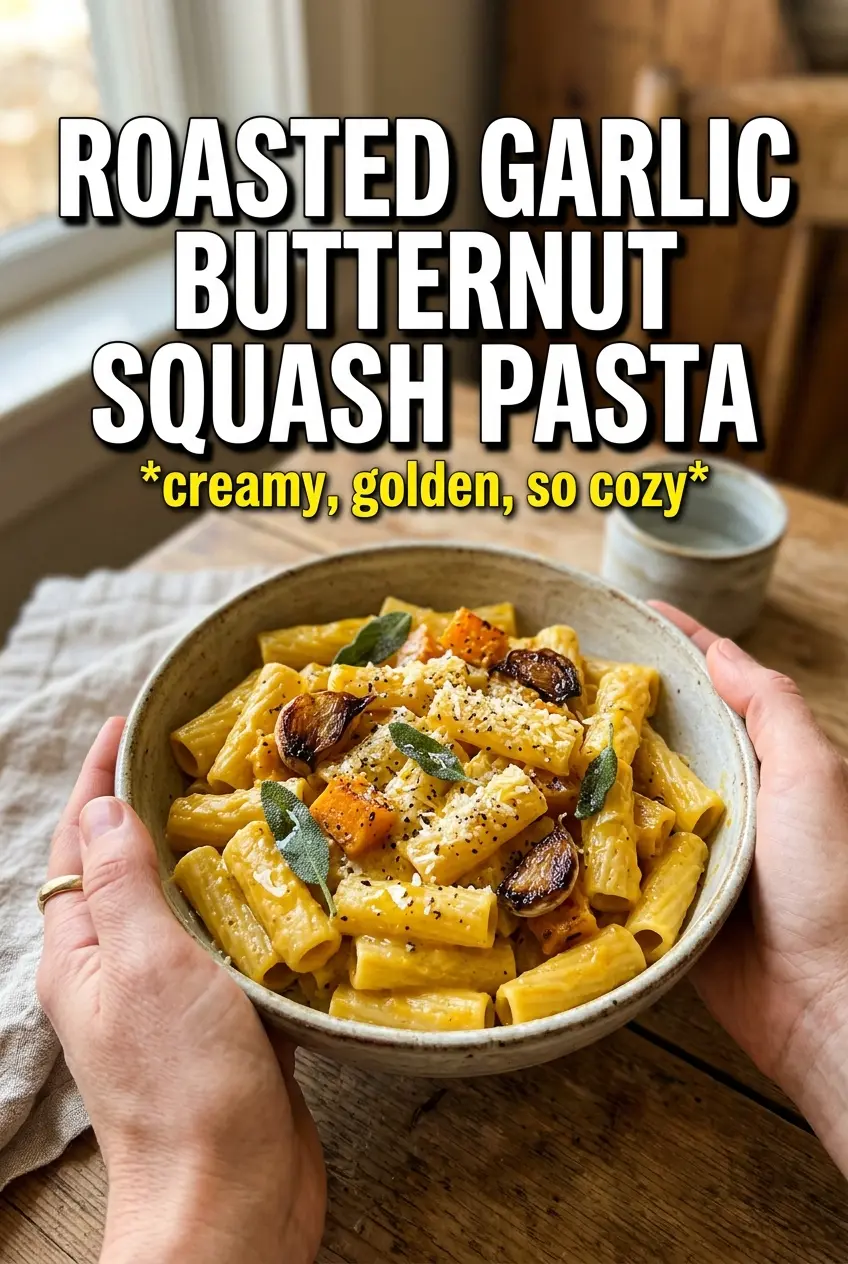
Roasted Garlic Butternut Squash Pasta
Ingredients
Equipment
Method
- Preheat the oven to 425F. Brush the squash halves and the garlic head with olive oil, then season with salt and pepper to taste.
- Roast in the oven for 35-40 minutes for the squash and 35 minutes for the garlic, until completely tender. Use a fork to confirm the squash is soft.
- Scoop the butternut squash flesh from the skins and squeeze the roasted garlic cloves out of their skins. Keep the roasted flesh and garlic together for blending.
- Blend the squash, roasted garlic, heavy cream, vegetable broth, nutmeg, and red pepper flakes until very smooth. Stop and scrape down the blender as needed so the sauce is uniform.
- Simmer the blended sauce for 5 minutes, stirring occasionally. Stir in the parmesan until melted and the sauce turns glossy.
- Cook the rigatoni or penne according to package directions until al dente, then reserve 1/2 cup pasta water. Add cooked pasta to the sauce along with pasta water and toss until evenly coated.
- Top the pasta with crispy fried fresh sage. Serve immediately while the sage stays crisp.


