Deep, dark gumbo has a way of settling into the bowl with a richness that feels earned. The broth should taste layered and steady, not thin or rushed, with smoky sausage, tender shrimp, and okra giving it that classic body that clings to rice instead of sliding right off it. When the roux is right, the whole pot turns into something that tastes like it has been simmering all day, even though most of the work is just patience and attention.
The roux is the backbone here, and it needs time. Flour and oil have to cook long enough to lose their raw taste and move all the way into deep chocolate-brown territory, or the gumbo will taste pale and flat. Adding the broth gradually keeps the base smooth, and waiting to add the shrimp until the end keeps them plump instead of rubbery. Okra goes in after the broth has had time to build flavor, which helps it thicken the pot without turning slimy.
Below you’ll find the small timing details that matter most, plus a few ways to adapt the pot if you need to work with what you have on hand. The difference between good gumbo and memorable gumbo is usually one careful step.
The roux took patience, but it was worth it — the broth turned silky and dark, and the shrimp stayed tender instead of getting tough. My husband kept going back for a second bowl with extra rice.
Save this shrimp and sausage gumbo for the night you want a dark roux, smoky andouille, and a bowl that eats like a full meal.
The Roux Has to Go Dark Enough to Taste the Difference
Most gumbo trouble starts long before the broth goes in. If the roux stops at peanut butter or light caramel, the finished pot will taste dusty and one-note instead of deep and rounded. You want the flour and oil cooked until the color is a rich chocolate brown and the aroma shifts from raw flour to something nutty and toasted.
Stir constantly and keep the heat at medium. A roux that jumps from tan to burnt can’t be fixed, and once it scorches, the whole pot carries that bitterness. If the bottom starts to catch, pull the pan off the heat for a few seconds and keep stirring until the roux calms down again. That little pause is better than trying to outrun a burned pot.
What the Shrimp, Sausage, and Okra Are Each Doing Here
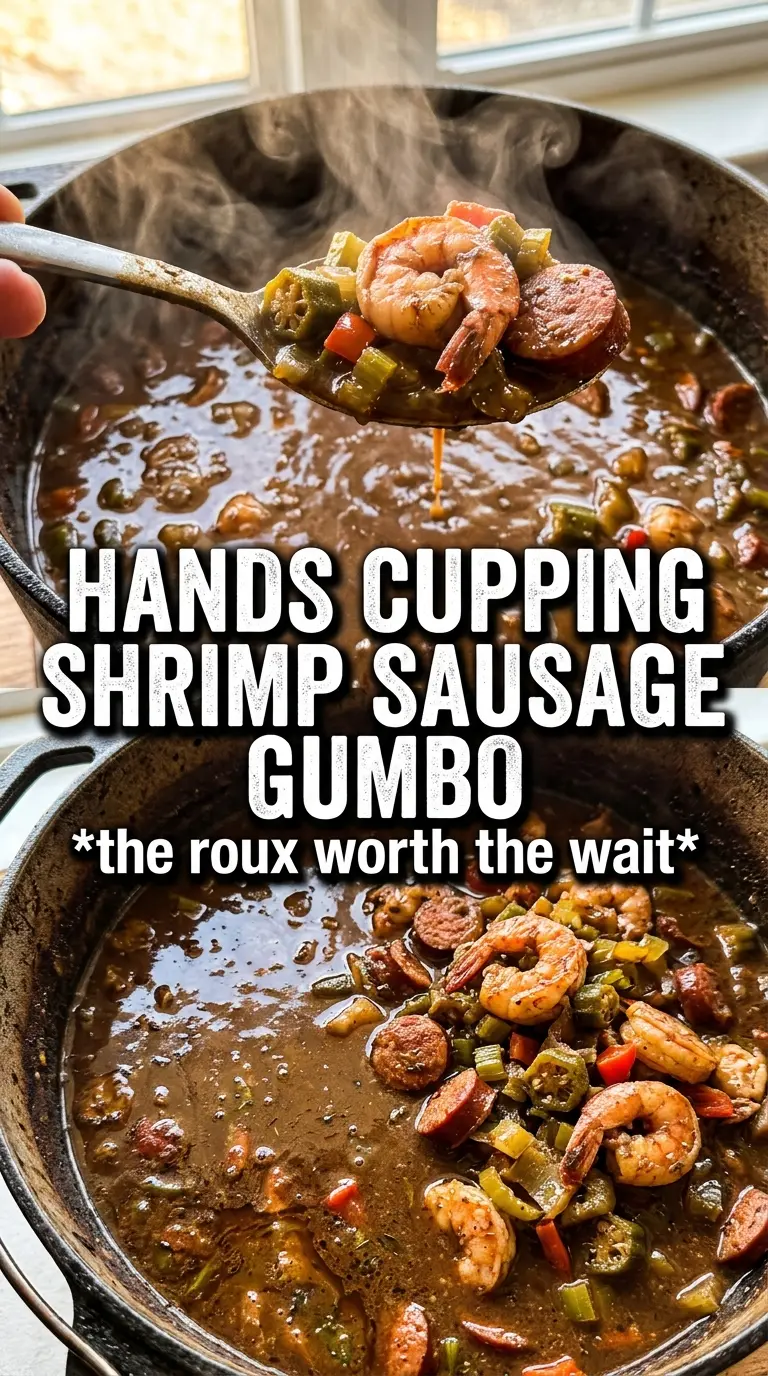
- Andouille sausage — This is where the smoky backbone comes from. Use a good sausage if you can, because bland sausage disappears into the broth. Slice it thick enough to hold up during the simmer so it keeps its texture instead of turning soft.
- Shrimp — Add them at the very end. Shrimp cook fast, and they go from tender to squeaky in a minute or two once the pot is hot. If you’re using smaller shrimp, shave a minute off the final cook time.
- Okra — Okra thickens the gumbo and gives it that classic body without needing extra starch. Fresh is best here, but frozen works if you add it straight from the freezer. Don’t thaw it first or it can get watery and loose.
- Broth — Shrimp broth gives the best seafood depth, but chicken broth still works well and keeps the gumbo balanced. Use a low-sodium version if possible so you can season at the end instead of fighting a salty pot halfway through.
- Filé powder — Optional, but useful if you want a little extra earthiness at the table. Stir it in after the heat is off, or sprinkle it over each bowl. If it boils, it can get stringy and lose its best flavor.
Building the Pot Without Breaking the Roux
Cooking the Aromatics in the Roux
Once the roux hits deep brown, add the onion, celery, and bell pepper right away. They stop the cooking and loosen the base just enough to keep it from darkening too far. Stir them in until they soften and the onion turns translucent, about five minutes, then add the garlic for only a minute so it doesn’t turn bitter. If the garlic goes in too early, it can scorch against the hot roux and throw off the whole pot.
Whisking in the Broth
Pour the broth in gradually while whisking the whole time. The roux will seize at first, then loosen as the liquid builds, and that’s exactly what should happen. If you dump all the broth in at once, you can end up with little lumps of flour that never fully dissolve. Keep whisking until the base looks smooth and glossy before you add the sausage, Cajun seasoning, and bay leaves.
Letting the Gumbo Simmer
Give the pot a long, steady simmer so the broth can taste like it belongs to the roux. This is where the flavor settles in and the sausage seasons the pot from the inside out. Stir now and then to keep anything from sticking on the bottom, especially around the edges of the pot. A gentle simmer is what you want; a hard boil can make the broth muddy and can tighten the sausage.
Finishing with Shrimp and Filé
Stir in the shrimp only after the okra has had time to soften and the gumbo has reached full flavor. They need just a few minutes until they turn pink and curl into firm C-shapes. If they coil into tight O-shapes, they’ve gone too far. Take the pot off the heat before adding filé powder, if using, then taste and adjust the salt and pepper before serving over rice.
How to Adapt the Pot When You’re Missing Something
Dairy-Free and Naturally Gluten-Free Serving
This gumbo is already dairy-free, and it can be made gluten-free only if you swap the flour in the roux for a gluten-free flour blend that browns well. The texture won’t be identical, because wheat flour gives the roux a deeper, more stable flavor, but you’ll still get a rich pot if you cook it patiently. Serve it over rice as written and skip any thickening shortcuts.
Chicken Instead of Shrimp
If shrimp isn’t your thing, bite-size cooked chicken thighs work better than breast because they stay juicy during the simmer. Add the chicken near the end, just long enough to heat through and pick up the broth. You’ll lose the sweet seafood finish, but the gumbo will still have that same smoky, savory base.
If You Don’t Have Filé Powder
Leave it out if you don’t have it. The gumbo already gets body from the roux and okra, so filé is a finishing note, not a requirement. Add it only after the heat is off if you do use it, because boiling can make it stringy and dull its flavor.
Storage and Reheating
- Refrigerator: Store in an airtight container for up to 4 days. The broth thickens as it chills, which is normal.
- Freezer: It freezes well for up to 3 months, but freeze without the rice. Shrimp can get a little firmer after thawing, though the gumbo itself holds up nicely.
- Reheating: Warm it gently on the stove over low heat with a splash of broth or water if needed. Don’t boil it hard, or the shrimp will tighten up and the broth can turn greasy at the edges.
Questions I Get Asked About This Recipe

Shrimp And Sausage Gumbo
Ingredients
Equipment
Method
- Cook all-purpose flour in vegetable oil over medium heat, stirring constantly for 30-35 minutes until deep chocolate-brown, watching closely to avoid burning.
- Add the Holy Trinity (green bell pepper, celery, and onion) and cook for 5 minutes, stirring so the vegetables pick up the roux color.
- Add minced garlic and cook for 1 minute, just until fragrant.
- Gradually add shrimp or chicken broth while whisking constantly to smooth out the roux and create a thick broth.
- Stir in the sliced andouille sausage, Cajun seasoning, and bay leaves.
- Simmer for 45 minutes, keeping the pot at a steady bubble for a rounded, roux-based flavor.
- Add sliced okra and cook for 15 more minutes until the gumbo thickens and the okra turns tender.
- Add peeled and deveined large shrimp and cook for 3-5 minutes until pink and just cooked through.
- Add filé powder if using, then let it rest briefly in the hot gumbo so it disperses.
- Remove bay leaves, then season with salt and pepper to taste.
- Serve gumbo over steamed rice and top with parsley and green onions.


