Slow cooker zucchini lasagna turns tender, cheesy, and spoonable without losing the layered comfort people want from lasagna. The zucchini softens just enough to blend into the sauce and cheese, but it still holds the dish together instead of turning into a watery mess. What comes out of the crockpot is rich, hearty, and sliceable after a short rest, with melted mozzarella running through every layer.
The trick is in the balance. The meat sauce needs to be thick enough to cling to the zucchini, and the ricotta mixture needs the egg and parmesan so it sets into creamy pockets instead of disappearing into the pot. Thin zucchini planks work better than thick slices because they cook evenly and settle into the layers without leaving gaps. I also skip the extra salting step here; the slow cooker does the job of softening the vegetables while the lid keeps everything moist and protected.
Below, I’ll walk you through the layering order that keeps this from falling apart, plus a few smart swaps if you want to use turkey, make it lighter, or stretch it for a bigger crowd.
I usually end up with watery zucchini lasagna, but this one held together after the 15-minute rest and the layers actually sliced cleanly. The meat sauce thickened up nicely in the slow cooker, and the mozzarella on top browned a little around the edges even without the oven.
Save this slow cooker zucchini lasagna for the nights when you want layered comfort with less fuss and no oven heat.
The Zucchini Problem: Why This One Stays Layered Instead of Watery
Most zucchini lasagnas fail for one of two reasons: the vegetables flood the dish, or the layers collapse into a loose casserole. This version avoids both because the slow cooker works gently and evenly, so the zucchini gives off moisture little by little instead of all at once. That matters more than people think. In a casserole dish, the heat can be aggressive enough to make the vegetables weep before the cheese has a chance to set. In the crockpot, everything cooks under a lid, so the sauce and ricotta have time to thicken around the zucchini instead of racing it.
The other key is slice size. Thin planks are what let the layers settle and soften without turning mushy. If the zucchini is cut too thick, you get awkward slabs that stay firm while the cheese overcooks. If it’s sliced too thin, the layers disappear. Aim for flexible, even planks that bend slightly but still look intact when you lift them.
- Thin zucchini planks give the lasagna structure without needing a pre-bake or salting step.
- Thick meat sauce keeps the layers from sliding around and protects the zucchini from turning soupy.
- The 15-minute rest lets steam escape, which is what makes clean slices possible.
What Each Ingredient Is Actually Doing in This Dish
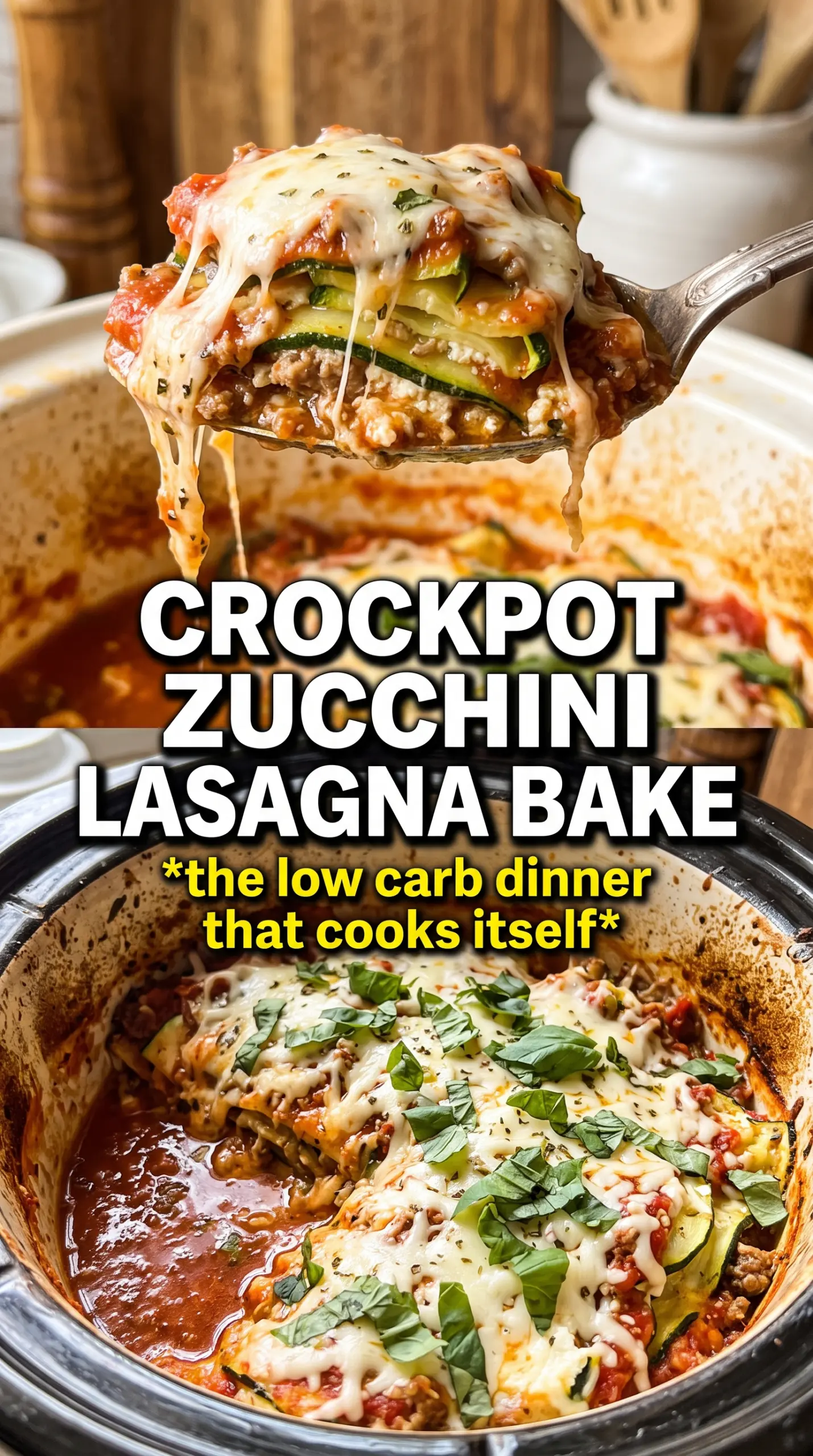
- Zucchini replaces the pasta sheets and gives the dish its shape. Use large, straight zucchini if you can, since they’re easier to slice into long planks. No salting is needed here, because the slow cooker’s closed environment changes the way the moisture behaves.
- Ground beef or turkey adds the savory backbone. Beef brings a deeper, richer finish, while turkey makes the dish lighter and leans more on the marinara and cheese. Either one works as long as you brown and drain it first.
- Marinara sauce should be thick enough to cling to the layers. A thin, watery sauce will pool at the bottom of the cooker. If your jarred sauce looks loose, simmer it for a few extra minutes with the meat before assembling.
- Ricotta, egg, and parmesan create the creamy middle layer. The egg helps the ricotta hold its shape during the long cook, and parmesan adds salt and depth that plain ricotta doesn’t have on its own.
- Mozzarella is what gives you those stretchy, melted pockets in every slice. Shred it yourself if you can; pre-shredded cheese works, but it doesn’t melt as smoothly because of the anti-caking coating.
The Layering Order That Keeps Everything from Slumping
Starting with Sauce, Not Zucchini
A little meat sauce on the bottom keeps the first zucchini layer from sticking to the crock and gives the dish a sturdy base. If you start with zucchini, it can fuse to the insert and make serving messy. That first thin layer of sauce also helps the heat move upward through the lasagna more evenly.
Building in Tight, Even Layers
Break the zucchini planks to fit where needed, but keep them in a snug layer so there aren’t big empty pockets. Spread the ricotta gently instead of dragging it around, because rough spreading tears up the zucchini beneath it. Keep repeating the pattern until you reach the top, and finish with sauce and the last of the mozzarella so the surface stays protected.
Letting the Steam Escape Before Serving
When the cook time is done, turn the slow cooker off and lift the lid for the full rest period. That last bit of uncovered time is what keeps the top from sliding when you cut in. If you serve it straight from the pot, the layers will look looser than they actually are, and the cheese will be too hot to hold together cleanly.
How to Adapt This for Different Eaters and Bigger Plans
Make It with Ground Turkey
Swap the beef for turkey and add a little extra salt plus a touch more Italian seasoning. Turkey is leaner, so the sauce won’t taste as rich unless you give it enough seasoning and use a marinara with good body.
Dairy-Light Version
Use part-skim ricotta and part-skim mozzarella. The texture will be a little less lush, but the lasagna still sets well because the egg is doing the structural work, not the fat.
Gluten-Free and Low-Carb by Design
This recipe is already gluten-free and naturally lower in carbs as written, as long as your marinara doesn’t contain added sugar or flour. Check the sauce label if that matters for your table, because that’s usually where hidden gluten or extra carbs show up.
Stretch It for a Crowd
Add one extra zucchini and another half batch of sauce if your slow cooker has room. Don’t overload it too far past the rim, though, because the top layer needs space to melt and set instead of sliding around in the steam.
Storage and Reheating
- Refrigerator: Store leftovers covered for up to 4 days. The texture tightens as it chills, which actually helps the slices hold together better the next day.
- Freezer: It freezes well in individual portions. Cool completely, wrap tightly, and freeze for up to 2 months. Thaw overnight in the refrigerator before reheating so the zucchini doesn’t break down too fast.
- Reheating: Warm in the oven at 350°F until hot in the center, or microwave individual slices in short bursts. The main mistake is blasting it too hard, which turns the zucchini soft and makes the cheese separate.
Questions I Get Asked About This Recipe
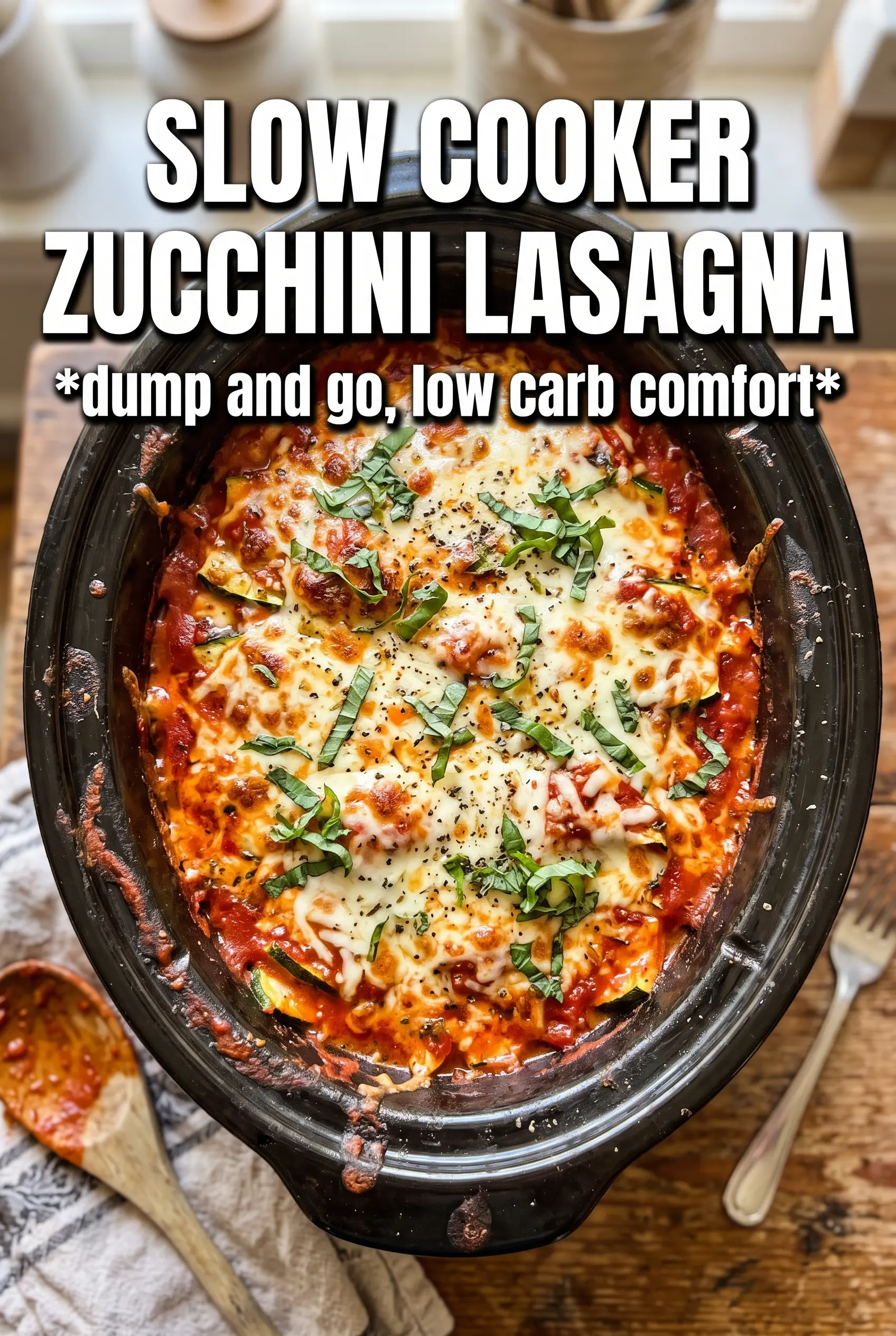
Slow Cooker Zucchini Lasagna
Ingredients
Equipment
Method
- Slice the large zucchini into thin planks; no need to salt and dry since the slow cooker handles moisture well.
- Brown the ground beef or turkey, then drain and mix it with marinara sauce, Italian seasoning, garlic powder, salt, and pepper.
- In a bowl, mix ricotta cheese with the egg, parmesan, fresh parsley, salt, and pepper until smooth.
- Spray the slow cooker insert with cooking spray.
- Assemble the lasagna by spreading 1/2 cup meat sauce on the bottom, layering zucchini planks (break to fit), spreading ricotta, adding meat sauce, then sprinkling mozzarella—repeat layers and finish with meat sauce and remaining mozzarella.
- Cook on Low for 4–5 hours (or High for 2–3 hours) until zucchini is tender and the cheese is melted.
- Turn the slow cooker off and rest for 15 minutes with the lid off to let steam escape before serving.
- Serve with fresh basil on top for a bright finish.