Golden crust, a moist crumb, and that faint sourdough tang make this zucchini bread the kind of loaf that disappears slice by slice. The zucchini keeps it soft without tasting vegetal, while the starter adds a little depth that plain quick bread just doesn’t have. It bakes up sturdy enough to slice cleanly, but tender enough that the crumb almost melts when it’s still slightly warm.
The balance here matters. Too much zucchini and the loaf turns heavy; too little and you lose the moisture that makes this bread worth baking. Squeezing the zucchini dry keeps the batter from getting watery, and using both baking soda and baking powder gives the loaf lift without making it taste cakey. The sourdough starter doesn’t act like yeast in this recipe — it brings flavor and a subtle tenderness, especially after the loaf rests overnight.
Below you’ll find the little details that keep this bread from going dense or soggy, plus a few smart variations for chocolate chips, nuts, or a dairy-free version that still bakes up beautifully.
The loaf came out incredibly moist without being gummy, and the sourdough starter gave it this gentle tang that got even better the next day.
Save this sourdough zucchini bread for the days when you want a moist, tangy loaf with a crackly golden top.
The Trick to Keeping Zucchini Bread Light Instead of Gummy
Zucchini bread goes wrong when the batter holds too much water. Zucchini looks harmless, but once it bakes, that extra moisture has nowhere to go except into a dense, damp middle. Grating the zucchini fine and squeezing it dry is the difference between a loaf that slices cleanly and one that feels underbaked even when the toothpick says it’s done.
The other trap is overmixing once the flour goes in. This batter doesn’t need beating; it needs just enough mixing to bring everything together. Stir until the flour disappears, then stop. The loaf keeps its tender crumb because the flour isn’t worked into a tough little network before it hits the oven.
- Squeezed zucchini — This is non-negotiable. After grating, press it in a clean towel or handfuls over the sink until it feels damp, not wet.
- Baking soda and baking powder — The soda reacts with the starter and brown sugar-style tang, while the powder gives the loaf a little extra lift so it doesn’t bake up flat.
- Sourdough starter — Use active starter or discard. Either one works here because the recipe wants flavor and moisture, not fermentation power.
- Oil over butter — Oil keeps the crumb softer for longer. Butter tastes good, but it firms up as the loaf cools and the bread loses some of that plush texture.
What Each Ingredient Is Actually Doing in the Loaf

- All-purpose flour — This gives the loaf enough structure to hold the zucchini and starter without turning bready. A 1:1 gluten-free blend can work, but the crumb will be a little more delicate and the top may dome less evenly.
- Sourdough starter — This is the ingredient that makes the flavor deeper and a little more interesting than standard zucchini bread. Discard works just as well as active starter here, so this is a good way to use up unfed starter without wasting it.
- Vegetable oil — Neutral oil keeps the texture moist for days. Melted coconut oil can work if you want a subtle coconut note, but it can firm up if the loaf is chilled.
- Sugar — It sweetens, yes, but it also helps the crust brown and keeps the loaf tender. If you cut it too much, the bread loses moisture and the spice starts to taste flat.
- Walnuts or chocolate chips — Both are optional, but each changes the loaf in a useful way. Walnuts add crunch and a little bitterness; chocolate chips push it toward dessert. Fold them in at the very end so they don’t sink.
Mix the Batter Gently, Then Let the Oven Do the Rest
Whisk the dry ingredients first
Start with the flour, baking soda, baking powder, salt, and cinnamon in one bowl. Whisking them together distributes the leaveners evenly, which matters more than it sounds like it should. If the soda clumps in one spot, you’ll get uneven rise and little pockets that taste metallic.
Build the wet base until it looks smooth
Beat the sugar, eggs, oil, starter, and vanilla until the mixture looks glossy and unified. You don’t need to whip air into it; you just want the sugar dissolved enough that the batter isn’t grainy. Once the zucchini goes in, it should look loose but not watery.
Fold in the flour without working it too much
Add the dry ingredients and stir only until the flour disappears. The batter will look a little thick and speckled with zucchini, and that’s exactly right. If you keep mixing after that point, the loaf gets tight and springy instead of soft and tender.
Bake until the center is set and the top cracks
Scrape the batter into a greased 9×5 loaf pan and bake until the top is deeply golden and a toothpick comes out clean from the center, usually 55 to 65 minutes. A crack down the middle is a good sign here. If the top browns before the center is done, lay a loose piece of foil over it for the last part of baking.
Let the loaf cool before slicing
Give it 15 minutes in the pan, then move it to a rack. The crumb finishes setting as it cools, and slicing too early can make the middle seem gummy. The sourdough note also settles in a little more by the next day, which is why this loaf tastes even better after it rests overnight.
Three Ways to Make This Loaf Fit What You’ve Got
Chocolate chip breakfast loaf
Swap in chocolate chips for the walnuts and the loaf moves firmly into treat territory. The chocolate adds sweetness and a softer bite, but it also makes the crumb feel a little richer, so I like to keep the cinnamon in place to balance it.
Dairy-free by default
This recipe already skips butter and milk, so it fits a dairy-free table without any changes. If you add chocolate chips, check that they’re dairy-free too. The texture stays just as soft because the oil does the heavy lifting.
Make it a little less sweet
You can reduce the sugar slightly if you want a less dessert-like loaf, but don’t cut it too far. Sugar isn’t just for sweetness here; it also keeps the crumb tender and helps the crust brown properly. Go too low and the loaf starts tasting more like a muffin with the softness removed.
Storage and Reheating
- Refrigerator: Store tightly wrapped for up to 5 days. The crumb stays moist, but the texture firms up a little in the fridge.
- Freezer: This freezes well. Wrap individual slices or the whole cooled loaf tightly in plastic, then foil, and freeze for up to 3 months.
- Reheating: Warm slices in a toaster oven or low oven until just heated through. Microwave only briefly, or the crumb turns rubbery and the edges get tough.
Questions I Get Asked About This Recipe
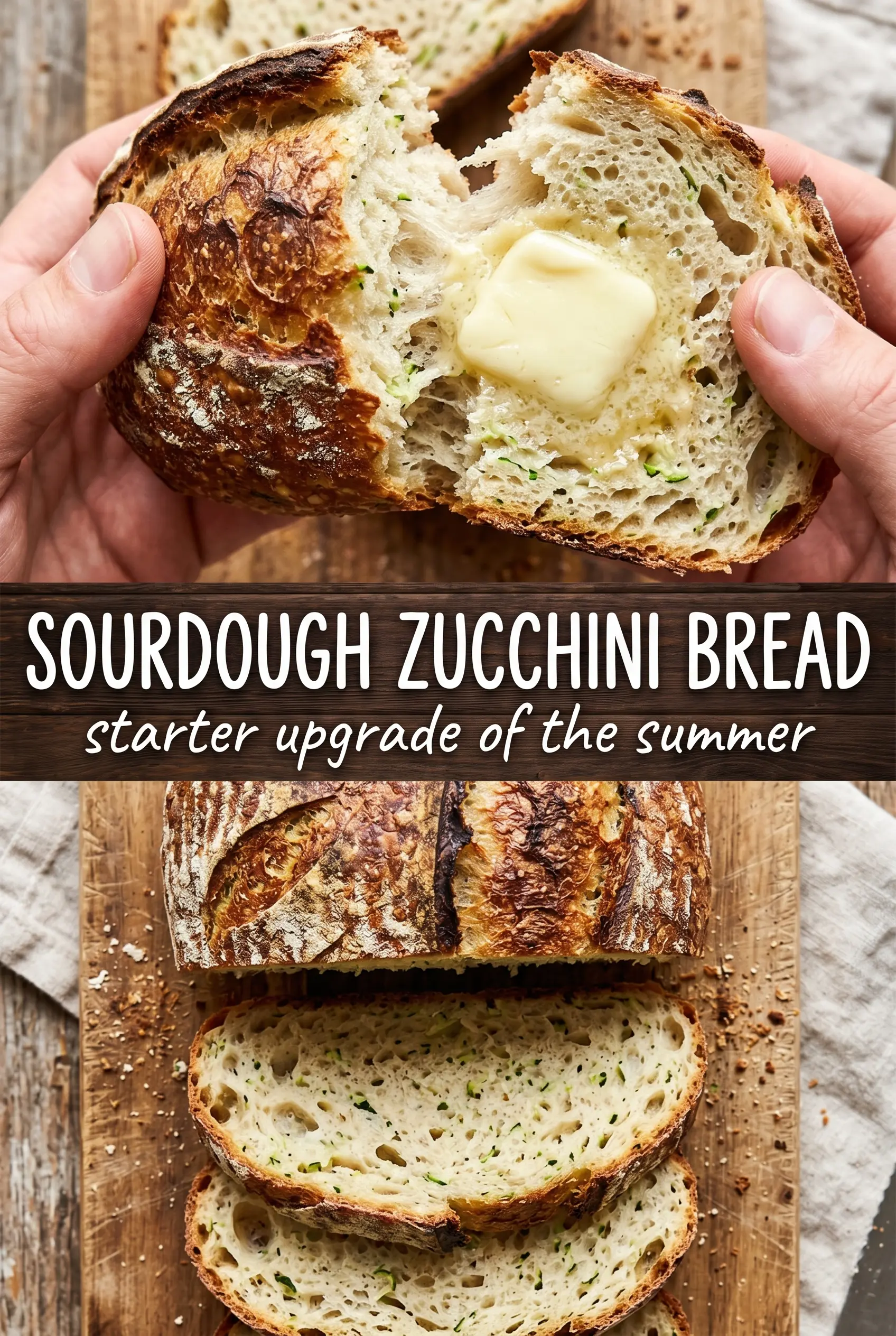
Sourdough Zucchini Bread
Ingredients
Equipment
Method
- Preheat the oven to 350°F and grease a 9x5 loaf pan, so the batter can go in right away.
- Grate the zucchini, then squeeze it dry until it no longer drips, so the loaf stays moist without turning gummy.
- Whisk all-purpose flour, baking soda, baking powder, salt, and cinnamon together until evenly combined.
- In a separate bowl, beat granulated sugar, eggs, vegetable oil, sourdough starter, and vanilla extract until smooth.
- Stir the grated squeezed dry zucchini into the wet mixture.
- Fold the dry ingredients into the wet ingredients until just combined, then fold in walnuts or chocolate chips if using.
- Pour the batter into the prepared loaf pan and smooth the top.
- Bake at 350°F for 55–65 minutes, until a toothpick comes out clean and the top is golden.
- Cool the loaf for 15 minutes before slicing, so the crumb sets and the tang develops more after one day.