Southern mac and cheese bakes up with the kind of center that slices cleanly and still spoon-collapses into a creamy custard under a bronzed, cheesy top. It holds its shape on the plate, but it’s never dry, never gluey, and never just noodles with sauce poured over them. The eggs and milk give it body, while the layered cheese melt creates those rich pockets that run through every bite.
What makes this version work is the balance between the custard and the cheese. Too much liquid and it turns loose. Too little and the casserole bakes up dense. Using evaporated milk adds richness without making the mixture heavy, and the Dijon quietly sharpens the cheese so the whole dish tastes fuller, not just saltier. The butter cubes melt into the top layer and help the crust brown without drying out the surface.
Below, I’ve broken down the part that matters most: how to keep the custard from overbaking, how to layer the cheese for the best pull, and what to change if you need to work with a different blend of cheeses.
The custard set up perfectly and the top got that golden, crusty edge without drying out. I used the full 10-minute rest and it sliced like a dream.
Like this custardy Southern mac and cheese? Save it to Pinterest for the golden-top, creamy-center casserole nights.
The Custard Is the Difference Between Creamy and Watery
Southern mac and cheese fails when the filling is treated like a regular cheese sauce. Once eggs are in the mix, the oven becomes the thickener, not the stove. That means the ratio has to stay balanced, and the casserole needs enough time to set without going past the point where the eggs turn tight and rubbery.
Layering matters here too. Putting cheese in the middle and on top gives you pockets of melt inside and a browned cap outside. If you stir every shred into the custard, you lose that contrast and the dish bakes up more homogenous and heavy. The rest time after baking is not optional; it lets the custard finish setting so the first scoop doesn’t flood the pan.
What the Cheese Blend Is Doing in the Dish

- Sharp cheddar — This is the backbone of the dish. It gives you the tang and the familiar mac and cheese flavor, and it also browns well on top. Pre-shredded cheddar works in a pinch, but freshly shredded melts smoother and gives you a creamier finish.
- Colby Jack — This softens the sharper edges of the cheddar and helps the middle stay silky. It melts into a smoother texture than cheddar alone, which keeps the filling from tasting dense.
- Gruyere — You don’t need a lot, but you do need it. Gruyere adds a nutty depth that makes the dish taste more layered. If you swap it out, use another good melting cheese with some character, like fontina.
- Evaporated milk — This is where the custard gets its richness without becoming thick like a béchamel. Whole milk alone can work, but evaporated milk gives a fuller body and a slightly sweeter, rounder finish.
- Eggs — They bind the casserole and give it that classic Southern slice. Whisk them well into the dairy so you don’t end up with little bits of cooked egg in the finished dish.
Layering and Baking the Casserole So It Sets Properly
Building the First Cheese Layer
Start with half the macaroni in the buttered dish, then scatter the first layer of cheese evenly over it. You want coverage from edge to edge so every scoop has some melted cheese running through the center. If the pasta is clumped from draining, loosen it first or you’ll end up with dry pockets that never pick up enough custard.
Adding the Custard Without Flooding the Dish
Whisk the eggs and dairy until the mixture looks fully combined and smooth, then pour it slowly over the layered pasta. Give the dish a gentle shake so the liquid settles down between the noodles. If you dump it in too fast, the cheese can bunch up in one corner and the center won’t set evenly.
Knowing When It’s Done
Bake until the top is deep golden and the center looks set with just a slight wobble when the pan is nudged. That wobble should be loose, not sloshy. If the center still ripples like liquid, it needs more time. Pull it too late and the eggs tighten, which is how you lose that creamy custard texture.
Gluten-Free Version
The filling is naturally gluten-free as written, so the only thing to watch is the pasta. Use a sturdy gluten-free elbow macaroni and cook it just to al dente, since softer gluten-free noodles can go mushy in the oven. The rest of the dish stays the same.
Bacon or Ham for a Heartier Pan
Fold in cooked crumbled bacon or diced ham between the pasta layers if you want a smokier, saltier casserole. Keep the amount modest so the custard still holds together and the cheese stays front and center. Too much meat turns this from a side into a dense main dish.
Making It Ahead
You can assemble the casserole a few hours ahead and keep it covered in the refrigerator, then bake it when you’re ready. Let it sit at room temperature for about 20 to 30 minutes before it goes into the oven so the center doesn’t start cold and bake unevenly. If it goes in straight from the fridge, the edges overcook before the middle sets.
Storage and Reheating
- Refrigerator: Store covered for up to 4 days. The texture firms up in the fridge, but it loosens again when reheated.
- Freezer: This freezes well after baking. Cool completely, wrap tightly, and freeze for up to 2 months. Thaw overnight in the refrigerator before reheating.
- Reheating: Reheat covered in a 325F oven with a splash of milk if it looks dry. Microwave reheating works for small portions, but stop before it gets hot all the way through or the eggs can turn grainy.
Answers to the Questions Worth Asking
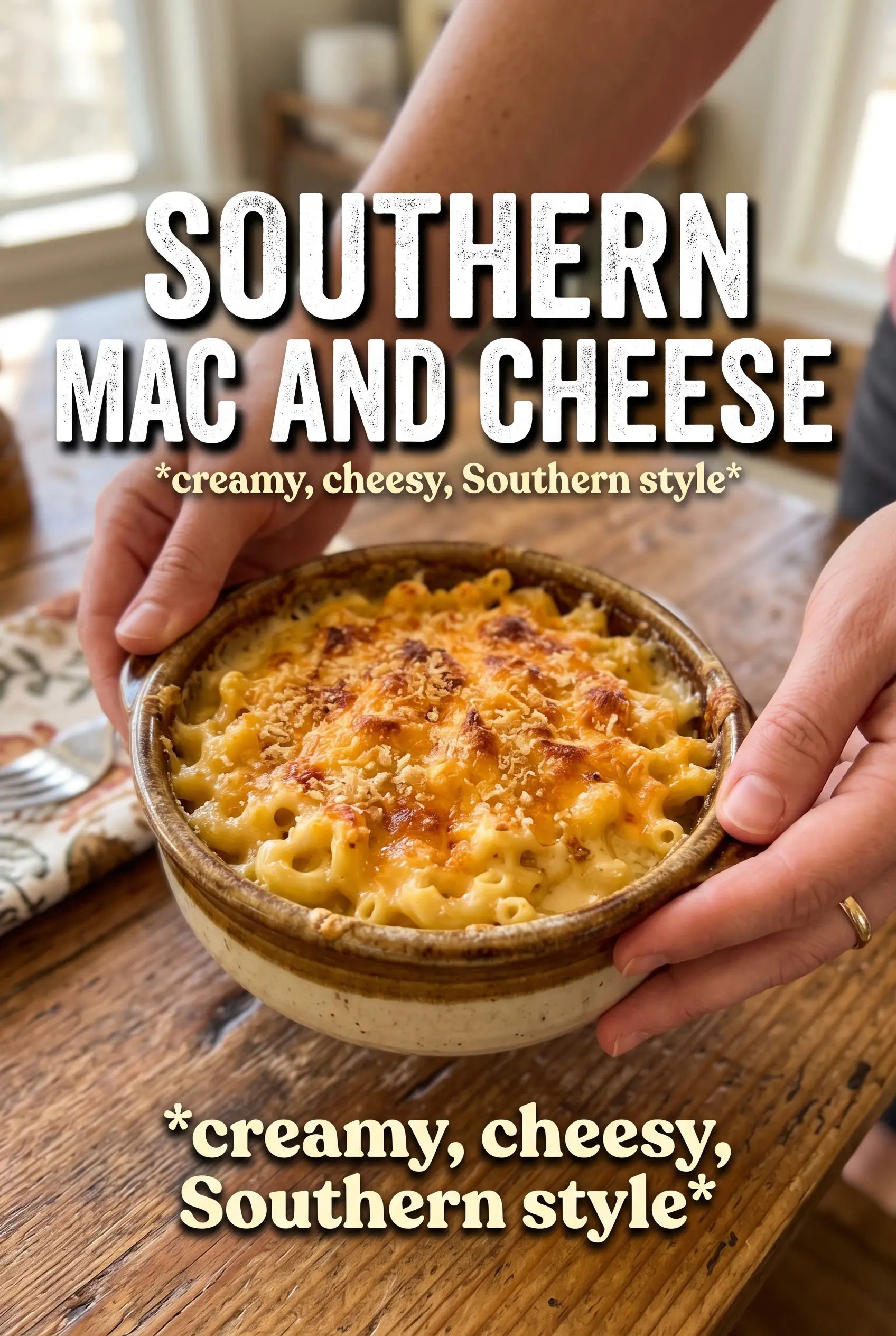
Southern Mac And Cheese
Ingredients
Equipment
Method
- Preheat the oven to 350°F and butter a deep 9x13 baking dish.
- Whisk eggs, whole milk, evaporated milk, Dijon mustard, smoked paprika, garlic powder, cayenne, salt, and pepper until smooth.
- Layer half the cooked macaroni in the buttered dish and scatter 2 cups sharp cheddar, all the Colby Jack, and the Gruyere over the top.
- Add the remaining macaroni and pour the egg-milk custard over everything.
- Dot the surface with butter cubes, then top with the remaining 2 cups sharp cheddar.
- Bake for 40-45 minutes, until the custard is set and the top is golden.
- Rest the mac and cheese for 10 minutes before serving so the custard fully sets.


