Supreme pasta salad earns its name the second you lift the lid and see all the color packed into one bowl. It’s cold, creamy, salty, crunchy, and sturdy enough to sit out at a picnic without collapsing into mush. The pasta stays pleasantly springy, the salami and pepperoni bring enough punch to carry the whole dish, and the vegetables keep every bite from tasting heavy.
The trick is treating the dressing like part of the seasoning, not just a coating. Tri-color rotini holds onto the Italian dressing in all those ridges, while a short chill gives the pasta time to drink in the flavor instead of leaving the bowl watery and thin. Rinsing the pasta after cooking matters here because you want it cool fast, and you don’t want the residual heat to wilt the vegetables or soften the cheese too early.
Below, I’ve included the small details that keep this salad from turning bland or soggy, plus the swaps I actually use when I’m building it from what’s already in the fridge. If you’ve ever made pasta salad that tasted great on day one and flat by day two, those notes will help.
The dressing soaked into the rotini during the chill time and every bite had a little of everything. I added a splash more Italian dressing right before serving and it tasted like it had just been tossed.
Loaded pasta salad with salami, pepperoni, and creamy Italian dressing is even better after a good chill.
The Dressing Has to Soak In, Not Just Sit on Top
The biggest mistake with pasta salad is serving it as soon as it’s mixed. The noodles need time to pull in the dressing, and the flavor settles down after a chill instead of tasting sharp and disjointed. That rest time also lets the salami, pepperoni, olives, and cheese season the pasta from the inside out. If it tastes a little light right after tossing, that’s normal.
Another thing that matters here is the pasta shape. Rotini gives you more surface area and more little grooves for dressing than a smooth pasta would. If you use a different shape, pick one with curls, ridges, or hollows so the salad doesn’t taste slick and the dressing doesn’t pool at the bottom of the bowl.
What Each Ingredient Is Actually Doing in This Bowl
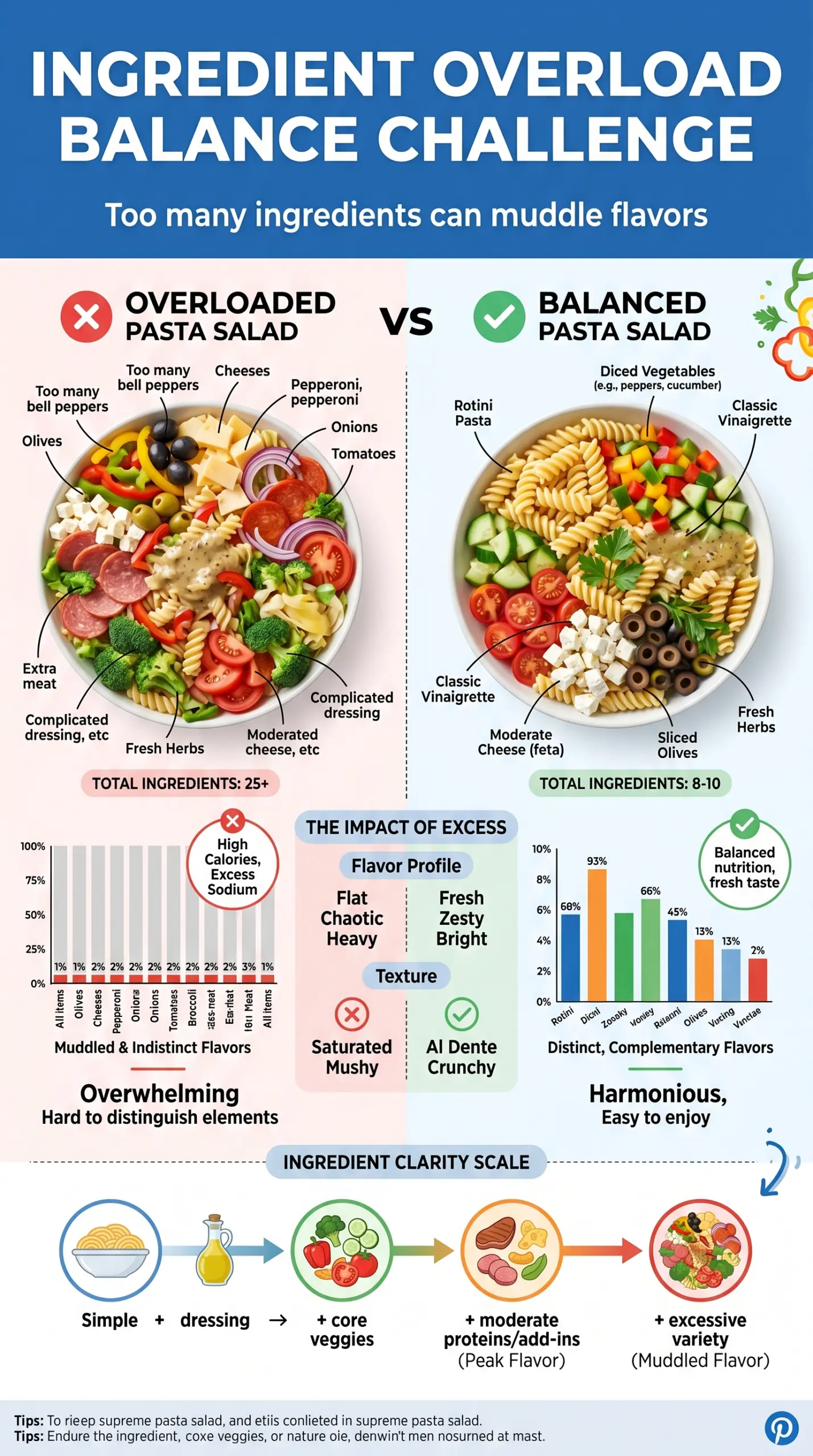
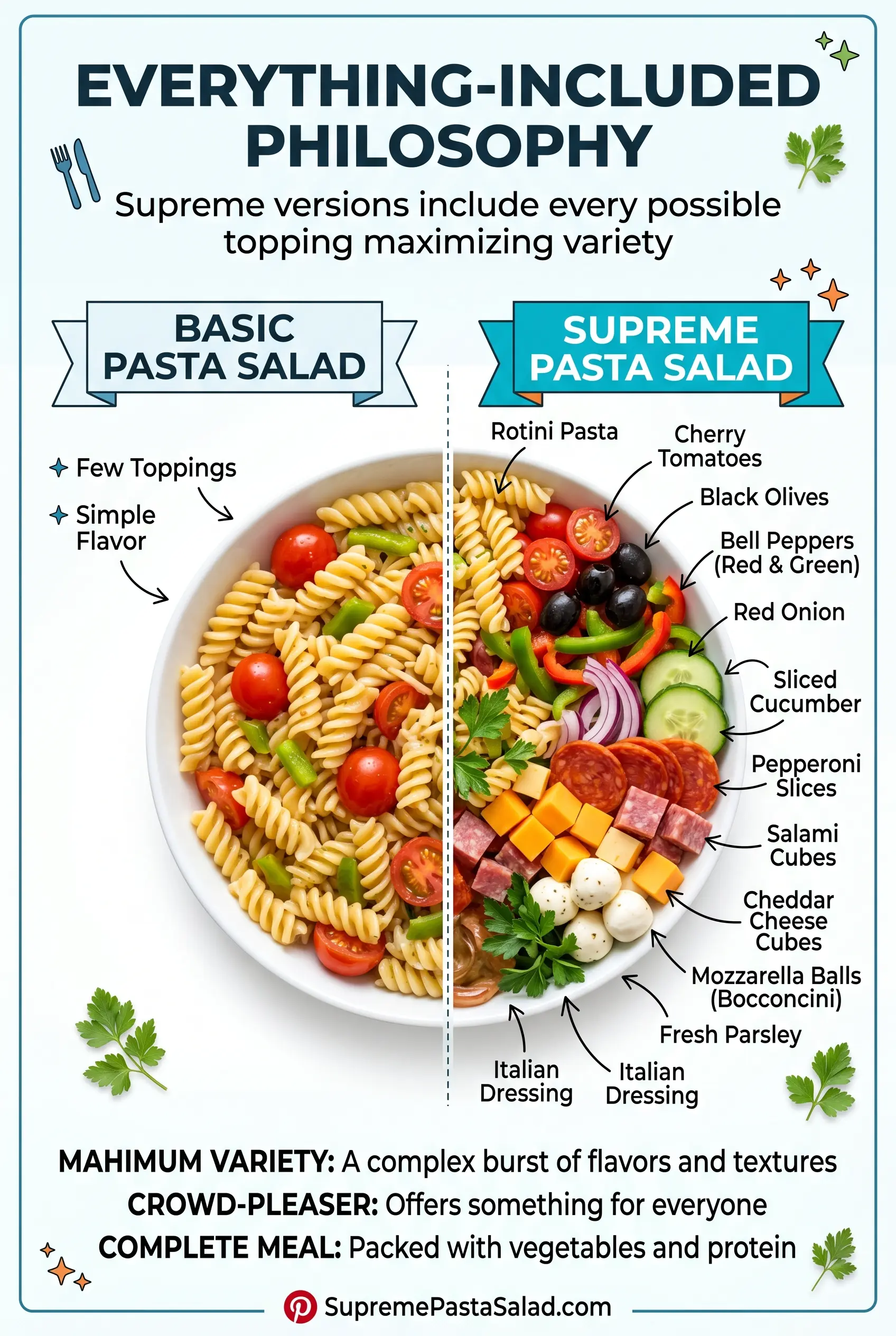
- Tri-color rotini — This is the backbone of the salad. The shape clings to the dressing better than straight pasta, and the color gives the bowl that classic loaded look. If you swap it, use another ridged pasta like fusilli or farfalle.
- Salami and pepperoni — These bring salt, fat, and enough seasoned meatiness that the salad doesn’t need fancy add-ins to feel complete. Cubing or quartering them small helps every forkful stay balanced.
- Mozzarella — It cools down the sharper edges from the meats and dressing. Use a block and cube it yourself if you can; pre-shredded cheese won’t give you the same soft, clean bite.
- Italian dressing — This is what ties the whole bowl together. Bottled dressing is fine here, but choose one with a tangy, herby bite so it can stand up to the meats and cheese. Add a little extra just before serving if the pasta looks dry after chilling.
- Parmesan and Italian seasoning — Parmesan sharpens the finish, and the seasoning fills in the gap between creamy and savory. Don’t skip both, or the salad can taste flat after a few hours in the fridge.
Building the Bowl Without Making It Watery
Cooking and Cooling the Pasta
Boil the rotini until it’s just tender, not soft. You want a little bite left because the pasta will keep relaxing as it chills in the dressing. Drain it well, then rinse with cold water until it’s no longer steaming. If you skip the rinse, the residual heat can soften the vegetables and turn the dressing dull.
Mixing the Meat and Vegetables
Combine the pasta with the salami, pepperoni, mozzarella, tomatoes, cucumber, olives, bell pepper, and red onion in the largest bowl you own. A cramped bowl makes it harder to coat everything evenly, and that’s how you end up with one heavy clump at the bottom. Toss gently so the cheese stays intact and the tomatoes don’t crush into the dressing.
Letting the Dressing Do Its Job
Add the Italian dressing, Parmesan, and Italian seasoning, then toss until everything looks evenly coated. At this point the salad should look glossy, not soupy. Chill it for at least 2 hours and give it a stir once or twice while it rests. If the pasta absorbs more dressing than you expected, add a small splash before serving instead of dumping in a lot at once.
How to Adapt This Supreme Pasta Salad for Different Tables
Gluten-Free Pasta Salad
Use a sturdy gluten-free rotini or fusilli and cook it just until tender, because GF pasta goes from firm to fragile fast. Rinse it well and handle it gently so it doesn’t break apart when you toss in the heavier ingredients.
Lighter, More Vegetable-Forward Version
Cut the salami and pepperoni back by half and add extra cucumber, tomatoes, and bell pepper. You’ll still get the classic loaded salad feel, but the finish will be fresher and less rich.
Vegetarian Supreme Pasta Salad
Leave out the meats and add extra olives, mozzarella, and a handful of chopped roasted red peppers for more depth. The salad loses some salt and punch, so taste it after chilling and add more Parmesan or dressing if it needs more backbone.
Storage and Reheating
- Refrigerator: Keeps for 3 to 4 days in a sealed container. The pasta will soak up more dressing over time, so expect it to taste a little less creamy on day two.
- Freezer: Don’t freeze this one. The dressing separates, the vegetables turn soft, and the cheese changes texture in a way that isn’t worth fixing.
- Reheating: Serve it cold. If it’s been in the fridge overnight, stir in a spoonful or two of Italian dressing before serving to wake it back up. Don’t warm it, or the cheese and vegetables will lose their texture.
Answers to the Questions Worth Asking
Supreme Pasta Salad
Ingredients
Equipment
Method
- Cook the tri-color rotini pasta according to package directions until just tender, then drain and rinse with cold water to stop the cooking.
- Spread the pasta on a sheet pan in a single layer so it cools quickly before mixing.
- In a large bowl, combine the pasta, salami, pepperoni, mozzarella, cherry tomatoes, cucumber, black olives, green bell pepper, and red onion.
- Add Italian dressing, Parmesan cheese, and Italian seasoning, then toss until everything is evenly coated with creamy dressing.
- Season with salt and pepper to taste and toss again to distribute.
- Refrigerate for at least 2 hours, tossing occasionally, so the flavors meld and the vegetables stay crisp.
- Before serving, check the texture and add more dressing if needed to recoat the pasta.