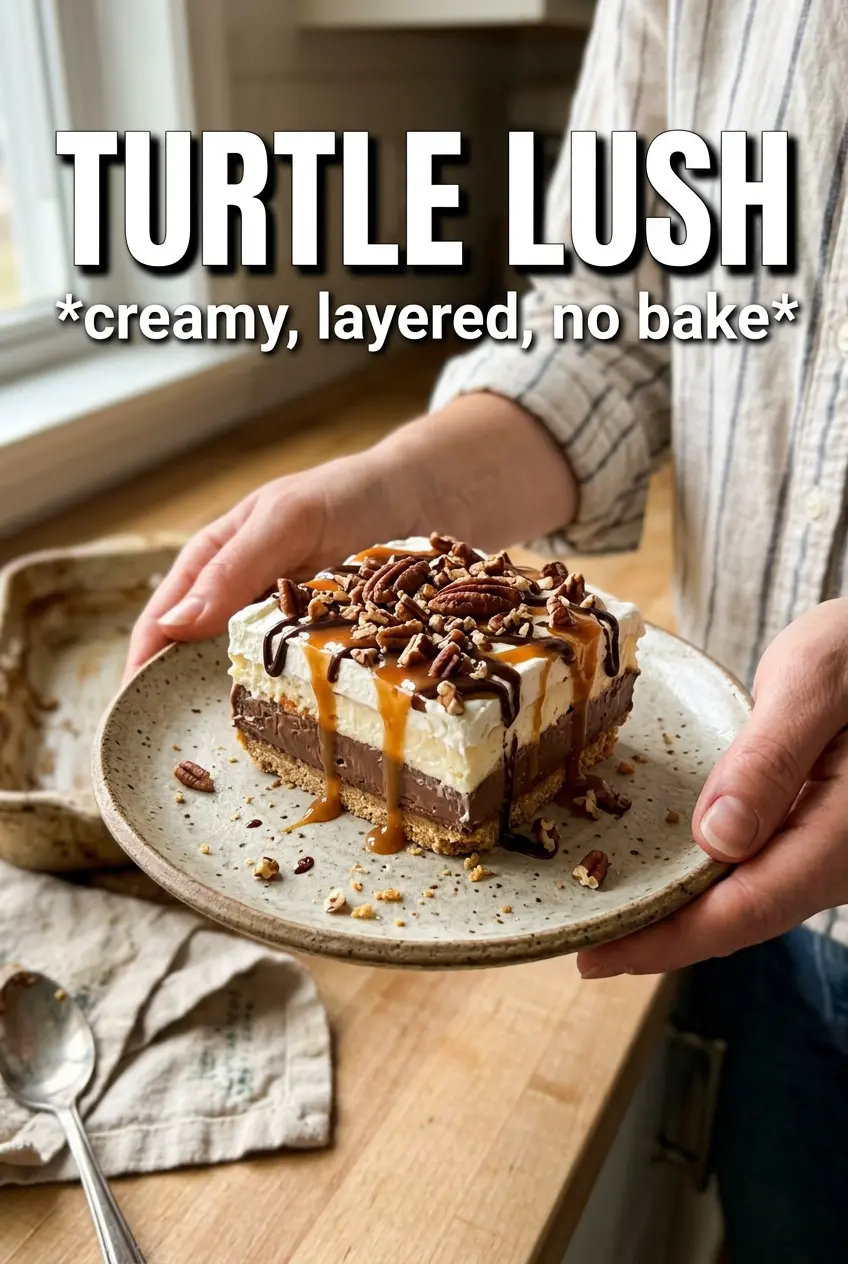
Layers settle into something a little magical here: a buttery pecan shortbread crust, a tangy cream cheese layer, chocolate pudding, and a fluffy topping finished with caramel, chocolate, and pecans. Turtle lush is the kind of dessert that slices cleanly when it’s chilled long enough, but still feels soft and rich on the plate. Every bite has crunch, creaminess, and that classic turtle candy flavor without any fuss.
What makes this version work is the crust. Instead of a crumb base that can turn soggy, the pecan shortbread bakes into a firm, tender foundation that holds the filling without going muddy. The cream cheese layer gives the dessert a little sharpness so the sweetness stays balanced, and the pudding needs to be whisked just until thick before it goes on the crust. If you overmix the pudding or spread it too soon, it won’t hold those clean layers the way it should.
Below, I’ve included the small details that matter most: how to get the crust fully cool before layering, how to keep the cream cheese smooth, and how to cut tidy squares after chilling. Those are the difference between a dessert that looks homemade in the best way and one that slumps on the plate.
The pecan crust stayed crisp even after chilling, and the pudding layer set up enough that I could cut neat squares for a potluck. My sister asked for the recipe before dessert was halfway gone.
Save this Turtle Lush recipe for a chilled layered dessert with a crisp pecan crust and candy-bar topping.
The Reason the Layers Stay Distinct Instead of Bleeding Together
There are two places where turtle lush usually goes wrong: a warm crust and a loose pudding. If the crust hasn’t cooled all the way, the cream cheese layer softens and the pudding starts sliding instead of stacking. If the pudding is still thin when you spread it, it will seep into the layer below and the whole dessert loses that neat, bakery-style look.
The fix is patience, not extra ingredients. Let the crust cool completely after baking, then work with fillings that have enough body to spread without pouring. The cream cheese layer should look smooth and thick, almost like frosting. The pudding should be whisked only until it thickens and then spread right away before it firms up too much in the bowl.
That’s what keeps every bite balanced. You get a clean slice, not a puddle, and each layer tastes like it belongs where it is.
What the Pecan Shortbread, Pudding, and Toppings Are Each Doing
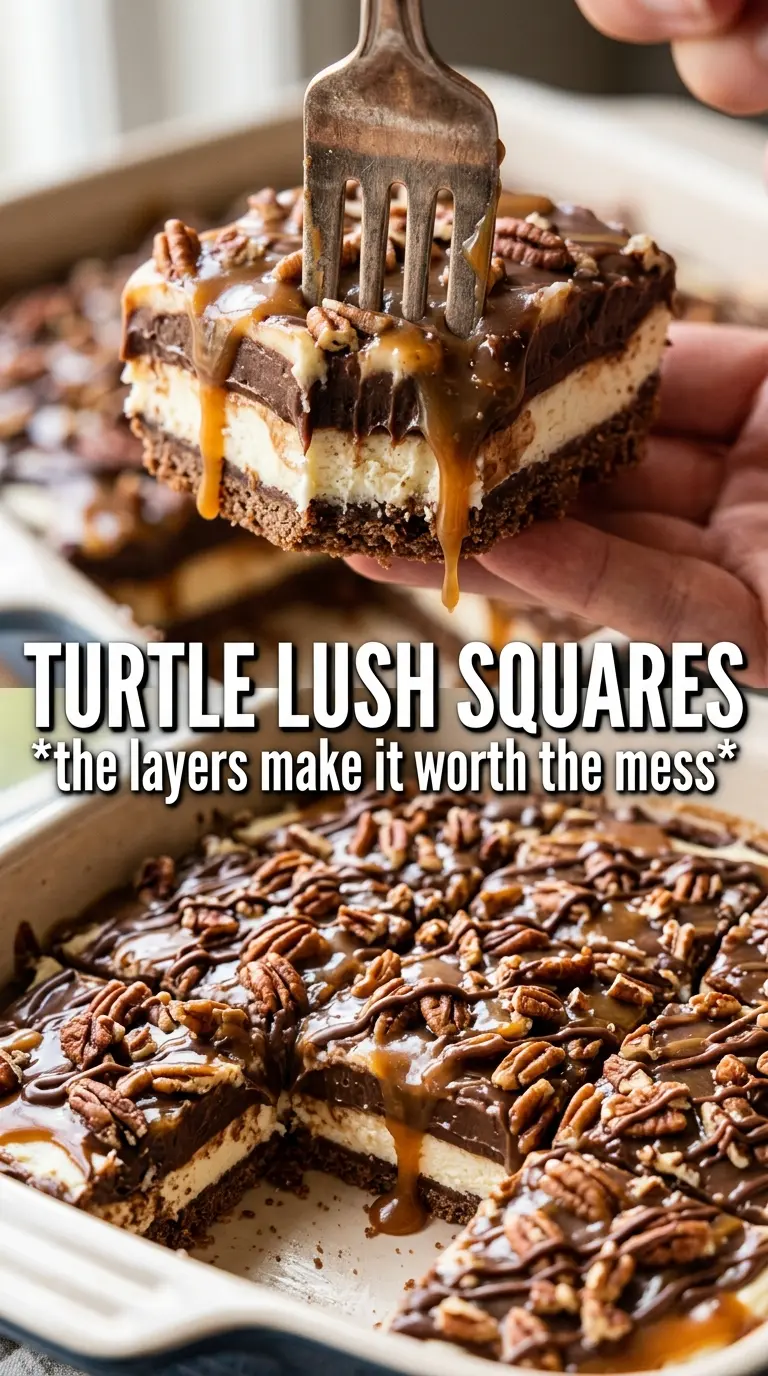
- Flour, powdered sugar, and butter — This is the shortbread base that gives the dessert structure. Powdered sugar keeps the crust tender instead of sandy, and cold butter is what helps it bake up firm. If the butter is warm, the crust spreads instead of pressing into a stable layer.
- Pecans — Chopped pecans in the crust add flavor from the bottom up, while pecan halves on top give the dessert that classic turtle look. Toasted pecans taste deeper, but even raw pecans work well here because the crust bakes long enough to bring them to life.
- Cream cheese — This is the layer that cuts through the sweetness. Full-fat cream cheese matters here because it whips smooth and holds its shape better than lower-fat versions. If your cream cheese is cold, it will stay lumpy no matter how long you beat it.
- Instant chocolate pudding — Instant pudding is the right choice because it sets quickly and stays creamy once chilled. Cook-and-serve pudding won’t give you the same layered texture. Use the milk amount listed on the box and stop whisking once it thickens.
- Whipped topping — It lightens both the cream cheese layer and the final finish. Homemade whipped cream can work, but it won’t hold as long after a few hours in the refrigerator, so the dessert loses some of its height.
- Caramel sauce, chocolate sauce, and toffee bits — These are the finishing details that make each square taste like a turtle candy bar. Add them after the top layer is spread so they sit on the surface instead of sinking in. A thicker caramel drizzles better than a thin ice cream topping.
Building the Layers Without Letting the Filling Slide
Baking the Pecan Crust
Mix the flour, powdered sugar, cold butter, and chopped pecans until the dough looks crumbly but holds together when pressed. Press it firmly and evenly into the baking dish so the base doesn’t crumble later when you cut squares. Bake until the edges are lightly golden and the center looks set, then cool it completely before adding anything else. If you rush this part, the filling softens the crust and the whole dessert loses its clean layers.
Whipping the Cream Cheese Layer Smooth
Beat the cream cheese with powdered sugar and vanilla until there are no streaks or lumps, then fold in the whipped topping. The mixture should look light and spreadable, not loose. If the cream cheese is still cold in the middle, keep mixing before you add the whipped topping or you’ll end up with little white bits in the filling. Spread it over the cooled crust in an even layer, all the way to the edges.
Setting the Chocolate Pudding
Whisk the pudding mix with the milk until it thickens, then stop. It should mound on the whisk and hold its shape for a second before settling. Spread it over the cream cheese layer while it’s still soft enough to move easily. If you wait until it gets too firm, it drags the layer underneath instead of sitting on top of it.
Finishing and Chilling
Spread the last layer of whipped topping over the pudding, then drizzle on the caramel and chocolate sauces. Scatter the pecan halves and toffee bits over the top while the surface is still tacky so they stick in place. Chill the dessert for at least 4 hours before slicing. That resting time is what lets the layers set into neat squares instead of soft, messy spoonfuls.
How to Change This Turtle Lush Without Losing the Texture
Gluten-Free Crust Swap
Use a 1:1 gluten-free flour blend in the crust. The texture will be a little more delicate, but the layers still hold well if you press the crust firmly and bake it until the top looks dry and set. Don’t switch to a crumb crust unless you want a softer base that won’t slice as cleanly.
A Lighter Topping
If you want a less rich finish, replace the final whipped topping layer with lightly sweetened whipped cream. The dessert tastes fresher, but it won’t hold as long in the fridge, so serve it within a day. That swap works best when you’re making the dish for a smaller group and don’t need it to sit for long.
Chocolate Lovers’ Version
Swap the vanilla in the cream cheese layer for a little extra cocoa powder and use chocolate whipped topping if you can find it. The result is deeper and less candy-like, with more chocolate in every layer. Keep the caramel and pecans on top so you don’t lose the turtle flavor that makes this dessert recognizable.
Storage and Reheating
- Refrigerator: Keeps for 4 to 5 days covered. The crust softens a little over time, but the layers still slice well.
- Freezer: Freezes better than you might expect if you hold back the final sauce drizzle and nuts until after thawing. Wrap tightly and freeze for up to 1 month, then thaw in the refrigerator.
- Reheating: Don’t reheat this dessert. It’s meant to be served cold, and heat will melt the pudding and whipped layers.
Answers to the Questions Worth Asking
Turtle Lush
Ingredients
Equipment
Method
- Press the pecan shortbread crust mixture into an even layer and bake at 350F for 15 minutes, until set. Cool completely before layering.
- Beat the cream cheese layer until smooth, then fold in 1 cup whipped topping and spread it over the cooled crust.
- Whisk the instant chocolate pudding with 3 cups milk until thick, then spread it over the cream cheese layer.
- Spread the remaining 8 oz whipped topping over the pudding in an even layer.
- Drizzle caramel sauce and chocolate sauce over the top, then scatter pecan halves and toffee bits.
- Refrigerate for 4 hours, then cut into squares to serve.


