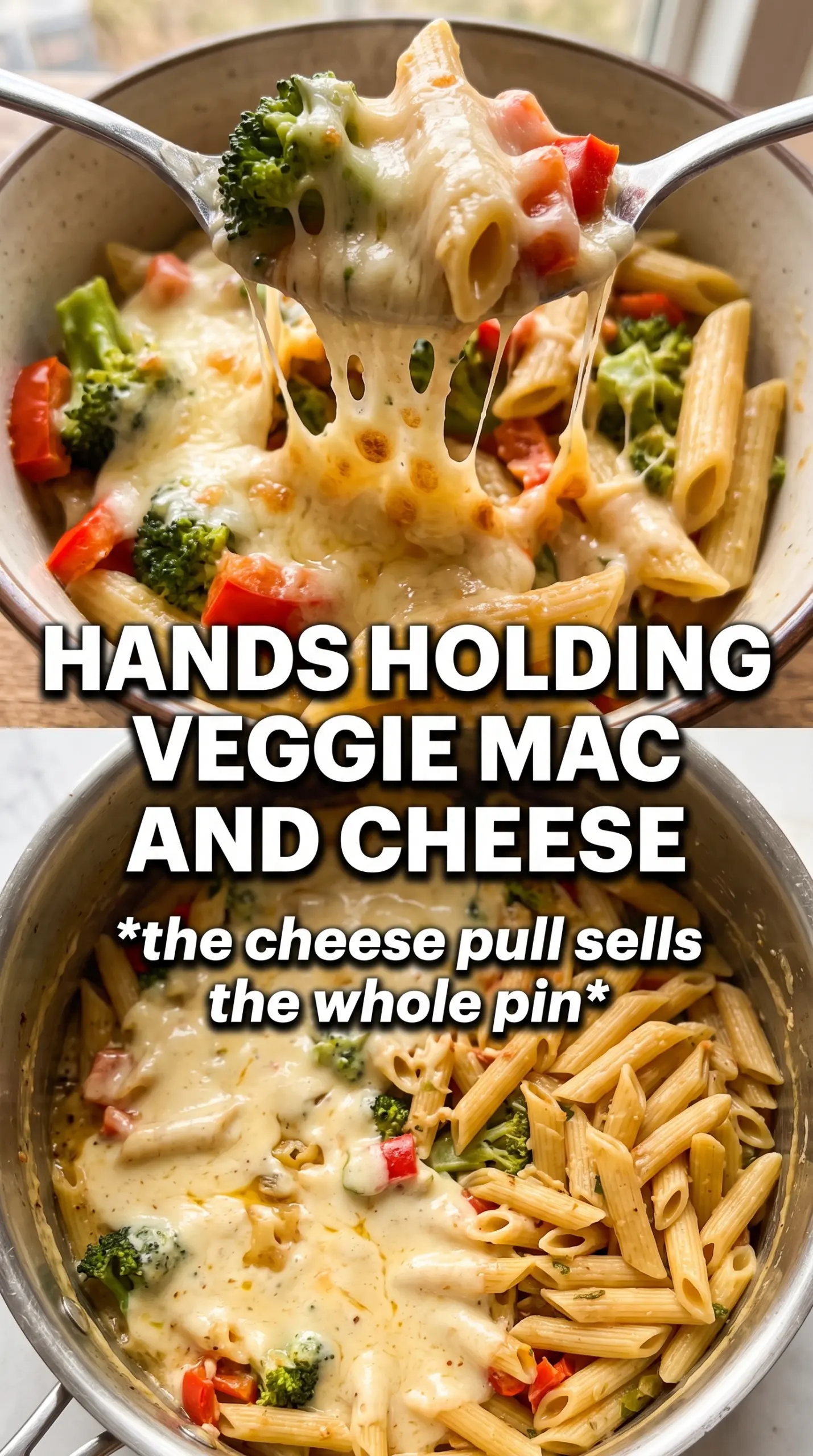
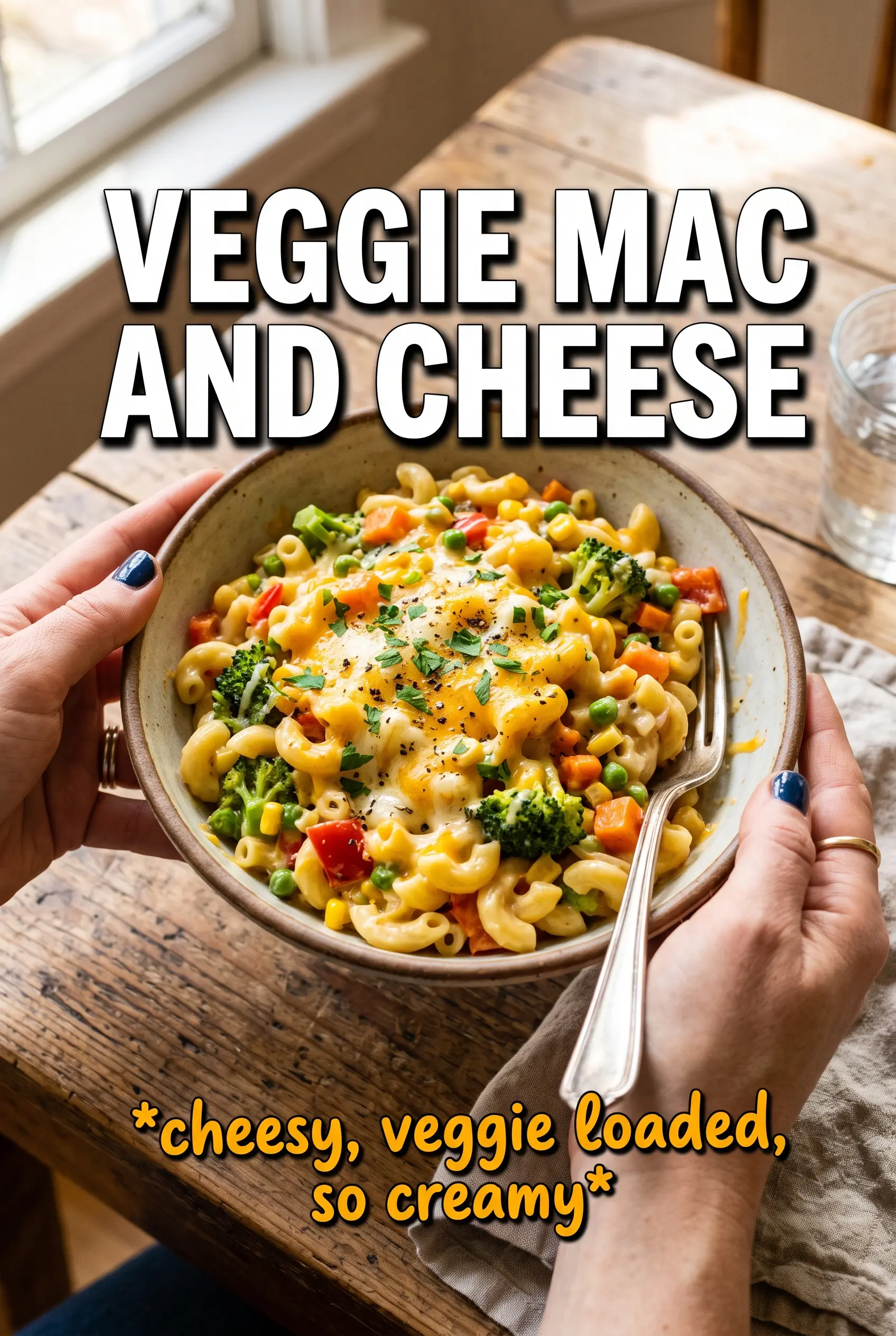
Veggie mac and cheese lands on the table with the kind of creamy, cheesy comfort that makes people go back for a second scoop before they’ve finished the first. The sauce clings to every shell or elbow, the broccoli stays bright, and the roasted red peppers bring little pops of sweetness that keep the whole dish from tasting heavy. The breadcrumb top gives you that crisp finish you want against all the softness underneath.
What makes this version work is the balance. Sharp cheddar brings the familiar mac-and-cheese flavor, while Gruyere melts smoothly and adds depth without turning the sauce stringy or flat. Dijon and smoked paprika don’t announce themselves, but they keep the cheese sauce from tasting one-note. The vegetables aren’t just tossed in at the end; they’re folded through so every bite has a little contrast.
Below, I’ll walk through the sauce texture that matters, the vegetable prep that keeps the bake from getting watery, and the easiest swaps if you want to adjust the mix based on what’s in your fridge.
The cheese sauce stayed silky even after baking, and the roasted red peppers kept every bite from feeling too heavy. My kids picked out the broccoli first and then asked for more of the “green pasta.”
Want that creamy veggie mac and cheese with the golden breadcrumb top? Save this one for the nights when you need a baked pasta that eats like a full meal.
The Part That Keeps This Mac and Cheese Creamy Instead of Gritty
The biggest mistake with baked mac and cheese is rushing the sauce after the roux is done. If the milk goes in too fast, the flour clumps before it can dissolve, and if the sauce boils hard after the cheese is added, the whole thing can turn grainy. This version stays smooth because the milk and cream go in gradually, then the sauce is simmered just until it thickens enough to coat a spoon.
The other thing that matters is heat control once the cheese goes in. Sharp cheddar and Gruyere melt best when the pan is off the highest heat, with the sauce just warm enough to pull everything together. That keeps the dairy from tightening up and gives you a sauce that bakes into the pasta instead of turning oily around the edges.
- Broccoli — Blanch it briefly so it stays tender-crisp in the oven. Raw broccoli can taste harsh after baking, while overcooked broccoli turns mushy and loses its color.
- Roasted red peppers — These add sweetness and a little acidity, which keeps the dish from tasting flat. Jarred peppers work fine as long as they’re well drained and patted dry.
- Spinach — It wilts down fast and blends into the pasta without needing extra cooking. Add it at the folding stage so it softens in the hot sauce instead of disappearing into a watery mess.
- Gruyere — This is the cheese that gives the sauce a smooth, almost nutty backbone. If you need a swap, use fontina or an extra mild cheddar, but the sauce will lose some depth.
What Each Ingredient Is Actually Doing in This Recipe
- Primary ingredient (the star) — Quality matters most. Choose the best you can find.
- Cooking medium (oil, butter, or broth) — This carries flavors and prevents dryness.
- Seasonings (salt, pepper, spices, herbs) — Layer flavors so nothing overpowers. Build depth gradually.
- Aromatics (garlic, onion, herbs) — Cook with fat to bloom flavors. Become the foundation.
- Supporting ingredients — Complement the main ingredient without overpowering it.
- Sauce or liquid (if applicable) — Brings flavors together. Balance richness with acid.
- Acid (lemon, vinegar, wine, or other) — Brightens and prevents flat-tasting results.
- Final finish (garnish, glaze, or sauce) — Prevents one-dimensional taste and adds visual appeal.
Building the Sauce and Baking It Without Losing the Texture
Cooking the Pasta Just Short of Done
Boil the pasta until it’s still a little firm in the center. It will keep softening in the oven, and if you cook it all the way first, the final bake turns soft instead of creamy. Drain it well so extra water doesn’t thin the sauce when everything gets mixed together.
Making the Roux and Thickening the Base
Melt the butter, whisk in the flour, and cook it for about a minute until it smells faintly nutty and looks smooth, not sandy. That step takes the raw flour taste out and gives the sauce its structure. Add the milk and cream gradually while whisking, and keep the heat at a steady simmer so the sauce thickens without scorching on the bottom.
Melting in the Cheese
Take the pan off the hottest burner once the sauce has thickened, then stir in the cheddar, Gruyere, Dijon, and smoked paprika. The sauce should become glossy and smooth, not stringy. If it looks even slightly oily, the heat was too high; pull it back and stir gently until it comes together again.
Folding and Baking
Add the pasta and vegetables while the sauce is still warm enough to coat everything easily. Fold just until the mix looks evenly covered, then transfer it to the baking dish. The panko topping should look evenly scattered, and the finished casserole is ready when the top is deep golden and the sauce bubbles around the edges.
How to Change the Vegetables, Cheese, or Topping Without Ruining the Bake
Make it gluten-free
Swap in your favorite gluten-free pasta and use a gluten-free flour blend for the roux. The sauce still thickens the same way, but gluten-free pasta can go soft faster, so pull the bake as soon as the top is golden and the edges are bubbling.
Make it vegetarian with what’s already in the fridge
The recipe is already meatless, so this is mostly about flexibility. Swap the broccoli and peppers for cauliflower, peas, mushrooms, or chopped zucchini, but keep the total vegetable amount about the same so the casserole doesn’t turn watery.
Make it a little lighter
Use all milk instead of the full cream-and-milk mix, but expect a less luxurious sauce. If you go this route, keep the cheese amount the same and don’t skip the Dijon, since it helps the sauce taste fuller even without as much fat.
Change the topping for a softer finish
Skip the panko and use a little extra parmesan on top if you want less crunch and more of a browned, salty crust. You’ll lose that breadcrumb contrast, but the bake will still finish with a nicely caramelized top.
Storage and Reheating
- Refrigerator: Store covered for up to 4 days. The pasta will absorb some sauce as it sits, so it firms up a bit.
- Freezer: It freezes well for up to 2 months, though the sauce won’t be quite as silky after thawing. Cool it completely, wrap tightly, and thaw in the refrigerator before reheating.
- Reheating: Cover and warm in a 325F oven until hot in the center, adding a splash of milk if it looks dry. Microwaving works for single portions, but use lower power and stir once or twice so the cheese sauce doesn’t separate.
Questions I Get Asked About This Recipe
Veggie Mac And Cheese
Ingredients
Equipment
Method
- Preheat the oven to 375F and grease a 9x13 dish. Grease thoroughly so the topping releases without sticking.
- Cook the pasta until tender, then drain. Keep it hot so it blends smoothly with the cheese sauce.
- Melt the butter and whisk in the flour, then cook for 1 minute. The mixture should look lightly foamy and smooth.
- Gradually add the milk and cream, then simmer until thick. The sauce should coat the back of a spoon.
- Stir in both cheeses, Dijon mustard, and smoked paprika. Keep stirring until fully melted and glossy.
- Fold in the pasta, broccoli, peas, roasted peppers, and spinach, then season with salt and pepper. Mix until everything is evenly coated.
- Transfer the mixture to the prepared dish. Spread it evenly so it bakes uniformly.
- Mix the panko topping with butter and parmesan, then scatter over the top. Aim for an even layer to create a crisp crust.
- Bake for 25-30 minutes at 375F until golden. Look for bubbling at the edges and a browned crumb topping.


