Blush-pink watermelon sangria hits the glass with a light, juicy sweetness and a clean citrus finish that keeps it from tasting flat. The watermelon flavor stays fresh instead of muddy, and the minty garnish makes the whole pitcher smell like you meant to make something special. It’s the kind of party drink that disappears fast because it’s easy to sip, not heavy, and it still feels polished enough to set out for guests.
The trick is starting with actual watermelon juice instead of relying on chunks alone. Blending and straining part of the melon gives the sangria a brighter color and a smoother, more even flavor base, while the remaining cubes stay in the pitcher for texture. Dry rosé keeps the drink crisp, and the little bit of vodka and triple sec adds structure without turning it into a boozy punch.
Below, I’m breaking down the part that matters most: how to keep the sangria bright, chilled, and balanced so the fruit tastes fresh instead of watered down. There’s also a simple swap guide if you want to change the wine or skip the vodka.
The watermelon flavor stayed bright even after chilling, and the mint with the lime made it taste fresh instead of syrupy. I loved that the pitcher looked as good as it tasted, with all the fruit floating around in it.
Love a bright, fruity pitcher drink? Save this watermelon sangria for the next warm-weather gathering when you want something cold, colorful, and easy to sip.
The Reason This Sangria Stays Bright Instead of Flat
Watermelon sangria can turn sleepy fast if every bit of fruit sits in wine overnight. The flavor gets diluted, the color dulls, and the melon starts tasting more like juice-soaked garnish than the main event. Blending just part of the watermelon solves that problem by giving you a strong base up front, while the extra cubes stay intact for a fresh bite in the glass.
The other thing that keeps this version clean is the balance between dry wine and sweeteners. Rosé brings fruit without too much sugar, and the honey or simple syrup should only round out the edges, not turn the drink into candy. If your sangria tastes too sweet, it usually means the wine was soft already or the watermelon was extra ripe, so add the sparkling water at the end and taste before adjusting anything else.
What Each Ingredient Is Doing in the Pitcher
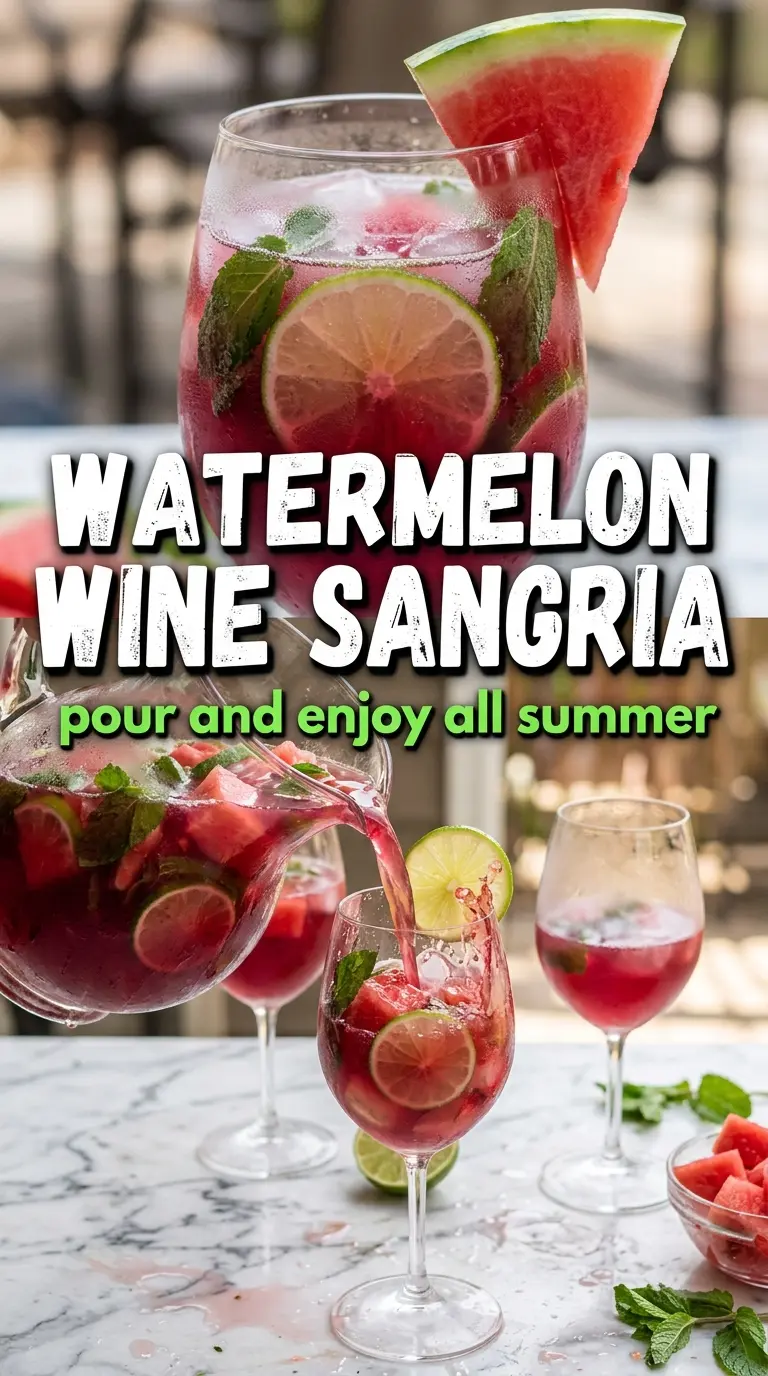
- Fresh watermelon — This is the whole point of the drink, so use ripe melon with deep color and plenty of juice. Seedless is easiest, but any seeded watermelon works as long as you strain the blended portion well.
- Dry rosé or white wine — Dry matters here. A sweet wine can make the finished sangria taste heavy, while a crisp rosé keeps the fruit flavors lively. If you use white wine, pick something bright and not overly oaky.
- Watermelon vodka or plain vodka — Watermelon vodka adds a little extra melon note, but plain vodka works just as well and keeps the drink from getting too perfumed. This is background structure, not the star.
- Triple sec — Orange liqueur brings a citrus edge that lifts the watermelon and helps the sangria taste complete. Don’t skip it unless you need to, because the drink loses some depth without that little bit of orange.
- Honey or simple syrup — Use this as a balancing tool, not a requirement. If your watermelon is very sweet, start with less and taste after chilling.
- Lime and lemon slices — Both matter. Lime sharpens the fruit, while lemon keeps the flavor from reading one-dimensional. Thin slices infuse faster and look better in the pitcher.
- Sparkling water or club soda — Add this only at the end so the sangria keeps its bubbles. Pouring it in early is the fastest way to lose the light, spritzy finish that makes the drink feel refreshing.
- Mint sprigs — This is the finishing detail that makes the pitcher smell fresh the second it hits the table. Tear nothing; just nestle the sprigs in whole so they stay fragrant.
Building the Pitcher Without Losing the Fizz
Making the Watermelon Base
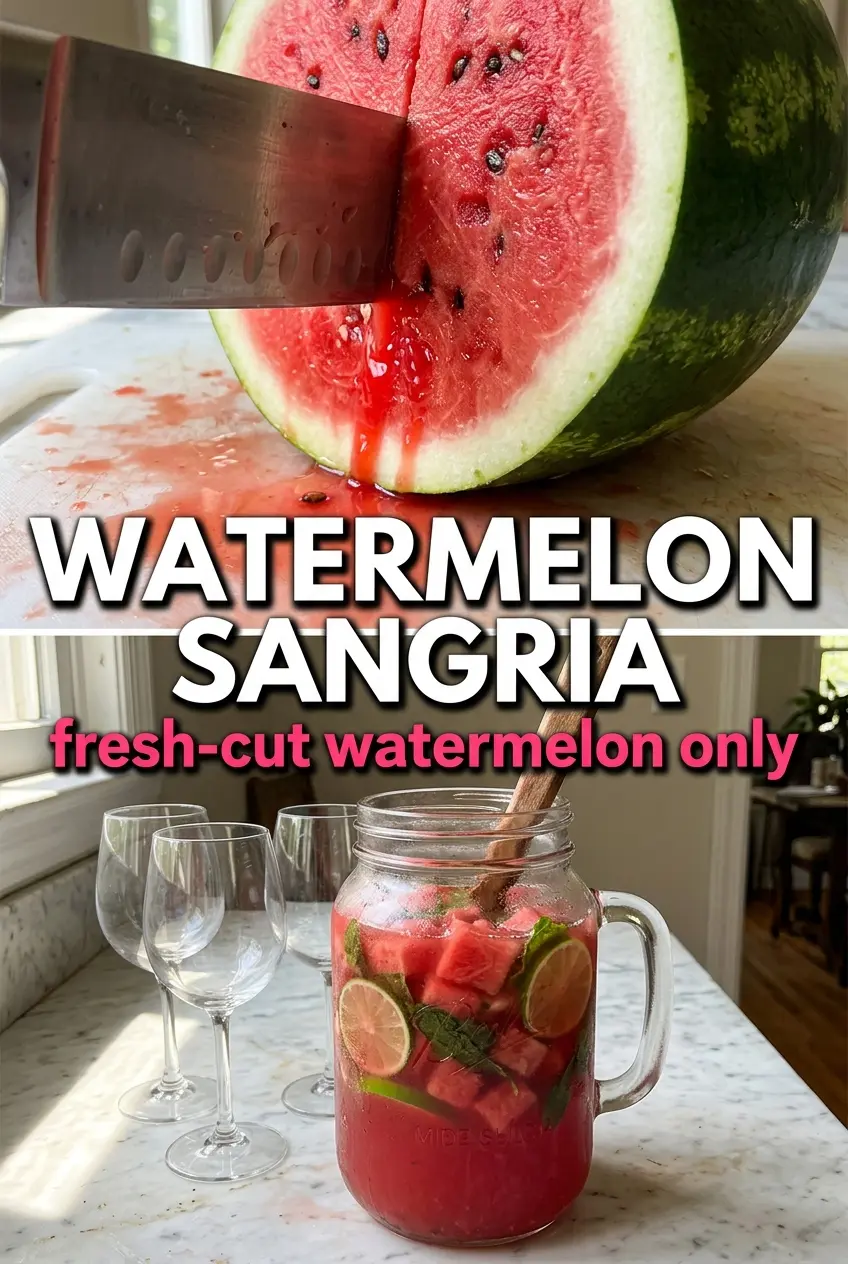
Blend half of the watermelon until smooth, then strain it through a fine mesh sieve so you end up with clean juice instead of pulpy foam. This step matters because watermelon pulp can make the sangria cloudy and heavy, especially after it chills. If the juice looks thin, that’s fine; the fruit flavor should taste fresh, not thick like a smoothie.
Balancing the Wine and Spirits
Stir the watermelon juice together with the wine, vodka, triple sec, and honey in a large pitcher. Taste it before adding the sparkling water. If it tastes a little shy now, chilling will soften it even more, so this is the moment to adjust sweetness. Don’t overdo the honey, though, because the fruit will continue to soften the drink as it sits.
Letting the Fruit Infuse
Add the remaining watermelon cubes, lime slices, and lemon slices, then cover and chill for at least two hours. That resting time lets the citrus edge round out and gives the fruit enough time to flavor the wine without turning mushy. If you go much longer than a few hours, the melon can start to break down, so this is best served the same day you make it.
Finishing With Bubbles
Right before serving, pour in the sparkling water and stir once or twice, just enough to lift everything without knocking out the bubbles. Serve it over ice in chilled glasses and add mint at the end so the garnish stays bright. If you add the sparkling water too early, it goes flat in the fridge and the sangria loses the light finish that makes it work.
Three Useful Ways to Change the Drink Without Ruining It
Make It Nonalcoholic
Swap the wine, vodka, and triple sec for chilled white grape juice or sparkling white tea plus a splash of orange juice and extra lime. You’ll get the same fruity, party-pitcher feel, but the drink will be a little sweeter and less sharp, so taste before adding any honey.
Use White Wine Instead of Rosé
A crisp Sauvignon Blanc or Pinot Grigio makes the sangria lean brighter and a little less berry-like. The color will be paler, and the watermelon will stand out more clearly. This is the better choice if you want the melon to taste fresh and clean instead of rounded and floral.
Skip the Vodka and Keep It Lighter
If you want a lower-alcohol pitcher, leave out the vodka and let the wine do the work. The drink will taste softer and a touch less boozy, but it still holds together because the watermelon juice and triple sec carry plenty of flavor on their own.
Storage and Reheating
- Refrigerator: Store leftovers covered for up to 2 days. The fruit will soften and the bubbles will fade, so it’s best on day one.
- Freezer: Don’t freeze sangria. The wine and fruit texture won’t thaw well, and the fresh flavor gets dull.
- Reheating: No reheating needed. If the sangria has been sitting awhile, add a fresh splash of sparkling water and a few ice cubes to wake it back up before serving.
Questions I Get Asked About This Recipe
Watermelon Sangria
Ingredients
Equipment
Method
- Blend 2 cups of watermelon cubes until smooth, then strain through a fine mesh sieve to get 1 cup of fresh watermelon juice. Stop when no pulp is left in the sieve and the liquid looks smooth and pourable.
- Combine watermelon juice, rosé wine, vodka, triple sec, and honey in a large pitcher and stir to combine. Mix until the honey is fully dissolved and the color turns uniformly blush-pink.
- Add remaining watermelon cubes, lime slices, and lemon slices to the pitcher. Gently fold so the fruit is evenly distributed throughout the sangria.
- Cover and refrigerate for at least 2 hours to chill and allow flavors to meld. The sangria should look cold and slightly saturated with fruit juices.
- Right before serving, top with sparkling water or club soda, stir gently, and pour into ice-filled glasses garnished with fresh mint. Add the bubbles at the end so they stay lively and visible in the glass.