Zucchini lasagna roll-ups bake into something that feels lighter than a classic baked pasta, but still lands with that same cozy, cheesy pull when you lift the first roll from the pan. The zucchini softens just enough to hold the filling without turning mushy, the spinach ricotta mixture stays creamy, and the marinara keeps everything saucy instead of watery. You get neat little spirals with browned mozzarella on top and tender edges underneath.
The trick is treating the zucchini and spinach like ingredients that need their water managed before they ever meet the cheese. Salting the planks, roasting them briefly, and squeezing the spinach until it’s almost dry are the steps that keep the dish from sliding around in a puddle. A little nutmeg in the filling also does more than people expect; it rounds out the ricotta and makes the whole pan taste more finished.
Below, I’ll walk through the one step that makes the biggest difference in texture, plus the small substitutions that still keep these roll-ups sturdy. If you’ve ever had zucchini bake into a watery mess, this version fixes that.
The zucchini held its shape and the filling stayed creamy, not watery. I followed the resting time and the rolls sliced cleanly instead of collapsing when I served them.
Save these zucchini lasagna roll-ups for a baked vegetarian dinner with creamy spinach filling and bubbling mozzarella.
The Step That Keeps Zucchini Roll-Ups from Turning Watery
Zucchini looks sturdy on the cutting board, but once it heats up, it releases a lot of moisture. If you skip the salting and the brief roast, the filling can slide, the sauce can thin out, and the rolls lose that neat layered look. The goal here isn’t to cook the zucchini soft all the way through. It’s to pull out enough water so the planks bend without breaking and still hold their shape after baking.
The other place people get into trouble is overstuffing the planks. A thick mound of filling seems generous, but it usually pushes out the sides and makes rolling harder. A thinner layer rolled tightly gives you better spirals, better portioning, and a cleaner bake. Seaming the rolls down in the dish keeps them from unfurling while the cheese melts.
What Each Ingredient Is Actually Doing in These Roll-Ups
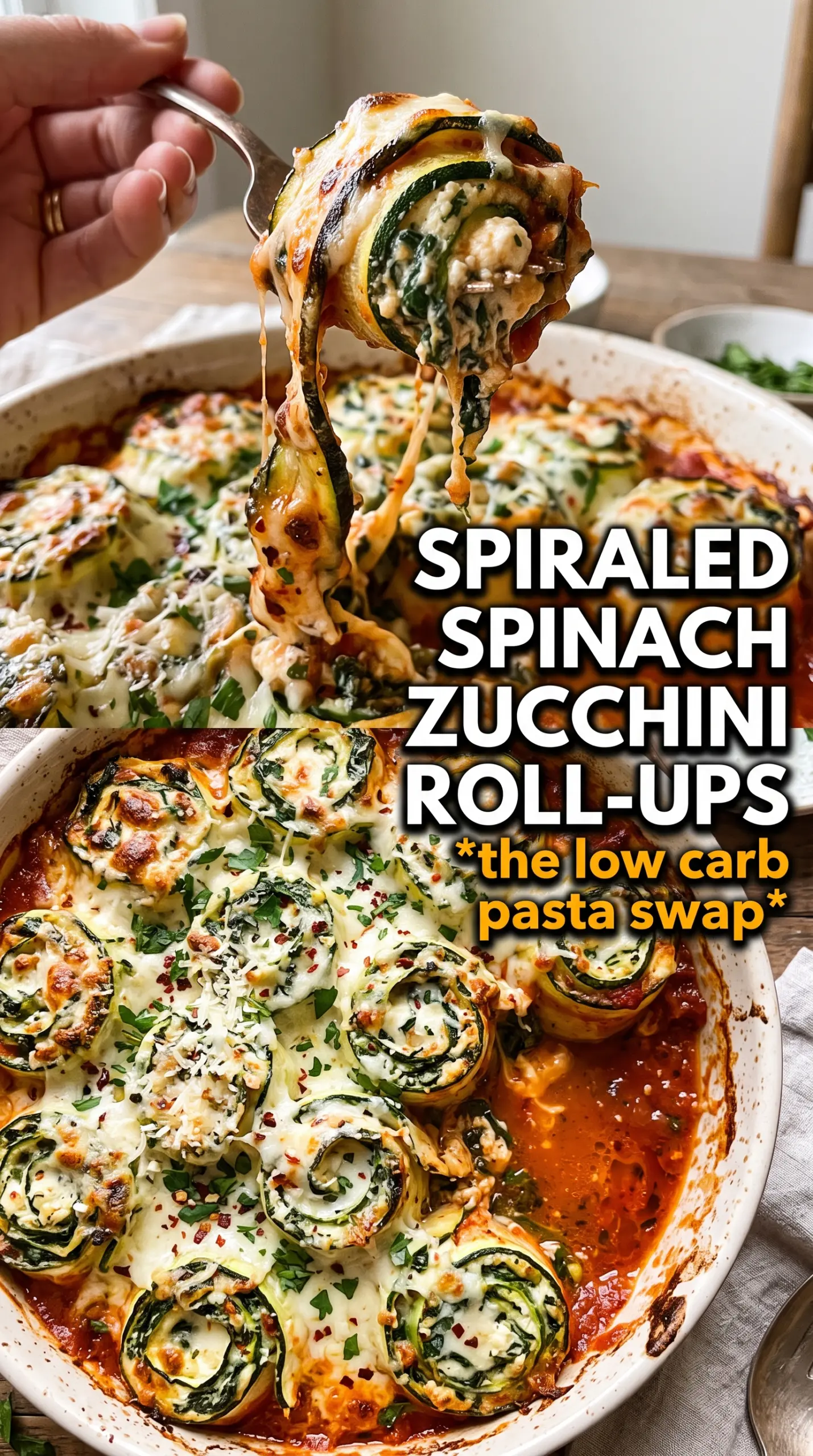
- Zucchini — This is the structure of the dish, so choose large, straight zucchini with broad sides. Thin, even planks matter more than fancy knife work here; they need to bend without cracking and bake evenly without disappearing into the sauce.
- Ricotta — Ricotta gives the filling its soft, creamy body. Whole-milk ricotta tastes best and stays richer in the oven, but part-skim works if that’s what you have. If the ricotta seems wet, let it drain for a few minutes before mixing.
- Frozen spinach — Frozen spinach is the easiest way to get enough greens into every bite, but only if it’s squeezed very dry. That dryness is non-negotiable. Wet spinach is what makes the filling loose and the bottom of the dish watery.
- Mozzarella and parmesan — Mozzarella melts into the filling and on top, while parmesan sharpens everything and keeps the flavor from going flat. Pre-shredded mozzarella works, but freshly shredded melts a little smoother. Parmesan from a wedge gives the best salty, nutty finish.
- Egg — The egg helps the filling set instead of oozing out when you slice the pan. Leave it out and the ricotta mixture stays softer, which is fine for spooning onto toast but not ideal for tidy roll-ups.
- Marinara — Use a thick sauce, not a thin one. If your sauce is watery, simmer it for a few minutes first so it clings to the rolls instead of pooling at the bottom of the dish.
Building the Rolls So They Hold Together in the Oven
Softening the Zucchini Without Overcooking It
Salt the zucchini planks and let them sit long enough for moisture to bead on the surface, then pat them dry before they go into the oven. A short roast at 400°F gives you pliable strips that won’t snap when you roll them, but it also drives off extra water. If the planks come out limp and translucent, they’ve gone too far and can tear when you handle them.
Mixing a Filling That Stays Creamy
Combine the ricotta, egg, well-squeezed spinach, mozzarella, parmesan, garlic, nutmeg, salt, and pepper until everything is evenly distributed. Don’t beat the mixture until it’s loose; you want it cohesive and thick enough to mound on a spoon. If it looks slack, the spinach probably still held water, and that will show up later in the bake.
Rolling and Baking for Clean Slices
Spread a thin layer of marinara in the dish before adding the rolls, then place each one seam-side down so it stays shut. Spoon the rest of the sauce over the top and finish with mozzarella, keeping the cheese mostly on the rolls rather than buried in sauce. Bake until the top is bubbling and the cheese has golden spots, then let the pan rest for 10 minutes. That rest matters; cut too soon and the filling spreads before it can settle.
How to Adapt These Roll-Ups for Different Pans, Diets, and Leftovers
Dairy-Free Version with a Different Kind of Creaminess
Use a dairy-free ricotta and shredded plant-based mozzarella. The texture will be a little softer and less tangy than the original, so add an extra pinch of salt and a touch more garlic to keep the filling from tasting flat.
Gluten-Free Without Changing the Method
This recipe is naturally gluten-free as written, so the main job is checking your marinara label. Some jars sneak in flour or gluten-containing additives, and a thick, simple sauce keeps the bake clean and stable.
Make It a Little Heartier
Stir a handful of chopped cooked mushrooms into the spinach filling if you want more bulk and a deeper savory note. Keep them cooked down and dry, or they’ll undo the careful moisture control that makes the roll-ups work.
Storage and Reheating
- Refrigerator: Store covered for up to 4 days. The zucchini will soften a little more, but the flavor stays good and the rolls hold together well.
- Freezer: Freeze baked roll-ups in a tightly covered dish or individual portions for up to 2 months. The texture softens after thawing, so freeze only if you don’t mind a less firm zucchini bite.
- Reheating: Warm covered in a 350°F oven until hot in the center, or reheat single portions in the microwave at medium power. High heat can make the cheese separate and the zucchini slump faster than you want.
Answers to the Questions Worth Asking
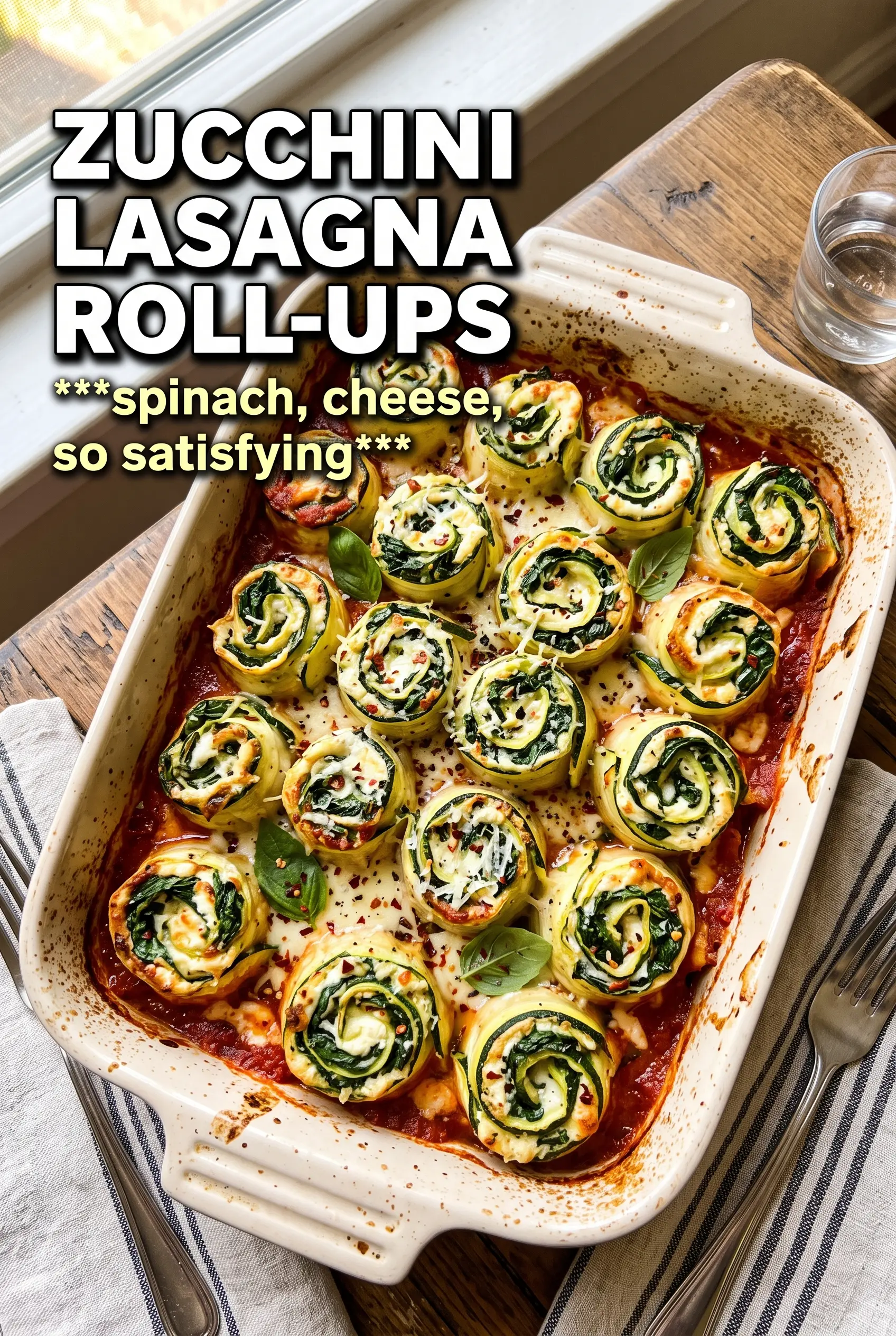
Zucchini Lasagna Roll-Ups with Spinach and Cheese
Ingredients
Equipment
Method
- Salt zucchini planks and rest 15 minutes, then pat dry so they’re less wet.
- Roast on a sheet pan at 400°F for 8–10 minutes to soften and dry out slightly.
- Squeeze all moisture from the thawed frozen spinach until very dry.
- Mix ricotta, egg, squeezed spinach, 1 cup mozzarella, parmesan, garlic, nutmeg, salt, and pepper until combined.
- Preheat oven to 375°F and spread 1 cup marinara in a 9x13 baking dish.
- Spread spinach cheese filling along one end of each zucchini plank and roll tightly, placing seam-side down in the dish.
- Spoon remaining marinara over the rolls and top with 1 cup mozzarella.
- Bake for 28–35 minutes until the cheese is golden and bubbling.
- Rest 10 minutes, then garnish with parmesan and fresh basil.