Kielbasa comes out at its best when the edges go sticky and browned and the vegetables underneath pick up all that sweet, garlicky glaze. This is the kind of sheet pan dinner that lands with enough color and texture to feel like a proper meal, but it still stays simple enough to pull together on a busy night. The sausage turns deeply savory, the broccoli catches crisped edges, and the peppers soften just enough to stay juicy.
The trick is spreading everything out in a single layer so the vegetables roast instead of steam. Honey helps the sauce cling, Dijon gives it backbone, and soy sauce keeps the whole pan from tasting flat. I also like tossing the kielbasa right in with the vegetables rather than browning it separately; the rendered fat and caramelized sauce coat everything as it cooks. Keep reading for the one step that keeps the vegetables from going soggy and the best way to swap in what you already have.
The sauce turned sticky and glossy on the pan, and the kielbasa got those browned edges I was hoping for. My broccoli wasn’t soggy at all, which never happens when I roast it with sausage.
Save this honey garlic kielbasa with veggies for a sticky sheet pan dinner with caramelized sausage and roasted vegetables.
The Difference Between Roasting and Steaming on One Sheet Pan
The main thing that separates a glossy, caramelized pan dinner from a soft pile of vegetables is space. When the pan is crowded, the vegetables give off moisture faster than it can evaporate, and you end up with gray zucchini and limp broccoli instead of browned edges. Kielbasa is forgiving, but the vegetables need room to breathe if you want those roasted spots and sticky glaze.
This recipe also works because the sauce is just thick enough to coat without drowning the pan. Honey can burn if it sits in a puddle, so the best move is a hot oven and a single layer of food that gets tossed once halfway through. That flip gives the sauce a chance to cling again instead of pooling underneath.
What Each Ingredient Is Actually Doing in This Pan Dinner
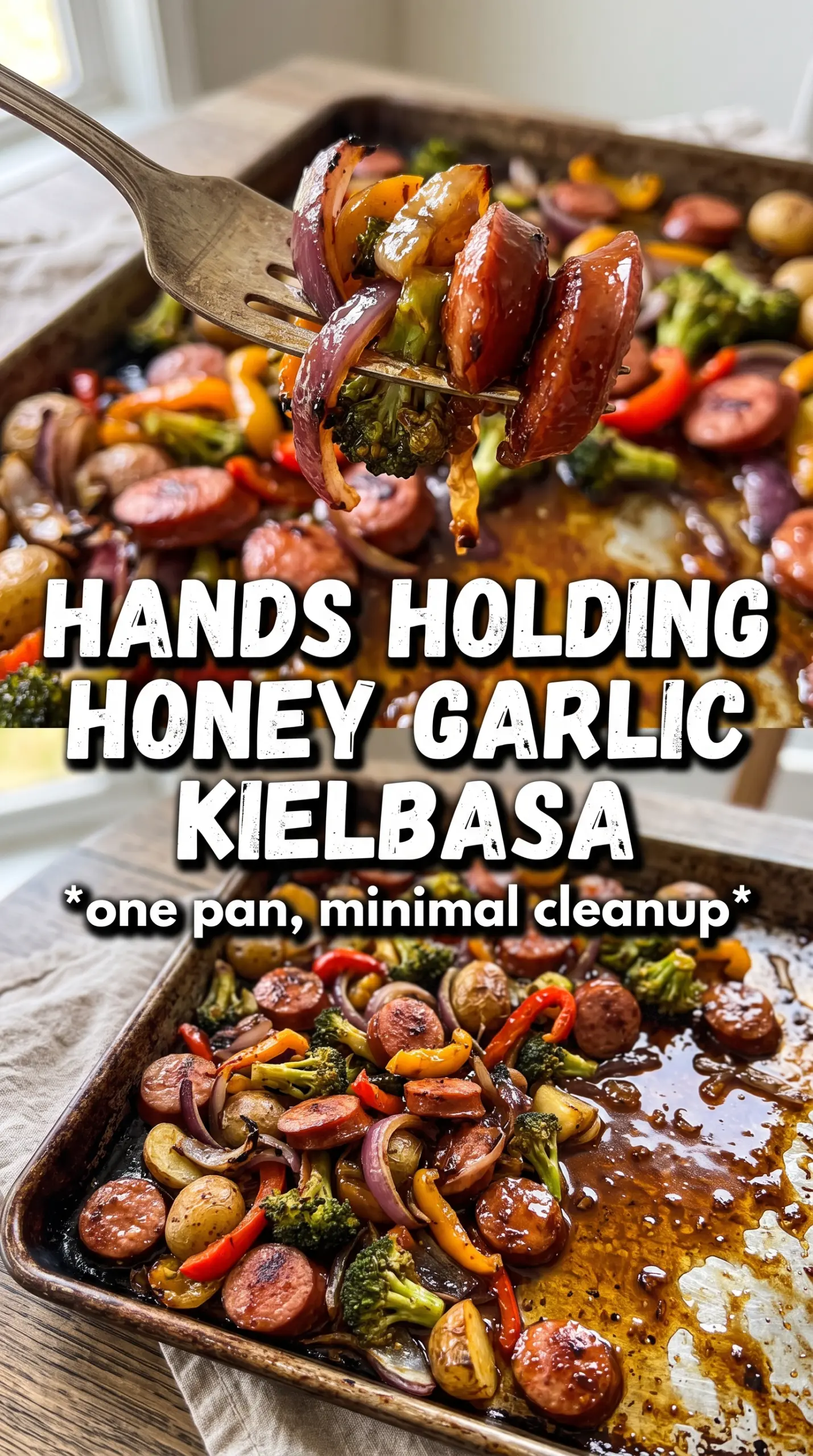
- Kielbasa — This is the backbone of the dish. It brings salt, smoke, and fat, which help the vegetables taste richer as they roast. Use a good supermarket kielbasa and slice it into even rounds so the edges brown at the same pace.
- Honey — Honey gives the sauce its sticky finish and helps it caramelize in the oven. There isn’t a perfect substitute for the way honey browns, but maple syrup can stand in if that’s what you have. The flavor will be a little deeper and less floral.
- Dijon mustard — Dijon keeps the glaze from tasting one-note sweet. It sharpens the sauce and helps it cling to the sausage and vegetables. Yellow mustard will work in a pinch, but the finished dish will taste softer and less balanced.
- Broccoli, peppers, zucchini, and red onion — This mix gives you different textures on one pan: broccoli for crisp edges, peppers for sweetness, zucchini for tenderness, and onion for a little char. Cut the zucchini thicker than the peppers so it doesn’t collapse before the rest of the pan is done.
- Soy sauce — Soy sauce brings the savory depth that keeps the glaze from tasting like honey alone. Use low-sodium if that’s what you keep on hand, since kielbasa already contributes plenty of salt.
Roasting the Pan So the Glaze Stays Sticky, Not Burnt
Whisking the glaze first
Mix the honey, garlic, soy sauce, Dijon, olive oil, and red pepper flakes in a bowl before anything touches the pan. The garlic needs to be evenly distributed so it doesn’t scorch in one spot, and the honey needs a little fat and acidity to coat smoothly. If the honey sits in a clump, it will burn before the vegetables finish.
Tossing everything together
Add the sliced kielbasa and vegetables to the sauce and toss until every piece looks lightly lacquered. Don’t drown the pan in extra liquid; you want a thin coating, not a marinade pooling at the bottom. If the vegetables look slick but not dripping, you’re in the right place.
Roasting until the edges catch
Spread everything on a lined baking sheet in a single layer and roast at 400°F for 20 to 25 minutes. Halfway through, toss the pan so the browned spots rotate and the glaze redistributes. If the vegetables are stacked, they’ll steam instead of brown, so use a second sheet pan if your first one feels crowded.
Finishing with sesame and greens
Scatter sesame seeds and sliced green onions over the hot pan right before serving. The sesame seeds add a little nuttiness and the green onions give a fresh snap that cuts through the glaze. Serve it immediately while the kielbasa is still glossy and the vegetables still have some bite.
How to Adapt This Sheet Pan Dinner Without Losing the Good Part
Make It Gluten-Free
Use a gluten-free kielbasa and swap in tamari for the soy sauce. That keeps the glaze salty and balanced without changing the texture of the finished dish. Check the sausage label carefully, since some brands use fillers that contain gluten.
Swap the Vegetables by What Roasts Best
You can use cauliflower, Brussels sprouts, green beans, or carrots instead of the vegetables listed here. Just keep the pieces similar in size and think about cooking time: carrots and Brussels sprouts need a little more time, while green beans need a little less. The goal is still the same browned edges and sticky glaze.
Turn Up or Down the Heat
The red pepper flakes add a small kick, not a burn. Leave them out for a milder version, or add a pinch more if you want the honey to taste a little sharper against the sausage. More heat works best when the glaze is still balanced with enough soy and Dijon to keep it savory.
Storage and Reheating
- Refrigerator: Store leftovers in an airtight container for up to 4 days. The vegetables will soften a little, but the flavor holds up well.
- Freezer: It freezes, but the zucchini and peppers lose some texture after thawing. If you plan to freeze it, expect a softer result and use it for lunch bowls or wraps.
- Reheating: Warm it on a sheet pan in a 375°F oven until heated through. The oven brings back some of the edges; the microwave makes the vegetables softer and the glaze looser.
Answers to the Questions Worth Asking
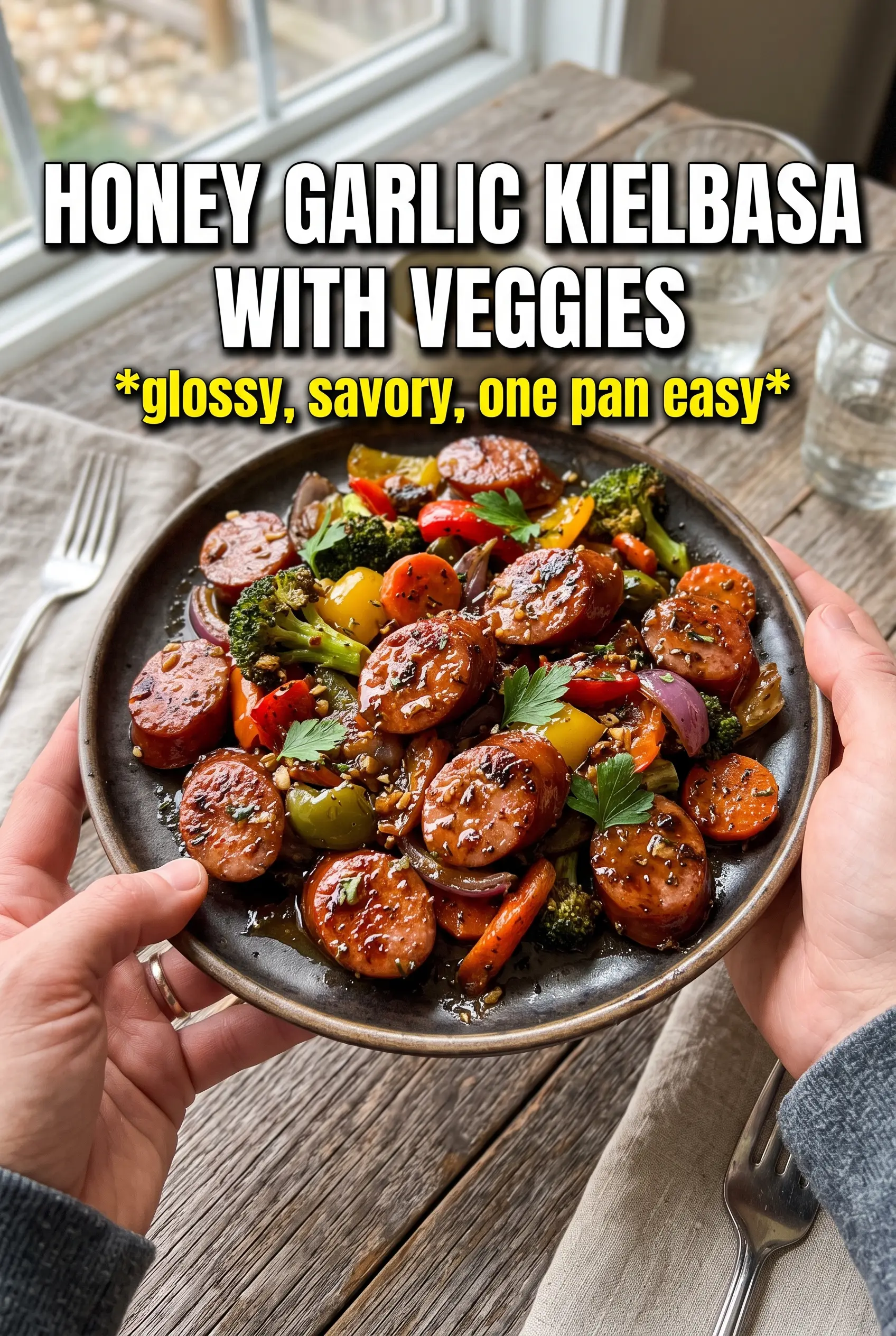
Honey Garlic Kielbasa With Veggies
Ingredients
Equipment
Method
- Preheat the oven to 400°F and line a large baking sheet.
- Whisk honey, minced garlic, soy sauce, Dijon mustard, olive oil, and red pepper flakes until smooth.
- Toss kielbasa rounds, broccoli florets, red bell pepper, green bell pepper, zucchini, and red onion with the sauce until evenly coated.
- Spread everything on the baking sheet in a single layer, then roast for 20–25 minutes, tossing halfway, until the vegetables are caramelized and the kielbasa is golden.
- Scatter sesame seeds and green onions over the sheet pan, then serve immediately.


